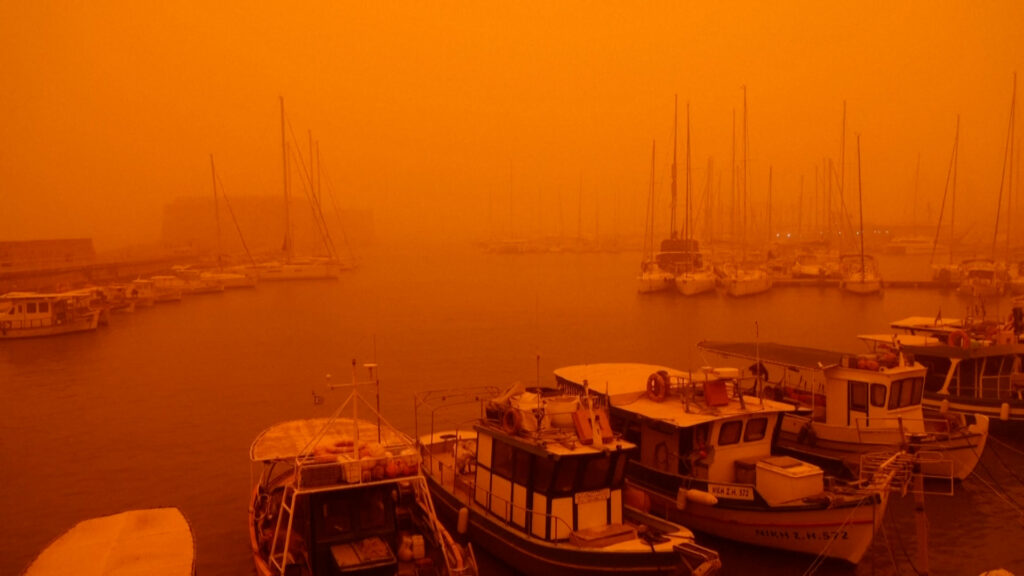
In a striking atmospheric event, the skies over the Greek island of Crete have been engulfed in an orange haze caused by Saharan dust sweeping in from North Africa. This natural phenomenon, which results from strong winds transporting dust particles across vast distances, has transformed the island’s usual scenic views into a surreal landscape painted in shades of orange and ochre.
The Saharan dust event has not only altered the visual aesthetics of Crete but also impacted air quality, with residents and visitors noting a fine layer of dust coating surfaces and a slight haze obscuring the horizon. This phenomenon typically occurs when winds pick up dry, fine dust from the Sahara Desert, carrying it across the Mediterranean Sea and into southern Europe.
Experts explain that such dust clouds are a part of natural climatic processes and can occasionally bring beneficial nutrients to soils but can also pose health concerns particularly for individuals with respiratory issues. The dust particles can contribute to increased particulate matter in the air, which might cause irritation to the eyes, nose, and lungs.
Authorities have advised caution for vulnerable groups, including children, the elderly, and those with asthma or chronic respiratory conditions. Wearing masks and limiting outdoor activities during peak dust periods are among the recommended precautions.
This event serves as a reminder of the interconnectedness of global ecosystems and the dynamic nature of atmospheric conditions. The transportation of Saharan dust over long distances is a testament to the power of natural forces shaping our environment in unexpected ways.
Meteorologists are monitoring the progress of the dust cloud as it moves across the region, with forecasts suggesting that the haze may persist for several days before rain or shifting winds clear the skies.
Residents of Crete and surrounding areas have shared numerous photographs on social media, capturing the eerie beauty of the orange sky and the dust settling on homes, cars, and vegetation. While the phenomenon is visually captivating, it underscores the need for awareness about the environmental and health impacts associated with such airborne dust events.
In the coming days, as the Saharan dust gradually disperses, Crete’s skies are expected to return to their usual clear blue, restoring the island’s famed Mediterranean vistas. Meanwhile, this unusual occurrence invites both locals and visitors to appreciate the complex interplay between natural desert processes and Mediterranean weather patterns that occasionally paint the skies in extraordinary colors.