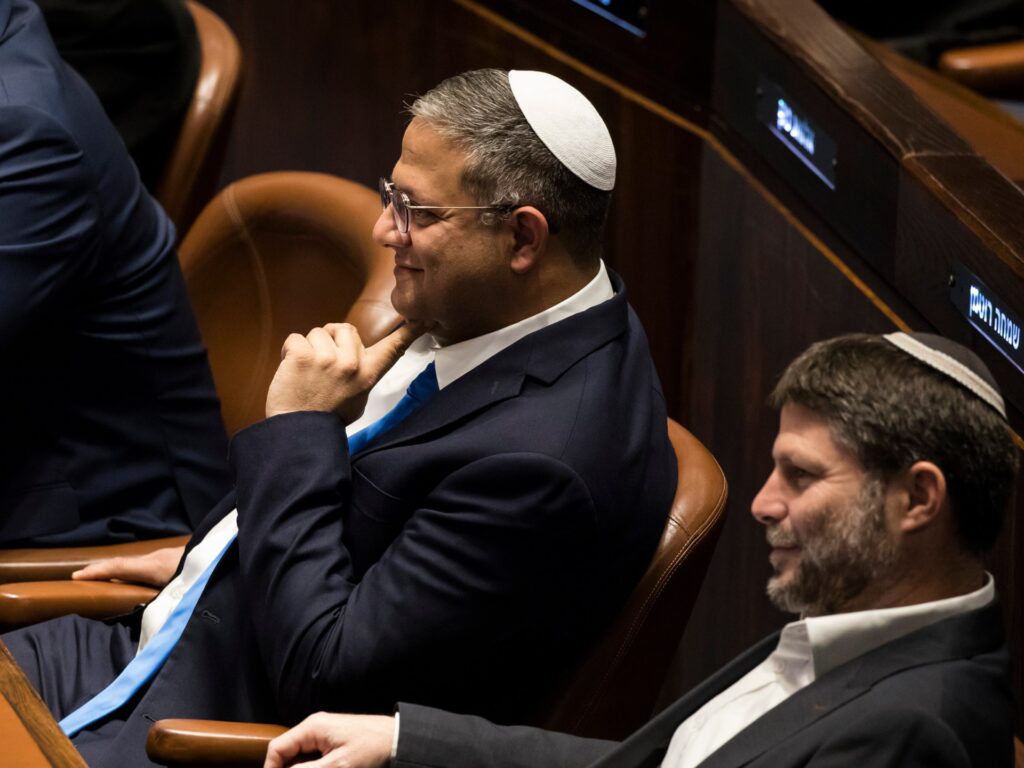
Ireland has announced a travel ban on Israeli ministers Itamar Ben-Gvir and Bezalel Smotrich, reflecting the country’s strong stance on the ongoing Israeli-Palestinian conflict. Irish Taoiseach Martin emphasized that the decision came after the ministers exhibited what he described as ‘a desire to see the elimination of Palestinians from Palestine.’ This statement underlines Ireland’s serious concerns about the rhetoric and policies promoted by these ministers, which are seen as detrimental to peace and security in the region.
Itamar Ben-Gvir and Bezalel Smotrich are prominent figures in the current Israeli government, known for their hardline views and controversial statements about Palestinians. Their political positions have often sparked international criticism, particularly from countries advocating for Palestinian rights and a peaceful resolution to the conflict.
The Irish government’s decision is notable, as travel bans are a significant diplomatic tool, reflecting a country’s protest against certain political stances or actions. Taoiseach Martin’s remarks highlight Ireland’s commitment to opposing what it perceives as attempts to undermine Palestinian welfare and rights.
This move by Ireland comes amid escalating tensions in the Middle East, with numerous countries closely watching the developments and reacting diplomatically where appropriate. Ireland has a history of supporting Palestinian rights and advocating for a two-state solution, and this travel ban exemplifies its efforts to influence the situation.
The travel ban restricts Ben-Gvir and Smotrich from entering Ireland, signaling disapproval of their involvement in policies and rhetoric that are seen as aggressive towards the Palestinian population. It also sends a message to other nations and international bodies about Ireland’s stance on human rights and justice in the region.
Political analysts suggest that this action might influence other European Union countries to consider similar measures, potentially leading to a broader diplomatic isolation of figures seen as obstructing peace efforts. Ireland’s position might contribute to increased pressure on Israel to reconsider its approach towards Palestinians.
Reactions within Israel have been mixed, with supporters of Ben-Gvir and Smotrich condemning Ireland’s decision as unwarranted interference in Israeli politics. Conversely, Palestinian groups and international human rights organizations have welcomed Ireland’s stance as a necessary step towards holding political leaders accountable for inflammatory rhetoric and policies.
This development also highlights the growing international dimension of the Israeli-Palestinian conflict, demonstrating how domestic political actions can resonate globally. Countries like Ireland, through measures such as travel bans, are attempting to assert influence beyond traditional diplomatic channels to affect change.
In summary, Ireland’s travel ban on Israeli ministers Itamar Ben-Gvir and Bezalel Smotrich is a clear statement against policies perceived as hostile to Palestinians, underscoring Ireland’s commitment to human rights and conflict resolution in the Middle East. The move contributes to the complex international dynamics surrounding the Israeli-Palestinian conflict and exemplifies how national decisions can have far-reaching implications on global peace efforts.