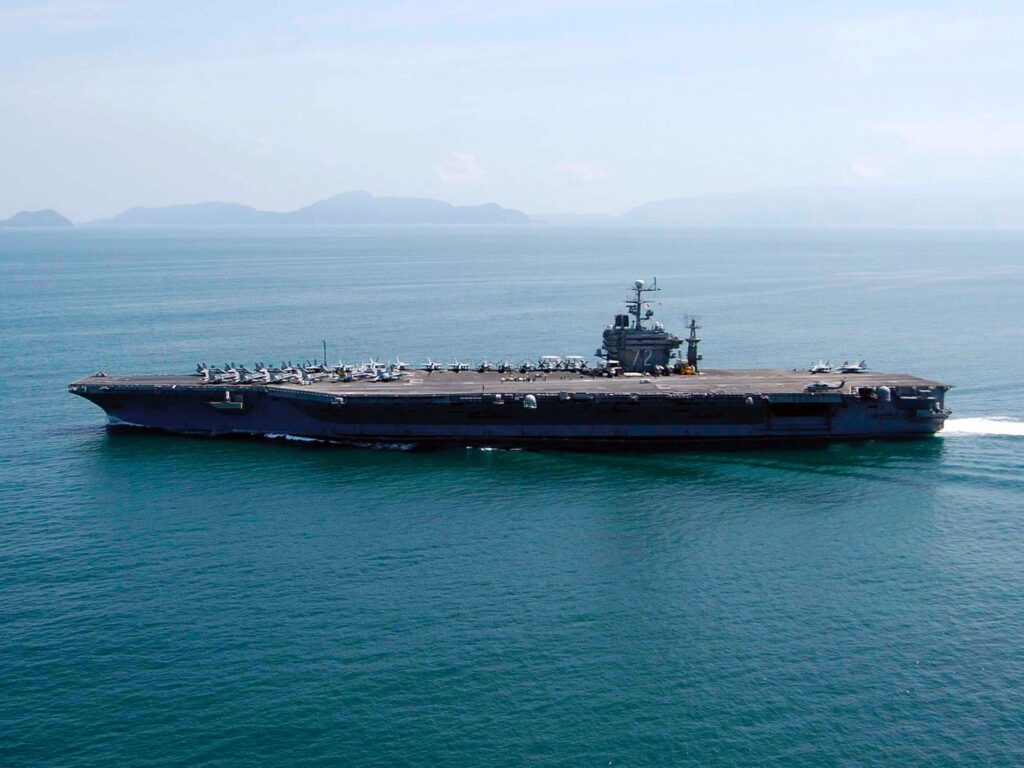
Reports have emerged of United States Navy sailors stationed in the Middle East attempting to ‘jump ship’—a naval term referring to sailors leaving their posts without authorization. These incidents have sparked significant public and political outcry, highlighting concerns about morale and working conditions amid ongoing military tensions in the region.
The USS Abraham Lincoln, a Nimitz-class aircraft carrier, has been at the center of this controversy. Sources reveal that the vessel has experienced an unusually long deployment without a port stop, setting what is believed to be a record for the longest stretch of time at sea without a break. This extended deployment is reportedly linked to ongoing operations related to heightened tensions with Iran.
US senators have reacted strongly to these reports, calling for a thorough inquiry into the conditions leading to the sailors’ attempted desertions. Senators are expressing concerns over the well-being of service members and the impact prolonged deployments may have on mental health, morale, and the overall effectiveness of the Navy.
The USS Lincoln’s extended sea duty comes amid escalating geopolitical tensions in the Persian Gulf and surrounding waters, where the US Navy has heightened its presence to counter perceived threats from Iran. Experts suggest that such continuous deployments without adequate shore leave may contribute to fatigue, stress, and lowered morale among sailors.
Military officials have so far declined to comment in detail on the allegations of sailors attempting to abandon ship, citing ongoing investigations and operational security. However, they have acknowledged the unprecedented length of the USS Lincoln’s recent mission cycle.
Veterans and naval experts highlight that lengthy deployments have long been a strain on service members, but the current situation appears especially demanding given the complex and precarious security environment in the Middle East. Prolonged separation from family and the monotony of life aboard the ship can exacerbate stress levels, potentially leading to such desperate actions as attempting to leave the ship without permission.
The Senate inquiry is expected to examine not only the immediate circumstances of the sailors’ actions but also broader issues regarding Navy personnel policies, deployment schedules, and support systems for mental health.
Calls for reform echo across military and civilian circles. Advocates urge that increased focus on sailors’ welfare, including mandatory rest periods and improved communication channels between command and crew, are essential to maintaining an effective and motivated fighting force.
This incident spotlights the challenges faced by US military personnel operating in hotspots worldwide. It raises critical questions about how long deployments should be managed to safeguard the health of service members while continuing key strategic missions.
The Department of Defense has pledged full cooperation with the forthcoming Senate investigation and emphasized its commitment to the welfare of all service members deployed abroad.
As the inquiry unfolds, attention remains fixed on the USS Lincoln and the broader implications for US naval operations during a time of heightened Middle East tensions. The situation underscores the human cost of prolonged military engagements and the balancing act of maintaining readiness while addressing the needs of the personnel who serve.
In the coming weeks, the Senate Armed Services Committee is likely to hold hearings, inviting testimonies from affected sailors, Navy leadership, and military mental health professionals. Their findings may lead to policy changes aimed at preventing similar incidents in the future.
The public and officials alike await answers on the pressures that led to such a dramatic response from sailors meant to uphold US presence and security in a volatile region. Ultimately, the goal is to learn from this episode and ensure the Navy can sustain its critical missions while protecting the welfare of its members.