The ongoing conflict in Gaza has taken a grave turn as Israel’s forces push the so-called ‘Yellow Line’ further westward, significantly altering the dynamics on the ground. This advance has profound implications, especially for displaced families in the Shujayea neighborhood, who find themselves with nowhere safe to flee as hostilities escalate.
The Yellow Line, a term used to describe the boundary that delineates active combat zones and Israeli military advances, has traditionally served as a reference for civilians to gauge safe areas. However, the recent shift westward marks a contraction of safe zones within Gaza, compounding the crisis for thousands already uprooted from their homes.
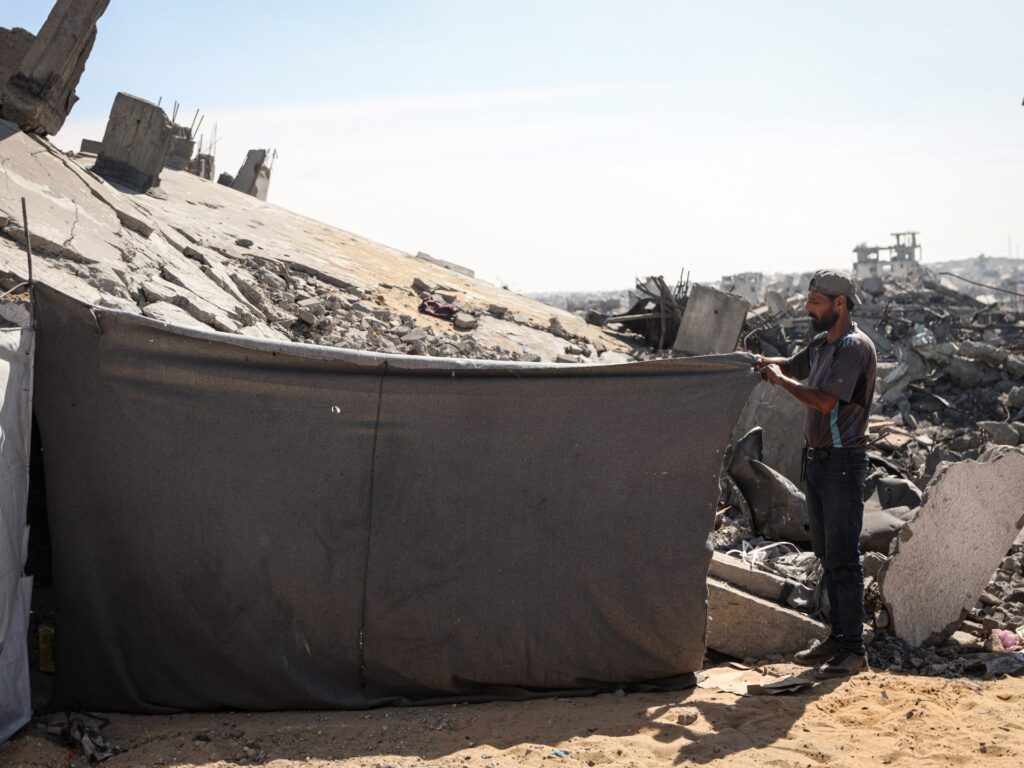
Shujayea, located on the eastern fringes of Gaza City, has been a focal point of intense fighting over recent weeks. Families displaced from other parts of Gaza have fled to this area seeking refuge. But with the Yellow Line moving closer, these families are now trapped in an increasingly perilous environment with restricted access to humanitarian aid, clean water, and medical assistance.
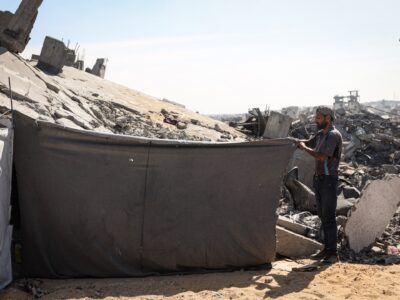
Local reports indicate that the advance has left many shelters bombed or severely damaged. The destruction of infrastructure and homes not only displaces residents but also dismantles community support systems crucial in times of conflict.
Humanitarian organizations on the ground express grave concerns about the potential for a humanitarian catastrophe. Access for aid workers is severely limited, further exacerbating the suffering of civilians, especially children, the elderly, and the sick.
Psychological trauma among displaced populations in Shujayea is mounting, with many reporting severe anxiety, uncertainty, and fear about the future. The lack of safe corridors or alternative evacuation routes leaves them vulnerable to ongoing military operations.
The international community has called for immediate ceasefires and for the protection of civilians under international law. Despite these calls, the advance of the Yellow Line continues, highlighting the complexities of achieving a ceasefire in a conflict marked by deep-rooted tensions and retaliatory strikes.
Amid these developments, aid agencies are urging donors and governments to increase support for emergency relief efforts, emphasizing the urgent need for food, shelter, medicine, and psychological support services.
As Gaza’s Yellow Line pushes west, families in Shujayea are caught in a deadly bottleneck, symbolizing the broader crisis faced by Gaza’s civilian population. The advance not only represents a military maneuver but also a human tragedy unfolding amid one of the world’s most prolonged and devastating conflicts.
The ongoing situation underscores the urgent need for political solutions alongside humanitarian interventions to break the cycle of violence and offer displaced families a glimmer of hope towards safety and stability.
In conclusion, the shifting of Gaza’s Yellow Line westward stands as a stark reminder of the immediate dangers faced by displaced families in Shujayea and across Gaza. As the world watches, the imperative grows for sustained efforts to protect civilians and restore peace in this embattled region.