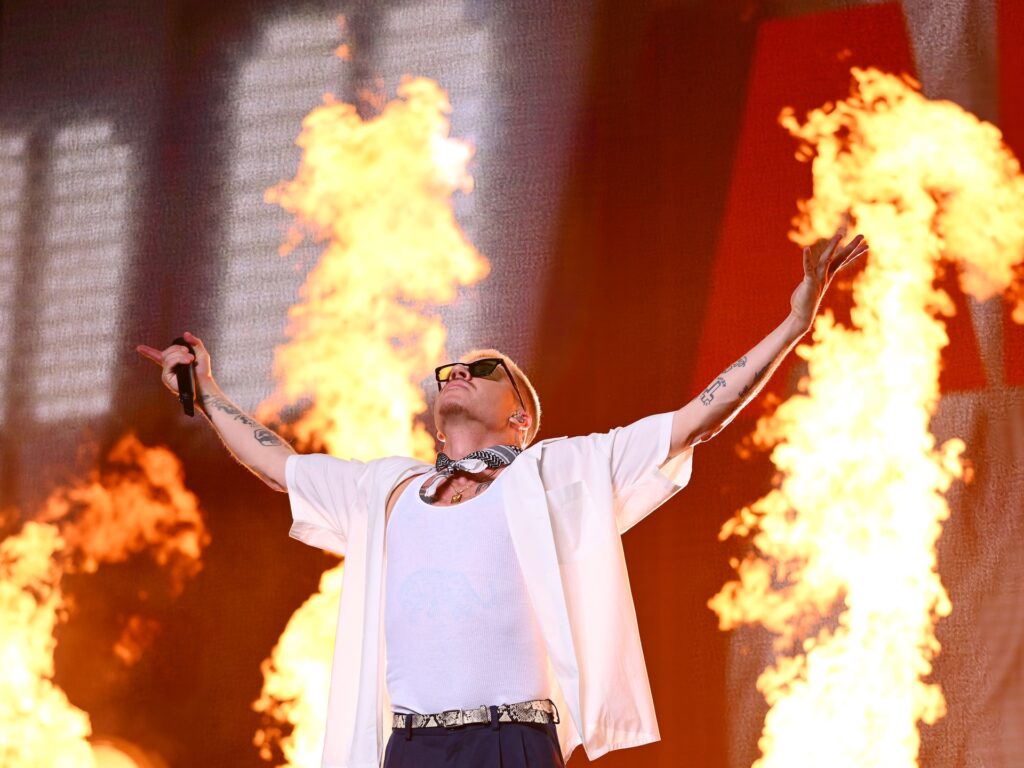
US rapper Macklemore has announced a new “Free Palestine” tour, a bold move that follows a recent controversy involving global pop star Ed Sheeran. Macklemore, known for his socially conscious lyrics and activism, has openly declared his support for Palestinian causes amidst ongoing conflict in the region.
In contrast to Sheeran’s more cautious approach, Macklemore has stated that “being apolitical during a genocide doesn’t work,” emphasizing the moral imperative to take a stand. His decision to launch the Free Palestine tour reflects his commitment to using his platform to raise awareness and support for Palestinians facing hardship.
The fallout from Ed Sheeran, who faced criticism for not publicly addressing the conflict, seems to have galvanized Macklemore into action. By directly associating his music with political activism, Macklemore seeks to inspire fans and fellow artists alike to confront difficult realities rather than remain silent.
Macklemore’s tour will not only bring music to fans around the world but also aim to generate financial aid for Palestinian causes. He has promised to donate all proceeds from the tour to organizations working towards Palestinian humanitarian relief and advocacy, underscoring his desire to make a tangible impact beyond just raising awareness.
This announcement has sparked mixed reactions, with supporters praising his courage and critics debating the role of artists in political conflicts. Nevertheless, Macklemore’s approach highlights a growing trend among musicians to engage deeply with global issues and mobilize their audience for social change.
Fans can expect performances that blend Macklemore’s signature style with powerful messages, creating a platform where music and activism intersect. The Free Palestine tour represents more than just a series of concerts—it is a statement of solidarity and an appeal for justice in a deeply divided world.
As this story develops, the music industry and global audience will be watching closely to see how Macklemore’s activism influences both public discourse and the broader movement for Palestinian rights. His willingness to take a stand exemplifies the increasing role of artists as influential voices in contemporary social and political struggles.