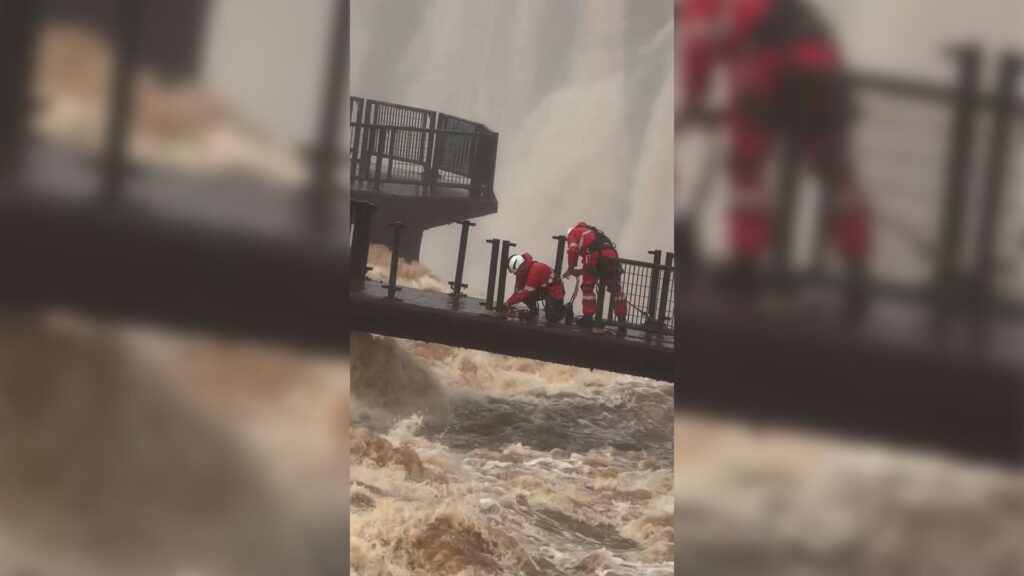
Iguazu Falls, one of the world’s most breathtaking natural wonders, has witnessed an unprecedented environmental event leading to the dismantling of its iconic Devil’s Throat walkway. The walkway, a critical platform that allowed visitors to experience the majestic power of the falls up close, was removed as water levels surged to nearly eight times their average.
The Iguazu Falls, located on the border between Argentina and Brazil, is renowned for its extensive and dramatic cascades. The Devil’s Throat, a U-shaped cliff where a significant volume of the water plunges down with tremendous force, has long been a prime attraction. The walkway provided tourists with a unique vantage point to witness this spectacle safely.
However, due to recent extreme weather patterns, the water flow in the Iguazu River has increased dramatically. The surge in water volume has posed significant risks to the structural integrity and safety of the walkway, prompting authorities to dismantle it temporarily. Experts have noted that the current water levels are nearly eight times higher than the usual average, a record-breaking influx that has also impacted the surrounding ecosystem.
This alarming rise in water levels has been attributed to unseasonal heavy rains and broader climatic changes affecting the region. The increased runoff from the river has not only threatened infrastructure but also the safety of visitors and park personnel. Authorities have emphasized that public safety is the top priority, and the walkway will be reinstalled once conditions stabilize.
The dismantling of the Devil’s Throat walkway is a significant measure reflecting the challenges presented by changing environmental conditions on natural tourist sites. The Iguazu Falls area is part of a major national park and UNESCO World Heritage Site, attracting millions of visitors annually. The temporary closure of this key attraction could impact tourism and the local economy.
Environmentalists and scientists are closely monitoring the situation, seeking to understand the long-term implications of such fluctuations in water levels. The unprecedented surge serves as a stark reminder of the increasing volatility in natural systems caused by climate change. Preserving the delicate balance of these ecosystems is crucial for their sustained beauty and ecological health.
Local authorities and park management are working in coordination with environmental experts to develop adaptive management strategies that can better prepare for and mitigate such extreme events in the future. This includes reinforcing the infrastructure, improving early warning systems, and enhancing visitor safety protocols.
Despite the current challenges, Iguazu Falls continues to inspire awe and admiration worldwide. Efforts are underway to ensure that future generations can safely enjoy the full splendor of this natural marvel. The dismantling of the Devil’s Throat walkway, while disappointing for many, underscores the need for vigilance and proactive stewardship in managing natural heritage amid a changing climate.