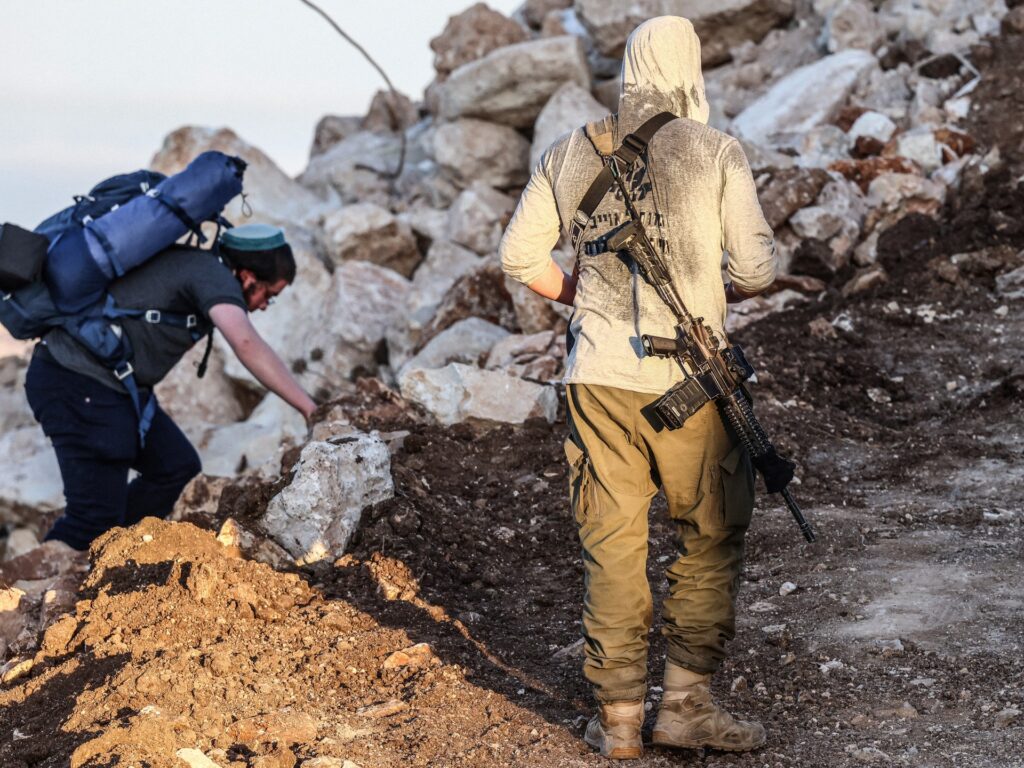
The Hilltop Youth, a radical religious Zionist faction, has emerged as a controversial and pivotal presence within the ongoing Israeli-Palestinian conflict. This group is primarily focused on seizing Palestinian territories in the West Bank through violent means, reflecting a hardline approach that sharply contrasts with mainstream political efforts for peace and negotiations.
Originating in the late 1990s and early 2000s, the Hilltop Youth consists mainly of young, ideologically driven settlers dedicated to establishing a dominant Jewish presence across the West Bank. Their name comes from the hilltop settlements they carve out in disputed areas, often igniting clashes with Palestinian residents and Israeli authorities who seek to uphold law and order in the region.
The ideology fueling the Hilltop Youth is deeply rooted in religious Zionism, which views the entirety of the biblical Land of Israel as a divine inheritance for the Jewish people. This belief system motivates members to not only settle but actively expand Jewish territory at the expense of Palestinian landowners and communities.
Tactics employed by the Hilltop Youth are frequently aggressive, including unauthorized habitation of private Palestinian lands, destruction of crops and property, and violent attacks on Palestinians and sometimes on Israeli security forces. These actions have resulted in significant tension and violence, undermining broader peace efforts and complicating Israeli-Palestinian relations.
The group’s operations are often conducted under a veil of secrecy, with small cells acting autonomously to avoid detection and legal consequences. This decentralized structure makes counteractions by authorities more difficult, as the group lacks a formal hierarchy and clear leadership.
Furthermore, the Hilltop Youth is known for its ideological education that indoctrinates youth in extremist views, preparing a new generation willing to sacrifice for their cause. This education fosters a sense of urgency and religious duty, which many members believe justifies the use of violence.
The international community has widely condemned the Hilltop Youth’s violent tactics, labeling their actions as violations of international law, particularly regarding the treatment of occupied territories and the rights of Palestinian civilians. However, the group continues to attract support from segments of Israeli society sympathetic to their religious and nationalist aspirations.
Within Israel, opinions about the Hilltop Youth are deeply divided. While some settlers view them as heroes defending Jewish legacy and security, others, including Israeli government officials and moderate settlers, criticize the group for endangering national security and escalating violence in the region.
Addressing the challenge posed by the Hilltop Youth requires a multifaceted strategy. Israeli authorities have increased law enforcement actions against illegal settlements and violence associated with the group, but political complexities and societal sympathies within Israel often limit the effectiveness of these efforts.
Peace organizations and Palestinian communities have called for greater international involvement to curb the influence of extremist groups like the Hilltop Youth. They argue that lasting peace depends on the cessation of land seizures and violence that exacerbate mistrust and hostilities between Israelis and Palestinians.
In conclusion, the Hilltop Youth represents a significant obstacle to peace and stability in the West Bank. Their commitment to using violence to seize control of Palestinian land underscores the broader challenges facing the Israeli-Palestinian conflict, where ideological extremism continues to fuel tensions. Efforts to confront this group’s activities are integral to advancing any future peace initiatives in the region.