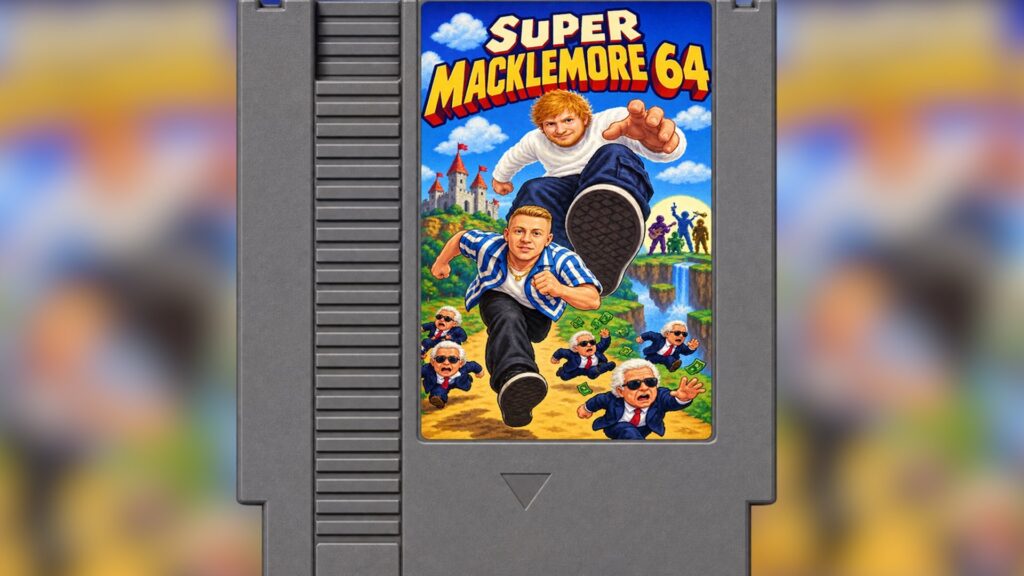
A new satirical video game titled “Super Macklemore 64” has garnered attention for its humorous take on recent music industry controversies. In this game, players navigate a surreal world where they must evade a giant character modeled after Ed Sheeran, while also dodging small representations of billionaire Robert Kraft.
The premise of Super Macklemore 64 is heavily inspired by the backlash and controversies surrounding Ed Sheeran’s concert appearances and his prominence in the music scene. The game uses exaggeration and caricature to poke fun at the singer’s dominance and the controversies linked to his shows.
Players are tasked with maneuvering their avatars through levels filled with obstacles symbolizing the challenges and criticism faced by Sheeran. The oversized Ed Sheeran figure represents the overwhelming presence and influence of the artist in the pop music world. Meanwhile, the tiny Robert Kraft figures add another layer of absurdity, referencing the billionaire’s involvement in unrelated scandals and public attention.
The gameplay involves quick reflexes and strategic movement, making the act of evading these characters both challenging and entertaining. Fans of parody games and those familiar with the music industry’s recent news will likely appreciate the satirical elements embedded within the game.
Super Macklemore 64 not only serves as entertainment but also as social commentary, providing players with a humorous perspective on celebrity culture, media narratives, and the public’s fascination with controversies.
This game adds to a growing genre of video games that blend current events with interactive media to create engaging, reflective, and often provocative experiences. By transforming real-world controversies into playful challenges, Super Macklemore 64 invites players to consider the impacts of fame and media scrutiny while enjoying a nostalgic gaming style reminiscent of classic 64-bit consoles.
Overall, Super Macklemore 64’s inventive and cheeky take on a real-world pop culture incident exemplifies how video games can serve as both artistic expression and cultural critique in the digital age.