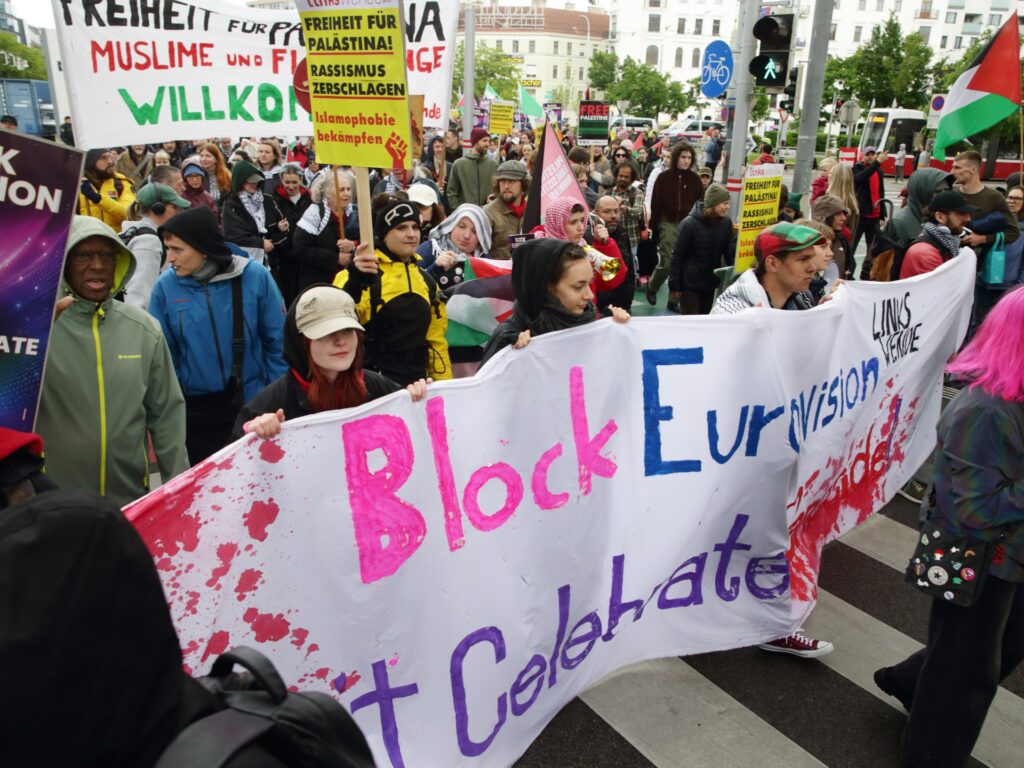
Ireland has announced its decision to boycott the Eurovision Song Contest for the second consecutive year, citing Israel’s participation as a key reason. The country’s public broadcaster stated that they cannot justify taking part in the contest given the ‘appalling and ongoing loss of lives in Gaza.’
The decision marks a continuation of Ireland’s protest against what it perceives as the contest’s political insensitivity. Last year, Ireland abstained from participating due to similar concerns surrounding Israel’s presence in the competition during a time of heightened tensions and violence in the Gaza Strip.
Eurovision, a long-standing international music competition, typically emphasizes themes of unity, peace, and cultural exchange. However, the inclusion of Israel in recent editions has drawn criticism from several quarters, especially in light of the ongoing conflict between Israel and Palestinian territories.
Ireland’s public broadcaster expressed deep concerns over the humanitarian crisis unfolding in Gaza. The statement highlighted the severe impact the conflict has had on civilians, describing it as an ‘appalling and ongoing loss of lives.’ This situation, they argued, makes it untenable for Ireland to separate politics from the contest or to take part.
The move has sparked diverse reactions among Eurovision fans and the international community. Supporters of the boycott commend Ireland for taking a moral stance, emphasizing the need to recognize and respond to humanitarian issues rather than ignoring them in favor of entertainment.
Conversely, some critics argue that Eurovision should remain apolitical and that the competition should not be used as a platform for political statements or boycotts. They fear that such actions undermine the spirit of the contest and could lead to further politicization of an event meant to bring people together.
Israel, meanwhile, continues to participate fully in Eurovision, viewing the contest as an opportunity to showcase its culture and foster international goodwill. Organizers of Eurovision have generally maintained that the event is apolitical, designed to celebrate music across cultures without endorsing political positions.
This year’s Eurovision contest is thus set against a backdrop of ongoing conflict and geopolitical tension, raising questions about the role of cultural events in times of crisis. Ireland’s boycott underscores the challenges of navigating international cultural diplomacy amid deeply polarized global issues.
Observers note that Ireland’s decision might influence other countries to reconsider their participation or approach to Eurovision in the context of the Israel-Gaza conflict. It highlights the increasing difficulty of maintaining neutral ground in global cultural forums when world events are so heavily charged with political and humanitarian significance.
The continuing loss of civilian lives in Gaza has drawn widespread international condemnation and calls for ceasefire and humanitarian aid. Ireland’s public broadcaster’s stance reflects a growing trend among institutions and countries to take explicit positions on conflicts and human rights issues.
As the Eurovision Song Contest approaches, all eyes will be on how the event handles participation from countries involved in or affected by conflicts, and whether cultural platforms can truly remain separate from global politics in a time of escalating tensions.
In summary, Ireland’s boycott of Eurovision for a second year is a significant political statement amid the ongoing Israel-Gaza conflict. It highlights the complexities of cultural diplomacy, the impact of geopolitical conflict on international events, and the challenges faced by global communities in balancing entertainment with ethical considerations.