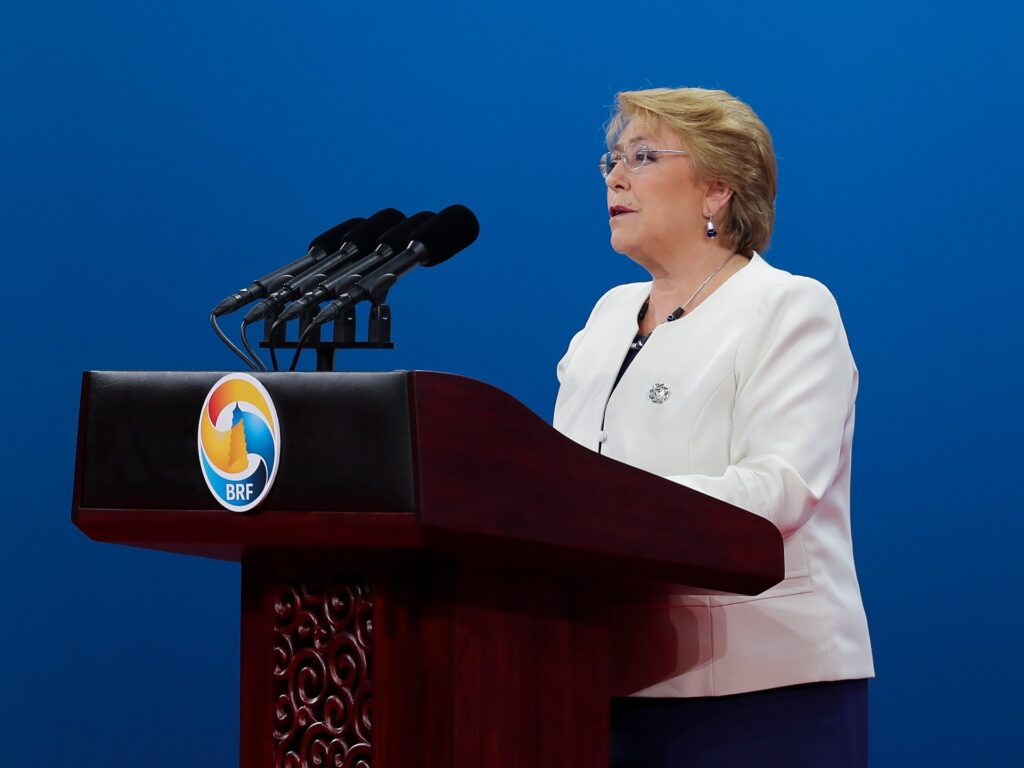
Michelle Bachelet, the former President of Chile, has officially ended her campaign to become the first female Secretary-General of the United Nations. Her decision to exit the race comes after receiving insufficient backing in early polling, which indicated low support from key member states and stakeholders within the UN system.
Bachelet, a seasoned politician with a long history of public service, was seen by many as a strong contender for the prestigious role. Serving two terms as Chile’s President, she earned international recognition for her leadership on human rights, social justice, and advancing gender equality. In 2010, Bachelet had also made history as Chile’s first female president, and her candidacy for the UN post was viewed as a continuation of her groundbreaking political career.
Despite her qualifications and global stature, Bachelet’s campaign faced challenges amid a crowded field of candidates vying to lead the world body. The selection process for the UN Secretary-General is highly political and involves intense negotiations among the UN Security Council’s permanent members and the General Assembly, who seek a candidate capable of navigating complex international dynamics.
Before withdrawing, Bachelet actively advocated for increased focus on tackling global issues such as climate change, humanitarian crises, human rights abuses, and sustainable development. She championed the United Nations as a platform for advancing peace and cooperation among nations, emphasizing the importance of multilateralism in addressing global challenges.
Her withdrawal highlights the competitive nature of the UN Secretary-General race, where geopolitical interests and strategic alliances play crucial roles in determining the outcome. The position demands a leader who not only holds diplomatic skill and vision but also commands broad-based support from diverse member countries.
Supporters of Bachelet expressed disappointment at her decision to step down but acknowledged the complexities involved in the UN selection process. They praised her contributions to international diplomacy and her commitment to progressive values, which have influenced policy debates at the United Nations and beyond.
Bachelet’s exit paves the way for other candidates to consolidate support and intensify their campaigns ahead of the final selection. The next UN Secretary-General will face a daunting agenda, including managing global conflicts, promoting sustainable development goals, and revitalizing the UN’s relevance in a rapidly changing world.
Observers note that the race to become the first female head of the United Nations continues, with several promising candidates still in contention. The historic milestone remains a significant point of interest as the organization seeks leadership that reflects its commitment to equality and diversity.
In conclusion, Michelle Bachelet’s withdrawal from the UN chief race is a significant development in the quest for new leadership at the United Nations. Her candidacy brought attention to critical global issues and underlined the ongoing challenges faced by women aspiring to hold the top international posts. As the selection process moves forward, the global community awaits the appointment of a Secretary-General who can navigate the complexities of today’s geopolitical landscape and lead the organization toward a more inclusive and effective future.