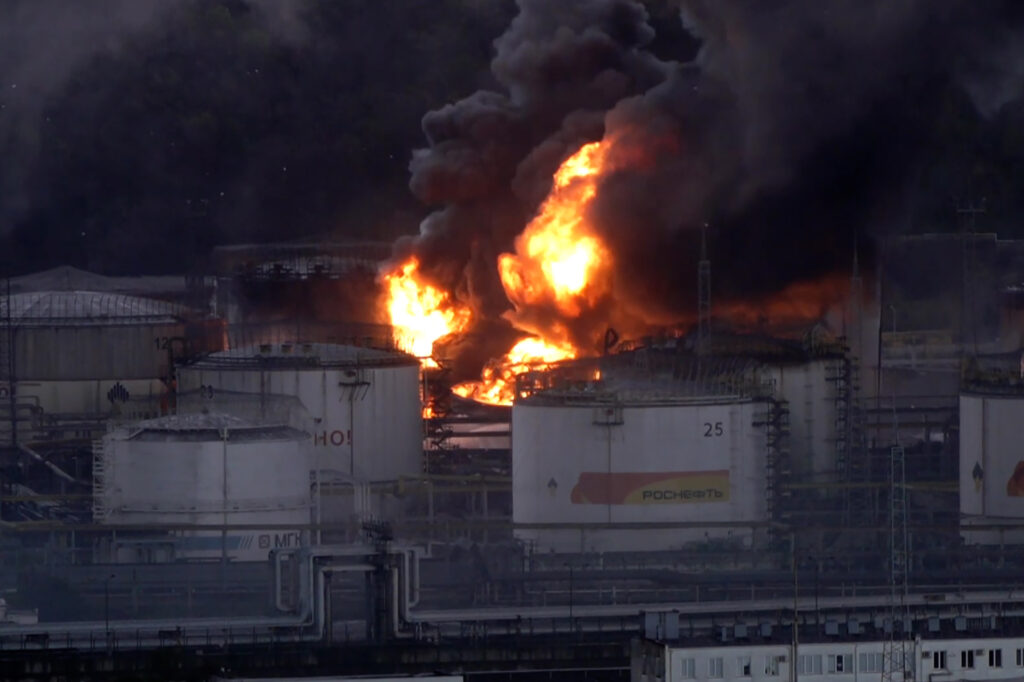
A major fire has erupted at the Tuapse oil refinery in Russia, believed to have been ignited by Ukrainian drone attacks. The incident has triggered a large-scale emergency response, with hundreds of firefighters deployed to contain the raging flames and prevent further damage to one of Russia’s critical energy infrastructures. The Tuapse refinery, located on the Black Sea coast, is a significant facility for processing crude oil and producing petroleum products vital for the Russian economy. According to reports, the attack involving unmanned aerial vehicles (UAVs) caused multiple fires within the refinery complex, leading to thick plumes of smoke visible for miles. Emergency services are working tirelessly to extinguish the fires, which pose a threat of escalating into broader industrial damage and environmental hazards. This assault on the refinery underscores the growing use of drone technology in modern warfare, enabling targeted strikes on strategic infrastructure from a distance. The Russian authorities have yet to release a full assessment of the damage or confirmed the number of casualties, if any, resulting from the attack. The Tuapse refinery incident is part of a broader pattern of ongoing conflict and hostilities affecting critical assets and energy facilities in the region. Security experts warn that such attacks could disrupt not only local production but also global oil supply chains, depending on the extent of the damage and duration of shutdowns necessary for repairs. The attack has also raised concerns about the vulnerability of vital infrastructure to drone strikes, prompting calls for enhanced defenses and countermeasures. Ukrainian officials have not formally claimed responsibility, but the use of drones aligns with their recent tactics aimed at targeting Russian logistical and industrial nodes. The fire intensity at the refinery has challenged firefighting efforts due to the presence of flammable materials and the complex layout of the facility. Firefighters are using all available resources, including foam suppressants and water spray systems, to combat the blaze amid high temperatures and unpredictable wind conditions. Local authorities have urged residents in surrounding areas to stay indoors and avoid the region due to potential health risks from smoke inhalation and air pollution. Environmental monitoring agencies are assessing the impact of toxic emissions released during the fires to mitigate long-term effects on the ecosystem. This event signals an escalation in tactical confrontations involving sophisticated drone attacks, highlighting the evolving nature of conflict in the area. The Tuapse refinery remains a critical node in Russia’s energy supply line, making its recovery and security a national priority. The ongoing efforts to control the fire exemplify the challenges faced by emergency responders when dealing with industrial disasters amid wartime conditions. Analysts predict that the economic repercussions could extend beyond immediate repair costs, potentially impacting oil prices and energy markets globally. International observers are closely monitoring developments, recognizing the strategic implications of infrastructure attacks in conflicts. This incident also raises questions about future security protocols and the need for innovation in protecting key industrial sites against aerial threats. As of now, firefighting efforts continue around the clock, with hopes to contain and eventually extinguish the fires in the coming days. Updates will follow as more information becomes available about the scale of damage, recovery timelines, and any broader geopolitical consequences resulting from the attack.