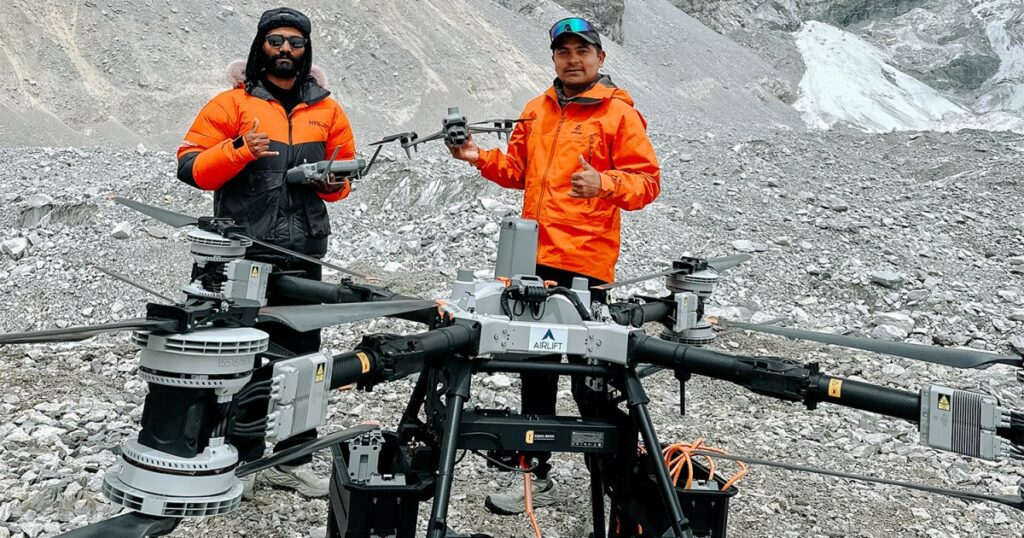
Nepal, long admired for its serene and towering Himalayan landscapes, now finds itself at the center of a high-stakes geopolitical contest as the burgeoning drone rivalry between the United States and China reaches the world’s highest peak, Mount Everest. The competition is more than just a technological tussle; it thrusts Nepal into a complex position that challenges its neutrality and sovereignty.
In recent years, both the U.S. and China have made significant advancements in drone technology, employing these versatile machines for a range of purposes—from military surveillance to scientific research. The strategic value of Mount Everest, not only as a natural wonder but also as a strategic vantage point, has turned the mountain into an unexpected frontline in this high-tech confrontation.
China has increased its drone activity along the northern border of Nepal, monitoring the adjacent Tibetan plateau and establishing a robust drone presence. This expansion is viewed by many analysts as part of China’s broader regional ambitions and its desire to assert dominance in the Himalayan region. Meanwhile, the United States, not to be outdone, has invested heavily in deploying drones on the southern side of the Nepalese Himalayas, conducting operations that purportedly include environmental monitoring and intellectual reconnaissance.
This escalation of drone presence around Everest puts Nepal in a delicate position. The country’s government has expressed concerns over the violation of its airspace and the potential threats to its environmental and tourism sectors—areas deeply intertwined with its national identity and economic wellbeing. Nepal’s official stance emphasizes diplomacy and calls for respecting its sovereignty and environmental integrity.
The conflict around Everest also highlights the complexities of Nepal’s geopolitical relationships. Situated between China and India, and with growing ties to the United States, Nepal is a small nation caught amid the interests of global superpowers. This drone competition further complicates Nepal’s balancing act, as it seeks to maintain friendly relations with all parties while safeguarding its own national interests.
Experts warn that continued drone rivalry could lead to increased tensions in the region, risking accidental confrontations or miscalculations. Furthermore, the environmental impact of frequent drone flights in this fragile ecosystem poses concerns about the disturbance of wildlife and the preservation of natural beauty.
International observers suggest that Nepal could leverage its situation by promoting itself as a neutral ground for discussions and agreements on aerial surveillance and drone regulations in the Himalayas, which might foster cooperation rather than conflict.
In conclusion, the US-China drone competition at Everest is not simply a technological race; it represents a pivotal moment for Nepal on the geopolitical chessboard. Balancing sovereignty, environmental stewardship, and international diplomacy, Nepal must navigate a complex interplay of power dynamics, making strategic decisions that will shape its future on the global stage and the preservation of one of Earth’s most iconic landmarks.