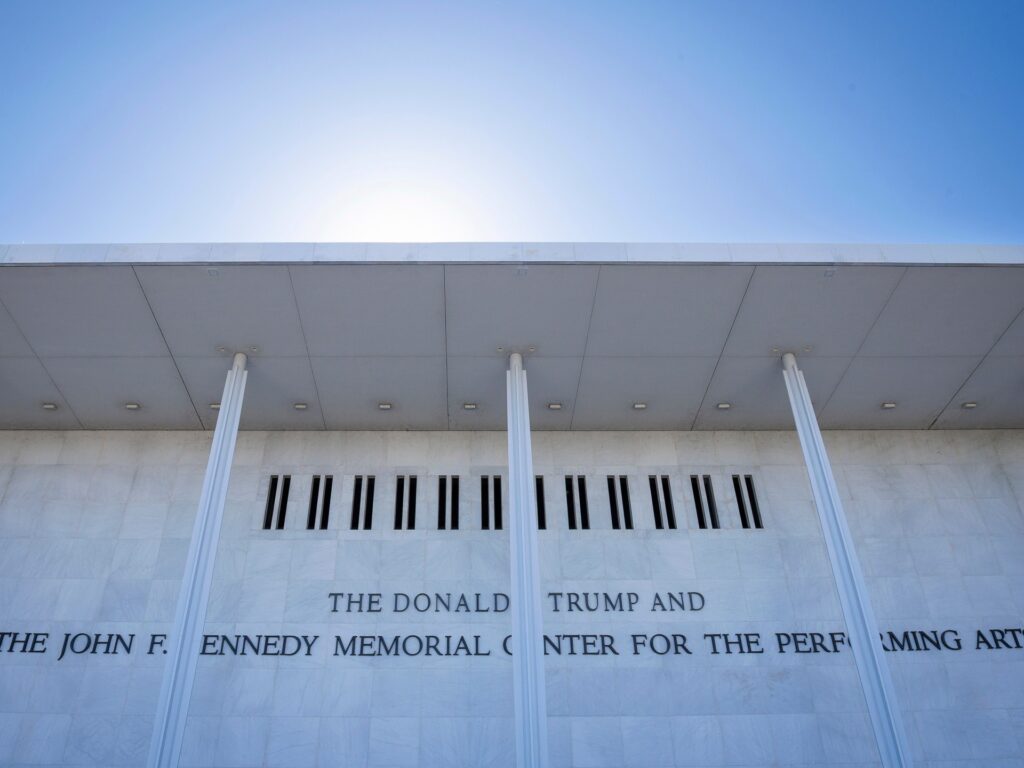
In a recent legal battle, former President Donald Trump has pledged to withdraw his association from the Kennedy Center following a federal judge’s ruling against his efforts to attach his name to the prestigious building. U.S. District Judge Christopher Cooper decisively ruled against Trump’s bid to rename the Kennedy Center and to impose a two-year closure of the center’s main theatre.
The controversy began when Trump sought to rebrand the Kennedy Center, a cultural landmark in Washington, D.C., by adding his name to the building. Additionally, he aimed to temporarily shut down the theatre for renovations and rebranding supposing to last two years. However, Judge Cooper’s decision blocked this attempt, rejecting the bid on legal and procedural grounds.
The Kennedy Center is renowned as the national cultural center of the United States, hosting a wide variety of performances and events including theater, dance, ballet, and music. The center’s name holds substantial historic and cultural significance, and any alterations to its identity undergo rigorous scrutiny.
Trump’s push to rename the center was met with widespread criticism from arts communities, politicians, and public advocates who viewed the move as a politicization of a treasured cultural institution. The proposal to close the theatre for two years was also opposed, as it would have disrupted many artistic schedules and impacted numerous performers and audiences.
In response to the court decision, Trump announced his intention to step back from the Kennedy Center entirely. This move signals the end of his direct involvement with the center and attempts to brand it with his name. His withdrawal is expected to calm tensions around the institution and preserve its historical identity.
Judge Cooper’s ruling emphasized the importance of preserving the integrity of cultural landmarks. The decision is seen by many as a protection of the arts community from political influence and a reaffirmation of the Kennedy Center’s mission.
The Kennedy Center has operated under its established name for decades, enjoying broad support across the political spectrum and from the general public. The center’s leadership expressed relief and gratitude following the court’s ruling, affirming their commitment to maintaining an apolitical platform for the performing arts.
This legal episode highlights the challenges faced when political figures attempt to imprint their legacy on national cultural institutions. It underscores the delicate balance required to maintain a non-partisan atmosphere in spaces dedicated to art and culture.
Looking forward, the Kennedy Center will continue its role as a premier venue for artistic expression without the shadow of political branding. The ruling serves as a precedent for future cases where attempts might be made to associate personal names with public cultural properties.
Overall, the court’s decision and Trump’s subsequent pledge to withdraw mark a significant moment in the intersection of politics, law, and culture. It reinforces the principle that cultural heritage should be protected from overt political agendas, ensuring that such institutions remain inclusive venues for all Americans.