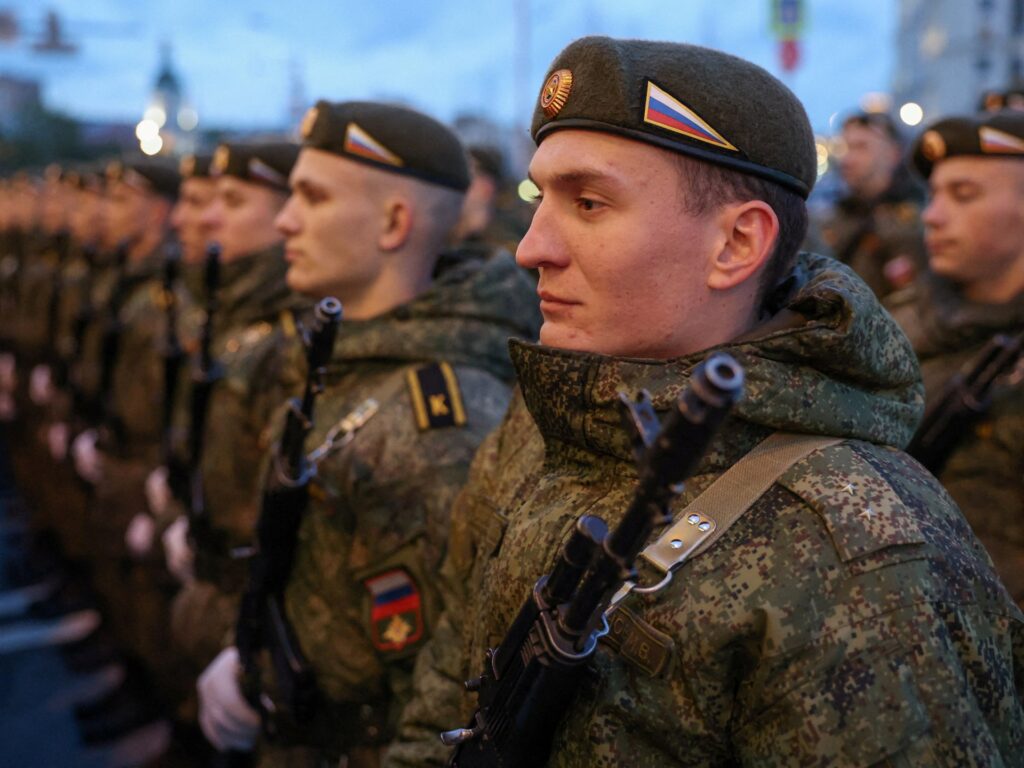
Victory Day, observed annually on May 9, holds profound significance in Russia as it commemorates the Soviet Union’s triumph over Nazi Germany in World War II. Traditionally, the day is marked with elaborate parades, military displays, and widespread celebrations across the country. However, this year, amidst the ongoing conflict in Ukraine and the unexpected challenges faced by Russian military forces, the Victory Day observance will be notably restrained.
Russian officials have announced that the usual grandiosity of the parades will be significantly reduced. This decision reflects the strategic and symbolic recalibrations in response to the military pressures and the perceived sensitivities surrounding the current geopolitical climate. Instead of showcasing a full display of military hardware and personnel, celebrations will focus more on commemorative and ceremonial aspects.
This scaling back is also seen as an acknowledgment of the intense scrutiny and tensions stemming from Russia’s military operations in Ukraine. The pared-down celebrations are likely to minimize any overt displays of strength that could be interpreted as aggression or provoke further international criticism.
Victory Day has long been a day of national pride in Russia, symbolizing resilience, sacrifice, and the collective memory of overcoming immense adversity during one of the darkest chapters in global history. The traditional parades in Moscow and other major cities usually feature tens of thousands of troops, a vast array of tanks, missiles, and aircraft, alongside veterans of the war.
This year’s modifications mark a significant shift, as the Russian leadership balances the need to honor historical legacy with the current realities of war and diplomatic isolation. Some analysts speculate that the reduction in military showcasing is partly aimed at controlling the narrative domestically, preventing potential embarrassment that could arise from military setbacks.
Public reaction within Russia is mixed. While some citizens express disappointment over the subdued festivities, others understand the need for a more cautious approach given the ongoing conflict and economic challenges. Social media buzzes with opinions, ranging from calls for maintaining tradition to appeals for focusing on peace and reflection.
Internationally, the decision to scale back the Victory Day celebrations is seen through the lens of the broader conflict and sanctions environment. Many governments view the trimmed-down event as a signal of the current strain on Russia’s military and political position.
Despite the restrictions on military displays, Russia remains committed to commemorating the sacrifices made during World War II. Special documentaries, televised ceremonies, and local events are planned to ensure the day’s significance is not lost.
In conclusion, the modest Victory Day observance in 2024 encapsulates the complex interplay of national pride, military realities, and international relations. It serves as a poignant reminder of how historic commemorations can be reshaped under the pressures of contemporary conflicts and geopolitical challenges. As Russia navigates this fraught period, Victory Day stands as both a tribute to past victories and a reflection of present trials.