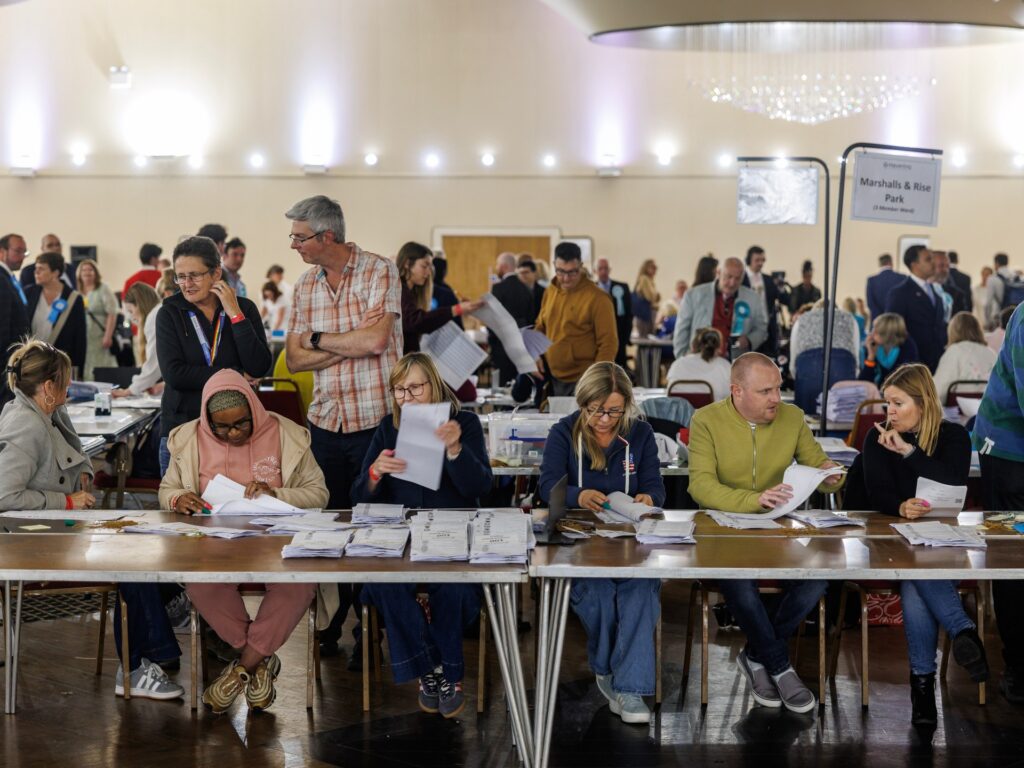
The recent UK local council elections have delivered early results that have shaken the political landscape, particularly for the ruling Labour Party. Despite Labour’s national prominence, early returns indicate losses in several key areas, sparking widespread analysis and debate on the implications for Labour leader Keir Starmer.
The elections saw notable gains for minor parties, with Reform UK and the Green Party capitalizing on voter dissatisfaction and increasing their presence in local councils across the country. These gains suggest a growing appetite among voters for alternatives to the traditional two-party dominance, reflecting shifting political dynamics at the grassroots level.
Labour’s setbacks in these local elections are significant given their role as the ruling party nationally. Early results indicate a loss of council seats, which might reflect voter unease with current government policies or dissatisfaction with Labour’s local governance performance. The losses have prompted questions about Labour’s broader electoral strategy and Starmer’s leadership effectiveness.
Reform UK, known for its conservative and anti-establishment positions, has made inroads in previously Labour-held areas, signaling a rightward shift among a segment of the electorate dissatisfied with mainstream party policies. Their gains are particularly pronounced in suburban and rural council wards, where economic and social concerns resonate strongly with Reform UK’s platform.
On the other hand, the Green Party has also increased its footprint, capitalizing on rising environmental concerns and progressive social policies. Their success underscores a growing segment of the electorate prioritizing climate action and sustainability, which could influence Labour’s policy focus moving forward.
The mixed results, with Labour struggling and smaller parties gaining, raise questions about Keir Starmer’s future as Labour leader. Some commentators and political analysts have speculated whether the electoral losses will force Starmer to reconsider his position or adjust his leadership style to reconnect with disaffected voters.
However, Labour insiders suggest it is premature to anticipate any immediate resignations. They argue that local election results often differ from national election dynamics and that Labour’s broader popularity remains intact despite local setbacks. Starmer’s supporters emphasize the need for strategic recalibration rather than a leadership overhaul.
The outcomes of these elections carry broader implications for UK politics, highlighting the volatility and fragmentation of voter preferences. The gains by Reform UK and the Greens reveal challenges for Labour in maintaining a cohesive voter base and underscore the importance of addressing constituent concerns at the local level.
As the full results come in and the picture becomes clearer, political parties will analyze the data to refine their platforms and campaign strategies. The Labour Party, in particular, faces the dual challenge of managing current losses while preparing for future national contests.
In summary, the early local election results show a Labour Party facing significant hurdles, with Reform UK and the Green Party making noteworthy advances. While these developments have prompted questions about Keir Starmer’s leadership, any decisions regarding his future will depend on continued political developments and internal party dynamics. For now, Labour’s focus will likely be on regrouping and responding to the evolving political environment to regain voter confidence in forthcoming elections.