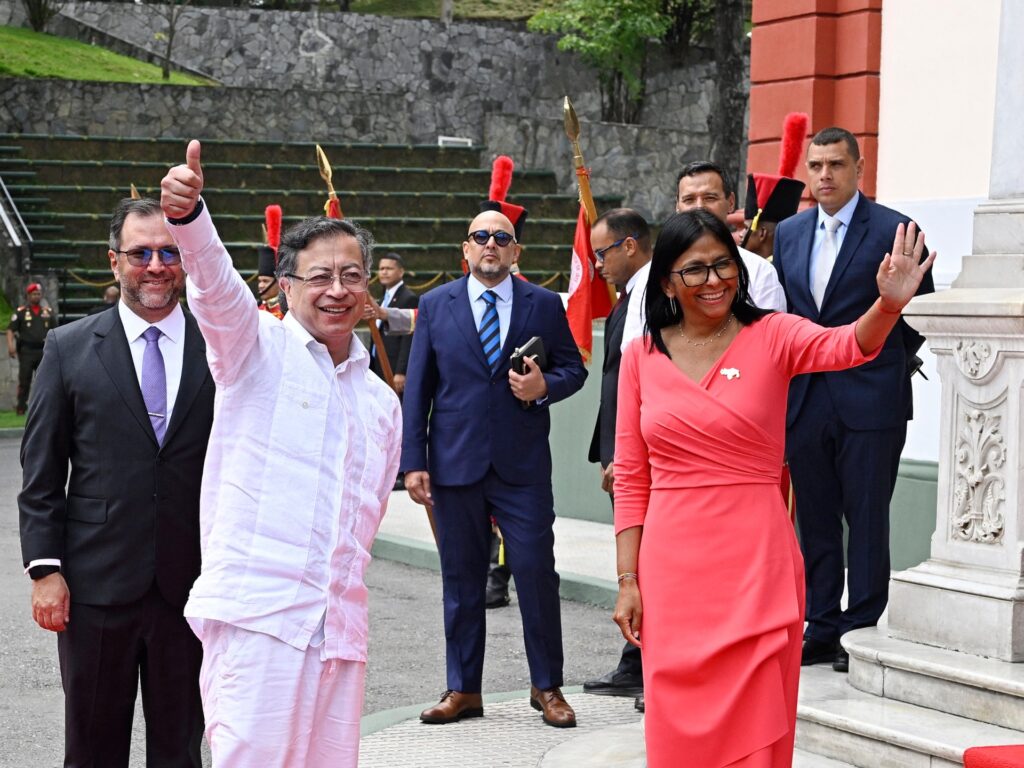
In a historic diplomatic move, Colombia’s President Gustavo Petro has become the first Colombian leader to visit Venezuela since the controversial abduction of Venezuelan opposition leader Juan Guaidó in 2023. This visit marks a significant thaw in previously strained relations between the two neighboring countries, which have long been marked by political tension, border disputes, and humanitarian challenges.
President Petro’s arrival in Venezuela is centered around addressing the pressing issues of border security, increased migration flows, and the ongoing humanitarian crisis that affects both nations. The border between Colombia and Venezuela has been a locus of conflict and instability, fueled by criminal groups, smuggling, and political unrest. Enhancing security and cooperation on this frontier is a priority for Petro’s administration.
During his trip, President Petro met with interim Venezuelan President Delcy Rodríguez, a key figure in Venezuela’s current government structure. This meeting underscores a notable diplomatic engagement, as Rodríguez has played a critical role in Venezuela’s political landscape under Nicolás Maduro’s administration.
The discussions between Petro and Rodríguez reportedly focused on several bilateral topics including border security collaboration, trade relations, and mechanisms to manage the large numbers of refugees and migrants crossing the border daily. According to sources close to the talks, both leaders emphasized the importance of dialogue and cooperation to promote stability and development in the region.
President Petro’s visit also carries symbolic weight as it contrasts sharply with the tense and hostile interactions that marked the previous decade. Colombia had been a strong critic of Maduro’s government and had supported the opposition leadership, including Juan Guaidó. However, Petro’s administration appears to be adopting a more pragmatic approach aimed at diplomacy and regional integration.
This development comes amid ongoing international debates concerning Venezuela’s political crisis and the legitimacy of its leadership. With Petro’s engagement, Colombia is signaling a potential shift toward rapprochement and peaceful resolution of disputes.
The implications of this visit extend beyond bilateral relations. Enhanced security cooperation may curb the activities of armed groups and reduce violence on the border, improving the safety of local populations. Additionally, improved relations could facilitate humanitarian access and economic exchange, contributing to stability and prosperity in the border regions.
Experts suggest that Petro’s strategy might influence other Latin American countries in how they manage relations with Venezuela. If successful, this approach could pave the way for wider regional cooperation.
While significant challenges remain, including deep-rooted political divisions and economic difficulties, this pioneering visit by President Petro represents a hopeful step towards restoring trust and cooperation between Colombia and Venezuela.
As the international community watches closely, the success of Petro’s diplomacy may have lasting effects on peace and security in South America, signaling a new chapter for two countries with intertwined histories and futures.