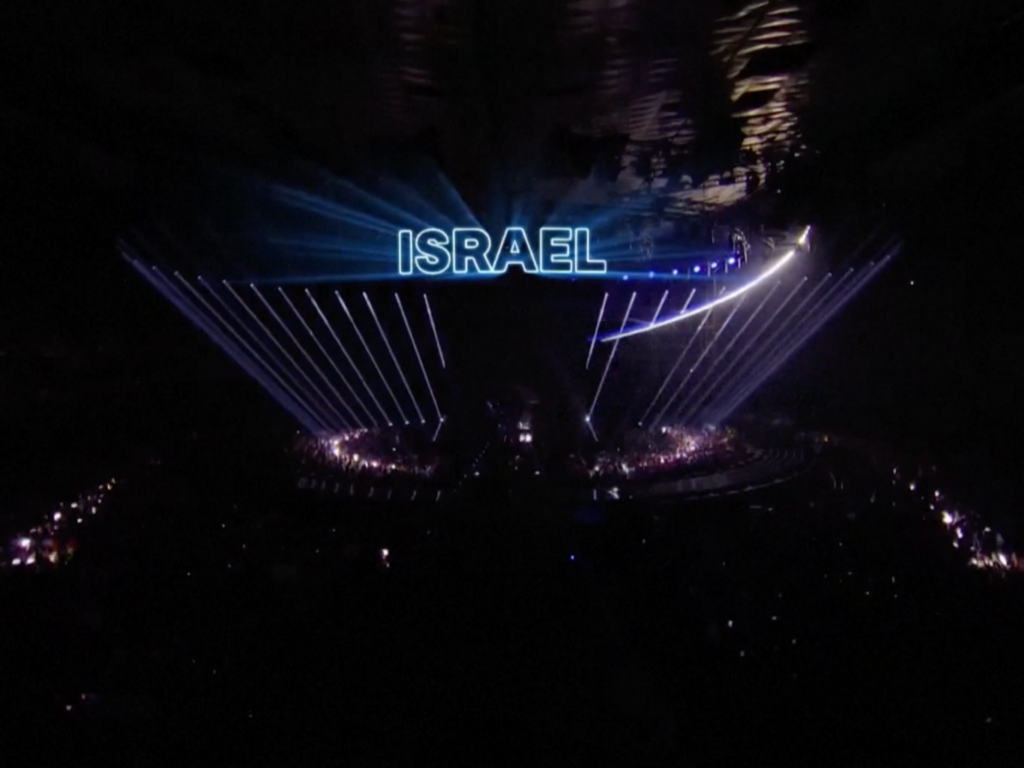
During the Vienna semi-final of the Eurovision Song Contest, Israel’s performance was notably interrupted by loud pro-Palestine chants from the audience. This unexpected disruption cast a shadow over the event, highlighting the ongoing political tensions surrounding the Israeli-Palestinian conflict even within international entertainment stages. The incident occurred as Israel’s representative took the stage, with protestors vocalizing their support for Palestine, demonstrating the intersection of politics and cultural events. Eurovision, known for celebrating diversity and unity through music, faced the challenge of managing such political expressions within its framework. Security personnel were reportedly tasked with addressing the disturbances, while the show’s organizers emphasized their commitment to keeping the contest a platform for entertainment, not political demonstrations. Despite the disruptions, the Israeli performer continued their act, attempting to maintain the spirit of competition and artistic expression. The pro-Palestine chants underscored how deeply international conflicts can permeate global events, prompting discussions on the role of politics in entertainment spheres. This event echoes previous occasions where Eurovision performances have been affected by political protests, reaffirming the contest’s status as more than just a musical competition but also a stage where geopolitical issues surface. Analysts suggest that such incidents could influence future protocols around participant security and audience conduct at international events. Fans and participants voiced mixed reactions, with some condemning the disruption as inappropriate for a music contest, while others supported the right to peaceful protest, reflecting the complex sentiments surrounding the Israeli-Palestinian situation. The Eurovision broadcasting network and event organizers are expected to review the incident to improve management of similar occurrences in future editions. As the competition progresses, the intersection of politics and entertainment at Eurovision remains a contentious yet undeniable aspect, illustrating the contest’s significance beyond music. This disturbance has reignited debates on how cultural platforms can remain neutral spaces amidst global conflicts, challenging the event’s organizers to balance freedom of expression with respect for participants and audience diversity. The Vienna semi-final incident thus exemplifies the persistent impact of international disputes on cultural and entertainment events, prompting ongoing dialogue on the responsibilities and limits of such platforms in politically charged contexts.