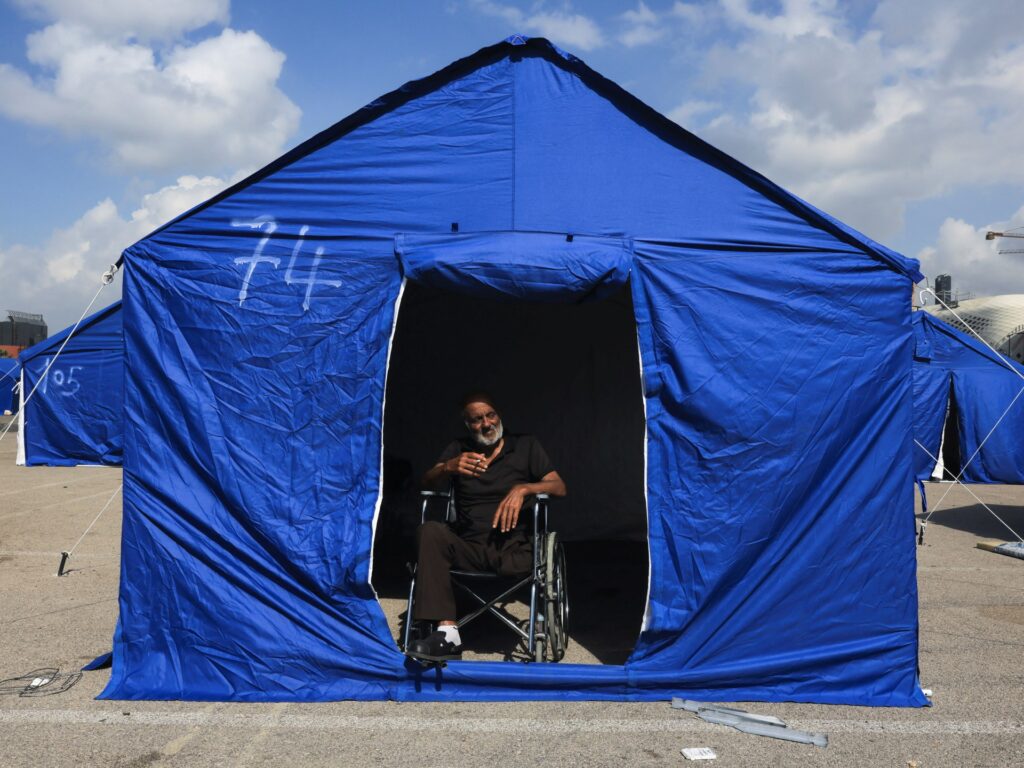
Mohamad Saaydoun, a Lebanese amputee displaced by the recent Israel-Hezbollah war, is currently living in a makeshift camp, struggling with the harsh realities of displacement and disability. The conflict, which has uprooted many families and devastated communities, has left Saaydoun and others like him in a precarious situation.
Saaydoun’s story is a poignant reminder of the human cost of war. Having lost a limb during the hostilities, he now faces not only the physical challenges of amputation but also the insecurity and instability that come with displacement. ‘‘Where am I supposed to go?’’ he asks, capturing the uncertainty and despair felt by many displaced persons.
The makeshift camp where Saaydoun resides lacks adequate medical facilities and essential services, complicating his recovery and daily life. Aid organizations are struggling to keep up with the growing needs, and many displaced individuals like Saaydoun are falling through the cracks.
This situation underscores the urgent need for comprehensive humanitarian assistance in the region. Authorities and international agencies are called upon to provide shelters, medical care, and social support to displaced persons, especially vulnerable groups such as amputees.
The conflict has not only destroyed homes and livelihoods but has also created a long-term challenge for rehabilitation and reintegration into society. Disabled displaced persons require specialized attention and resources to rebuild their lives.
Mohamad Saaydoun’s plea is a stark illustration of the broader crisis affecting Lebanon’s displaced populations. His vulnerability highlights the intersection of war, disability, and displacement, demanding a coordinated response.
The international community, including humanitarian organizations and governments, must prioritize the protection and assistance of disabled displaced persons. Strategies should include accessible healthcare, psychological support, and pathways to sustainable housing and employment.
Moreover, efforts to mediate peace and prevent further conflict remain crucial in addressing the root causes of displacement. Without stability, the cycle of suffering for individuals like Saaydoun will continue.
In conclusion, the story of Mohamad Saaydoun is a call to action to address the multifaceted challenges faced by displaced Lebanese amputees. Providing immediate relief as well as long-term solutions is imperative to restore dignity and hope to those affected by the ongoing conflict.