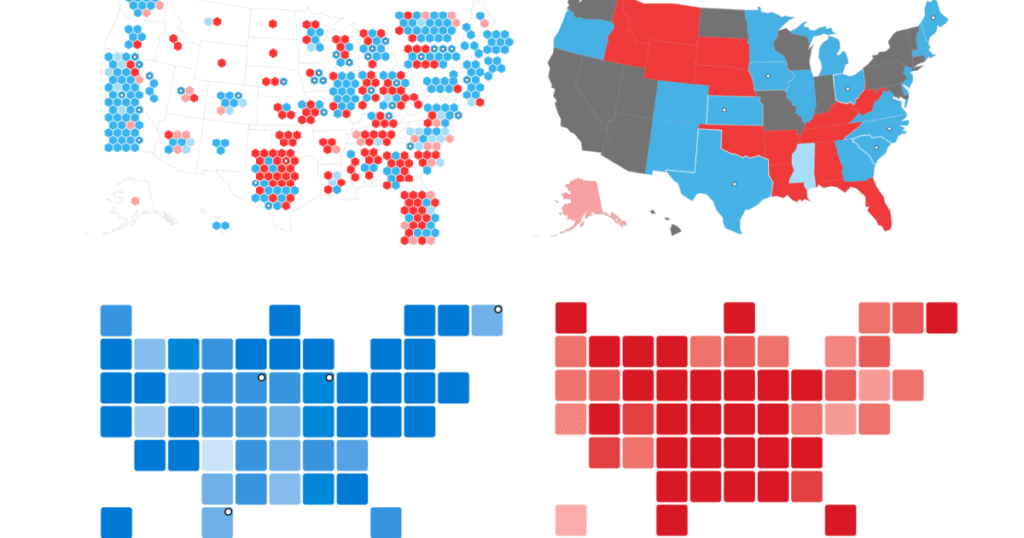
The 2026 US midterm elections have reshaped the political landscape, turning the map predominantly blue and marking significant historical milestones. This article delves into who voted, the key seat flips, and the individuals who made history during this pivotal electoral event.
Voter Turnout and Demographics:
The 2026 midterms saw an unprecedented voter turnout, with a significant increase in younger voters aged 18-29 and minority groups. This demographic shift played a critical role in the Democratic Party’s success. Suburban voters, who had shown wavering support in previous elections, largely swung towards Democratic candidates, influenced by economic and social issues.
Key State Outcomes:
Several traditionally Republican-leaning states experienced surprising shifts. States like Arizona, Georgia, and Texas flipped Democratic, contributing to the party’s expanded control in both the House of Representatives and the Senate. These flips were driven by changing demographics, targeted campaigning, and local issues resonating with voters.
Historic Seat Flips:
Numerous battleground districts flipped blue, some for the first time in decades. Notably, the 5th Congressional District of Texas and the 7th District of Wisconsin were among the seats that changed hands, signaling a broader trend of changing political loyalties in suburban America.
Notable Political Figures:
Several candidates broke barriers and made history. Among them was the first Native American woman elected to the Senate and a record number of young women entering Congress. Their victories not only diversified the political representation but also energized the party’s base for future elections.
Impact on Governance:
With increased Democratic control, the legislative agenda is anticipated to shift towards progressive policies focusing on healthcare, climate change, and social justice. The results have also set the stage for the 2028 presidential election, highlighting emerging leaders and shifting political dynamics.
Conclusion:
The 2026 midterm elections were a transformative event in American politics. The widespread blue wave, driven by diverse voter turnout and significant seat flips, indicates a changing electorate and a new direction for US governance. As the nation moves forward, the impact of these elections will resonate in policy making and political strategies for years to come.