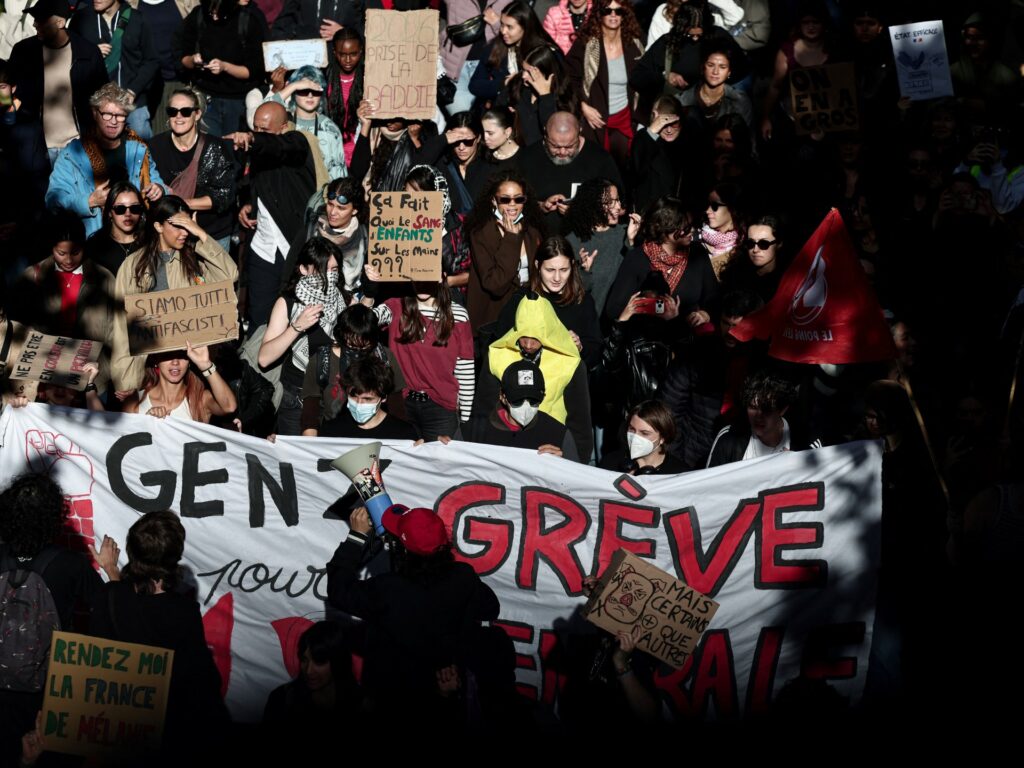
France is witnessing a widespread and powerful workers’ strike that has brought hundreds of thousands of people out onto the streets to protest. The demonstrators are unified in their demand for an increase in the minimum wage, calling for better wages not just for minimum wage workers but for all employees across the country. This significant labor action reflects deep-seated frustrations among workers regarding income inequality and the rising cost of living.
The strike is one of the largest coordinated actions seen in France in recent years, with labor unions playing a pivotal role in mobilizing workers from various sectors including construction, transportation, education, health, and public services. Protesters are not only calling for higher pay but also other important labor reforms that they believe are necessary to improve working conditions and economic fairness.
Among the reforms requested by demonstrators are enhanced worker protections, clearer regulations around work hours, better pension schemes, and improved healthcare benefits. The widespread nature of the strike indicates the growing discontent with the current economic policies and the government’s approach to labor rights.
Trade unions have emphasized that the strike is peaceful, focusing on raising awareness and pressing the government to take meaningful action. Authorities have responded by ensuring public safety and attempting to keep essential services operational, although some disruptions have occurred.
The French government faces increasing pressure to engage with union leaders and find a solution that balances economic sustainability with the demands of the workforce. The protests also reflect broader global trends where workers are advocating for fair wages amidst inflation and economic uncertainty.
Economists suggest that the strike highlights structural challenges faced by the French labor market, including wage stagnation and a decline in purchasing power for many workers. The upcoming negotiations between the government, employers, and unions will be pivotal in determining the future direction of labor policies in France.
Public opinion in France appears to be largely sympathetic to the striking workers, recognizing their grievances as valid given the economic hardships many families are experiencing. The strike has sparked debates on social media and public forums about income inequality and the role of government in protecting worker rights.
This national movement has also inspired solidarity actions in other countries, as labor groups observe France’s stance and consider similar demands in their own regions. The ongoing situation remains fluid, with further demonstrations expected in the coming weeks as workers continue to push for significant wage increases and reforms.
In conclusion, the massive workers’ strike across France is a defining moment in the country’s labor history, showcasing the determination of the workforce to secure better financial and social conditions. The outcome of these protests and negotiations will likely have lasting impacts on French society and may serve as a benchmark for labor movements worldwide.