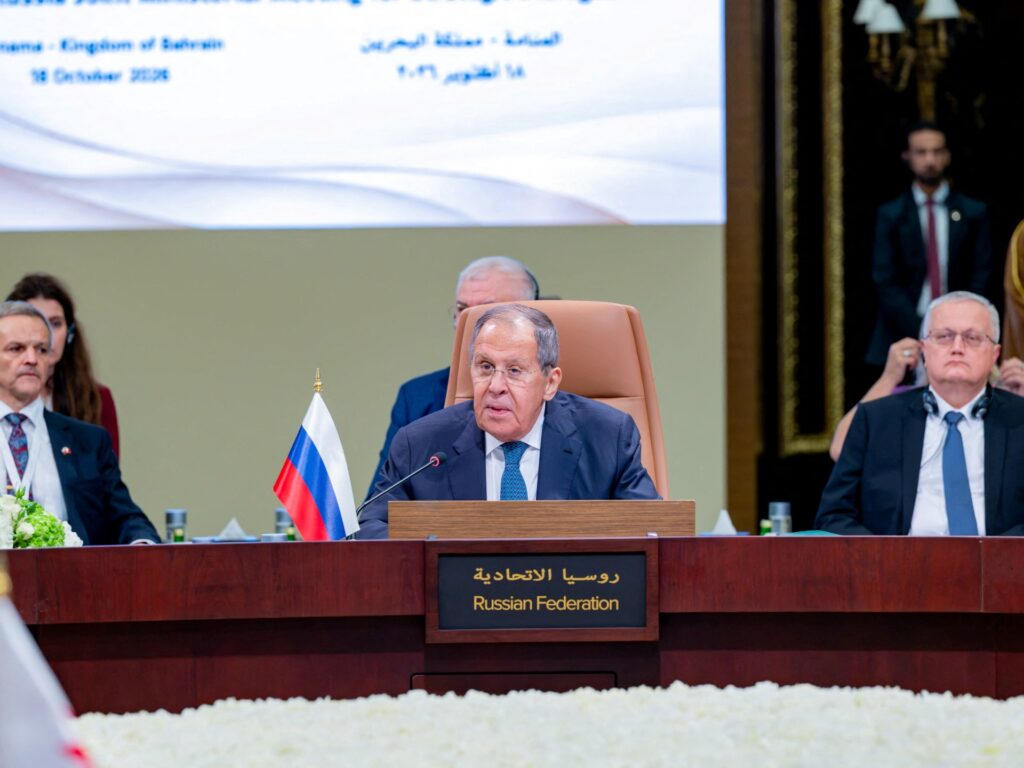
During a recent diplomatic visit to Tehran, Russian Foreign Minister Sergey Lavrov engaged in high-level discussions focusing on the ongoing conflict involving the United States and the broader regional security situation in the Middle East. The visit underscores the pivotal role Russia continues to play in Middle Eastern geopolitics, particularly in relation to tensions exacerbated by US military actions in the region.
Lavrov’s talks in Tehran highlighted critical concerns raised by Gulf Cooperation Council (GCC) states, who have actively sought Moscow’s assistance in curbing Iranian hostilities that have destabilized the Persian Gulf area. A central issue driving these discussions is the security of the Strait of Hormuz, a crucial maritime chokepoint through which a significant portion of the world’s oil supply passes. The GCC has pressed Russia to leverage its influence to halt Iranian attacks and facilitate the reopening of safe and secure navigation routes in the strait.
The engagement between Russia and Iran during this period points to a complex web of alliances and strategic interests that shape the current state of affairs in the Middle East. Russia’s involvement is seen as a counterbalance to US influence and aims to bolster regional stability while promoting its own geopolitical and economic objectives.
Moreover, Lavrov’s diplomatic effort seeks to reinforce Russia’s position as a key mediator in conflicts involving Iran, the Gulf states, and the broader international community. Moscow’s role in negotiating security arrangements and addressing the threats posed by militant activities and sanctions-related pressures forms a cornerstone of its foreign policy agenda in the region.
The discussions also touched on the broader implications for global energy markets, as disruptions in the Strait of Hormuz can have far-reaching effects on oil prices and international trade. Stability in the Persian Gulf is thus not only a regional imperative but a global economic concern.
In conclusion, Sergey Lavrov’s visit to Tehran marks a significant diplomatic endeavor by Russia to address critical security challenges in the Middle East. By engaging with Iranian officials and responding to the concerns of the GCC states, Russia positions itself as a pivotal actor striving to mitigate conflict, ensure the security of vital maritime routes, and promote a balance of power in the region amid ongoing US military involvement.