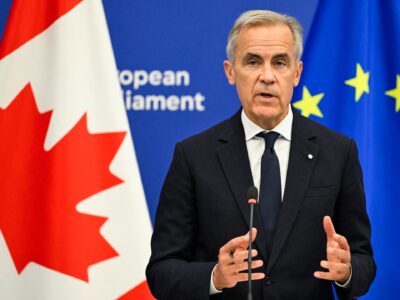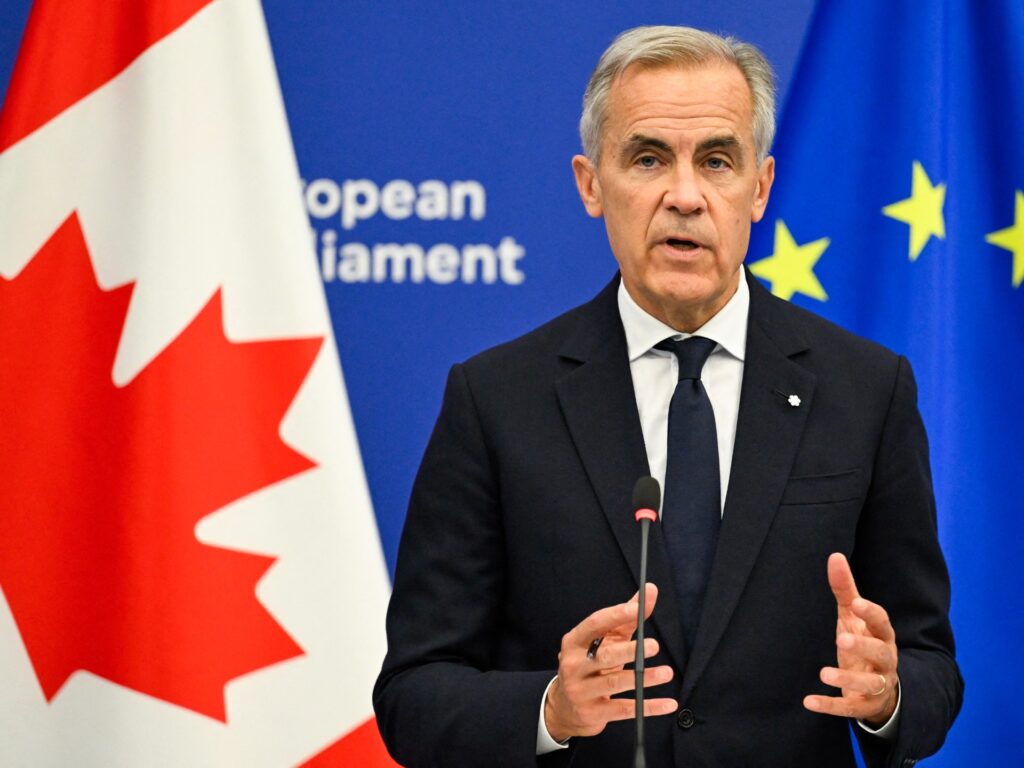
In a significant address to the European Parliament, Canadian Prime Minister Mark Carney expressed his enthusiastic support for the European Union’s proposal of an associated membership status for Canada. This initiative aims to deepen the cooperation between Canada and the EU, fostering stronger political and economic ties.
Carney, speaking in front of EU lawmakers, outlined several key areas where Canada seeks to enhance collaboration with European countries. These include trade, innovation, environmental policy, and security. By aligning these efforts, both Canada and the EU aim to create a partnership that is more resilient and adaptive to the challenges of the 21st century.
The Prime Minister emphasized that the world faces unprecedented challenges, such as climate change, economic instability, and geopolitical tensions, which require close cooperation among like-minded nations. He pointed out that Canada’s associated membership would allow more seamless interaction in these fields while respecting the sovereignty and individual policy frameworks of each member.
One of the main highlights was the emphasis on trade relations, with Carney recognizing the EU as one of Canada’s principal trading partners. Strengthening trade ties would not only benefit businesses and workers on both sides but also promote sustainable economic growth through shared standards and mutual market access.
Innovation and scientific research were also identified as crucial areas for collaboration. Carney mentioned that increased cooperation could lead to breakthroughs in technology, healthcare, and clean energy—sectors vital for future economic competitiveness and environmental stewardship.
In terms of environmental policies, Canada is eager to work with the EU on climate action and sustainability initiatives. The Prime Minister highlighted both parties’ commitment to the Paris Agreement and the importance of joint efforts to reduce carbon emissions and promote green technologies.
Security cooperation was addressed as another essential pillar, particularly in combating terrorism, cyber threats, and organized crime. Carney suggested that deeper collaboration would enhance mutual safety and security while maintaining democratic values and human rights.
Carney’s address was well-received by members of the European Parliament, signaling a positive outlook for the proposed associated membership. This development represents a new chapter in Canada-EU relations, promising more integrated policies and joint initiatives.
The proposal for associated membership is designed as a flexible framework allowing Canada to participate in selected EU programs and policies without full membership obligations. This arrangement is expected to provide mutual benefits while preserving Canada’s autonomy.
This initiative is part of Canada’s broader strategy to diversify its international partnerships and fortify its position in the global arena. The associated membership would position Canada closer to European decision-making processes, enabling it to contribute to and benefit from collective efforts more effectively.
Overall, Mark Carney’s endorsement of the EU’s association proposal marks a pivotal moment, emphasizing the importance of transatlantic collaboration in addressing global challenges and building prosperous futures for both communities.