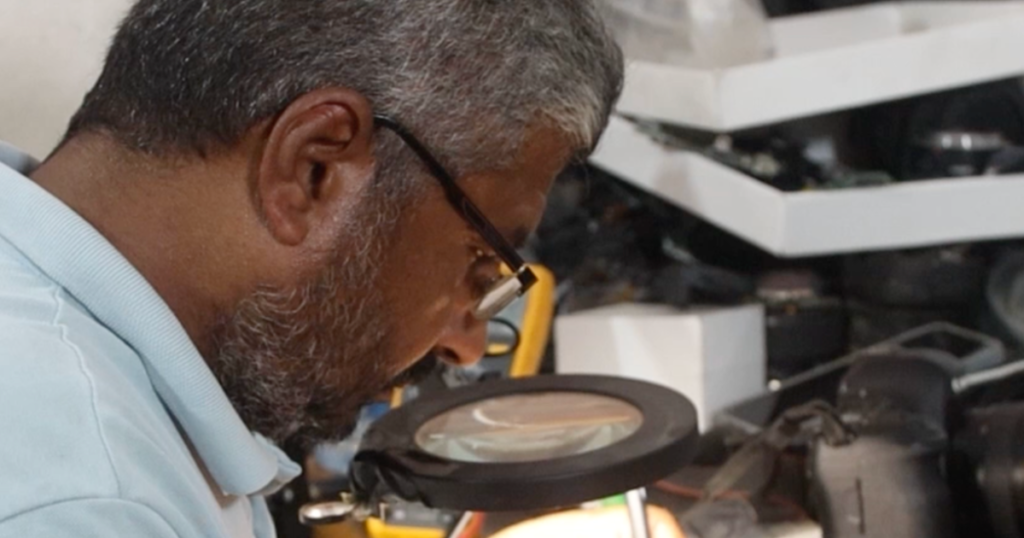
In the midst of the ongoing conflict in Gaza, the role of journalists documenting the war is indispensable. Their courage and determination help bring the realities of the situation to the world. Yet, as these journalists face numerous challenges on the ground, their equipment often suffers damage from the harsh conditions. This is where Mohammed Radwan, a skilled camera repairman, emerges as an unexpected but vital figure in the conflict. Radwan’s expertise keeps damaged cameras and other gear operational, ensuring that the journalists can continue their critical work without interruption.
Mohammed Radwan has become known among journalist circles in Gaza for his dedication and technical skills. Despite the dangers and difficulties posed by the conflict, Radwan has set up a repair workshop in a modest location, where he meticulously fixes cameras, lenses, and other media equipment. Journalists often arrive battered but relieved to find someone who can restore their essential tools under such challenging conditions.
The war has caused substantial damage to electronic equipment due to exposure to dust, debris, and continuous usage under pressure. Cameras smashed by explosions or damaged by frequent travel in unstable conditions risk stopping the flow of real-time news. Radwan’s tireless work means these devices are quickly brought back to life, reducing downtime and enabling reporters to capture and transmit vital footage and images from the conflict zone.
Radwan’s involvement goes beyond mere repairs; he imbues journalists with hope and resilience. When equipment breaks in the field, it is not just the machinery but the morale that is affected. Having a reliable technician close by gives journalists confidence to keep going. This contribution underlines the unseen struggles and cooperation required behind the scenes to sustain war reporting.
His workshop is described as a hub of creative problem-solving and solidarity amidst adversity. The repairman often uses spare parts scavenged from broken units, adapting and innovating with whatever is available. This resourcefulness highlights the determination of both Radwan and the journalists to document the war’s impact despite overwhelming obstacles.
Moreover, the work Radwan performs carries symbolic weight—helping to preserve the truth amid destruction. In a conflict fraught with misinformation and propaganda, journalists rely on their gear to bear witness to the human cost and realities on the ground. Radwan’s repairs ensure that these tools remain functional to record history as it unfolds.
His efforts have also drawn attention beyond Gaza, with international media and humanitarian organizations recognizing the critical role technical support plays in conflict zones. Providing equipment maintenance is now seen as essential for frontline journalism, where reliable recording devices can make the difference between exposure and silence.
Mohammed Radwan’s story is a reminder of the many unsung heroes in war zones who contribute to the work of bearing witness to atrocities. While journalists take headlines, professionals like Radwan work quietly but indispensably to keep the documentation alive. Their combined perseverance strengthens the global understanding of the conflict and honors the memory of those affected.
In conclusion, the war in Gaza has challenged journalists in unimaginable ways, and Mohammed Radwan’s contribution as a camera repairman is proving vital to their mission. By maintaining damaged equipment amid conflict, he enables the continuous flow of crucial news coverage in a time when the world needs it most. His dedication exemplifies the courage and collaboration behind the scenes of war journalism, highlighting that even small acts of repair can help uphold the truth in times of crisis.