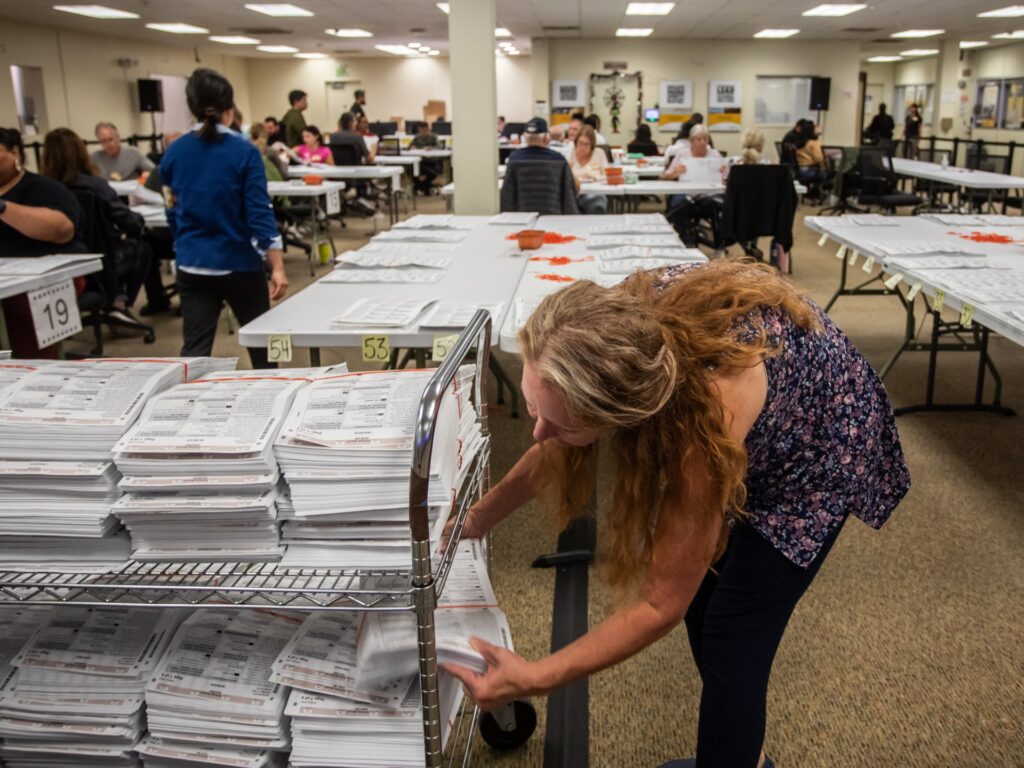
In a controversial move leading up to the midterm elections, former President Donald Trump has petitioned the Supreme Court to block 20,000 ballots in California. These ballots are allegedly linked to suspected noncitizens, raising concerns about voter eligibility and election integrity.
Trump and his legal team argue that the inclusion of these ballots could potentially affect the outcome of the midterm elections, emphasizing the need for stricter scrutiny of voter registrations and ballots cast. They maintain that preventing ineligible votes is crucial to safeguarding the democratic process.
However, California officials have pushed back strongly against this request. They warn that any action to block these ballots could disenfranchise thousands of eligible voters. According to the state, allegations against these voters have not been definitively proven, and the risk of denying legitimate citizens their right to vote is a serious concern.
The clash highlights the broader national debate over voting rights and election security. Supporters of Trump’s request claim it is a necessary step to prevent voter fraud, while opponents see it as an attempt to suppress voting, particularly among minority and immigrant communities.
Election experts note that investigations into voter eligibility must balance the prevention of fraud with the protection of voter access. Historically, cases involving voter roll purges and ballot challenges have resulted in mixed outcomes, with courts often cautious about disenfranchisement risks.
California officials have announced plans to vigorously defend the rights of all eligible voters and ensure that ballots are counted accurately and fairly. They emphasize that the state has robust verification processes in place and is committed to transparent election procedures.
The Supreme Court’s decision on this matter could have significant implications for the midterm elections and future voting policies nationwide. It brings to light the ongoing challenges in maintaining election integrity while upholding democratic principles of inclusion and participation.
As the legal battle unfolds, voters and political observers across the country are closely watching for outcomes that could shape election laws and voter rights protections in the years ahead. This case serves as a critical example of the tensions between election security efforts and the imperative to protect every citizen’s right to vote. The midterm elections thus stand at a crossroads of democracy, where legal interpretations and political pressures intersect.