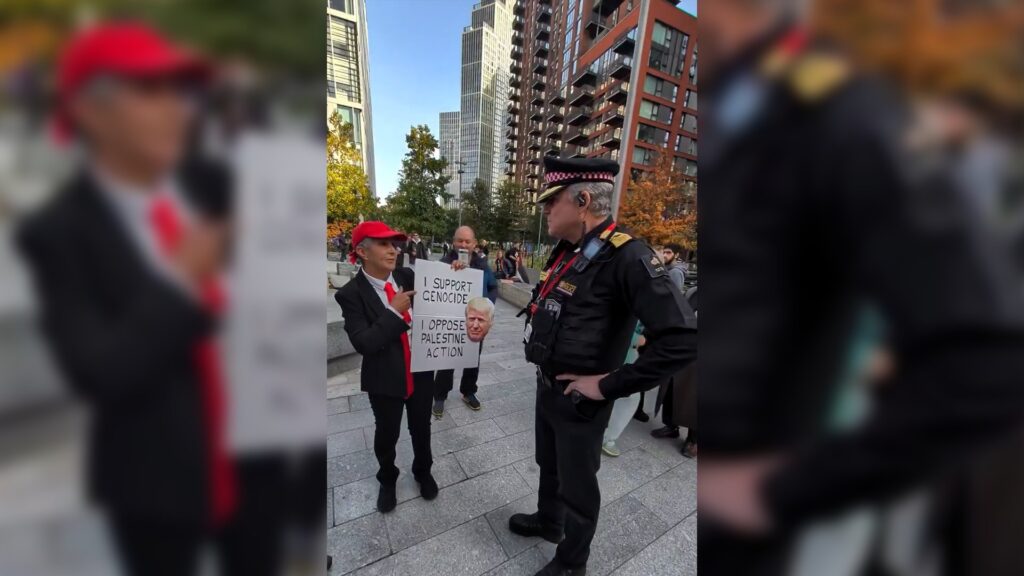
A recent protest in the UK sparked controversy when a demonstrator held up a sign that read, ‘I support genocide.’ Despite the alarming and provocative nature of this message, police officials have stated that the sign alone does not justify arrest or any immediate legal action under UK law.
The incident raised significant public debate regarding freedom of speech versus hate speech legislation. UK law protects freedom of expression; however, this right is balanced against provisions preventing incitement to violence or hatred.
Legal experts explained that simply supporting genocide in a sign, while offensive and disturbing to many, does not necessarily meet the threshold for criminal behavior unless it incites imminent violence or hatred towards a particular group.
According to UK regulations, police intervention typically requires an action to provoke or encourage violence or hatred actively. Without explicit incitement or evidence of intent to commit hatred crimes, carrying a sign with such wording is protected by free speech laws.
Human rights advocates voiced concerns about the implications, suggesting that allowing such messages in public spaces may embolden extremist views and encourage harmful ideologies.
At the same time, some argue that criminalizing expressions of extreme views, even when offensive, risks undermining democratic values and could set a precedent curtailing free speech rights broadly.
The police have maintained a stance of upholding free expression while monitoring the situation closely to ensure no breach of public order or safety.
This incident has sparked widespread discussions about where the legal line lies between protecting freedom of speech and preventing hate speech or incitement.
Community leaders and activists urge a careful approach that addresses hate speech through education and civic dialogue rather than solely relying on legal sanctions.
In summary, the protester’s sign, despite its deeply troubling message, does not currently invoke police arrest under existing laws. This situation highlights the complex challenges in balancing rights and protections in a democratic society faced with controversial and extremist expressions. The debate continues as society seeks to define acceptable limits of free speech while ensuring community safety and respect for all individuals.