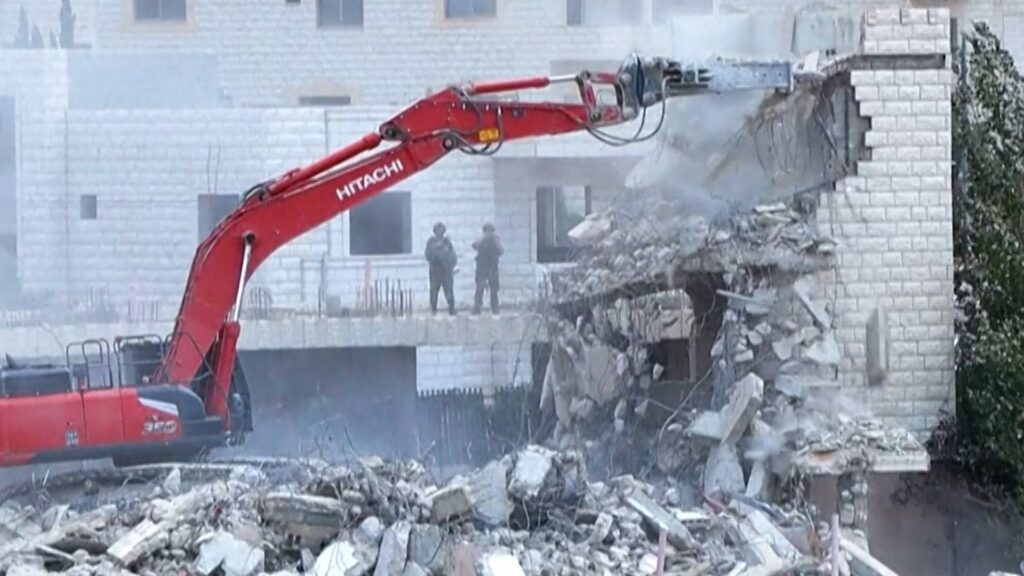
The ongoing conflict in the West Bank has seen a significant escalation, with Israeli forces demolishing Palestinian homes while settler activity leads to the expansion of Israeli outposts. Recently, in the city of Nablus, Israeli forces carried out demolitions of Palestinian homes, a move that has sparked outrage among Palestinian communities and international observers alike. This operation is part of a wider pattern of demolitions that Palestinians say are aimed at displacing communities and undermining their presence in areas the Israeli government considers strategically important.
At the same time, in Hebron, Israeli settlers have been actively clearing land to establish a new outpost. This development is particularly contentious as it not only involves the expansion of settlements but also encroaches on Palestinian-owned land. The settlers’ actions have been met with concern and condemnation by Palestinians who see these outposts as illegal under international law and as obstacles to peace efforts in the region.
The demolition of homes in Nablus and the clearing of land in Hebron underscore the complexity and volatility of the situation on the ground. These actions highlight the broader issues at play, including disputes over land ownership, security concerns, and the broader Israeli-Palestinian conflict.
Palestinian residents affected by the demolitions have spoken out about the profound impact on their lives, citing the loss of homes and the disruption to their communities. Humanitarian organizations have called for greater protections for Palestinian civilians and an end to the demolitions, emphasizing the need for a just and lasting resolution to the conflict.
In Hebron, the establishment of new outposts raises fears of further displacement and increased tension between the two communities. The outposts often become points of conflict, with clashes between settlers and Palestinians reported regularly.
Internationally, the expansion of Israeli outposts and the demolition of Palestinian homes have drawn criticism from the United Nations and various human rights organizations. They argue that these actions undermine the prospects for peace and violate international laws regarding occupation and settlement activity.
The Israeli government, on the other hand, often cites security concerns and legal justifications for its actions. It argues that some demolitions are necessary to prevent illegal construction and that settlers are exercising their rights on disputed land.
The situation remains fluid and deeply contentious, with both sides entrenched in their positions. The international community continues to call for dialogue and restraint to prevent further escalation.
As Israeli outposts continue to expand and Palestinian homes face demolition, the lives and futures of many individuals hang in the balance. The need for renewed peace efforts and a comprehensive solution to the Israeli-Palestinian conflict is more urgent than ever.
This recent episode serves as a grim reminder of the challenges facing the region and the difficulties in achieving lasting peace amidst ongoing disputes over land and sovereignty.