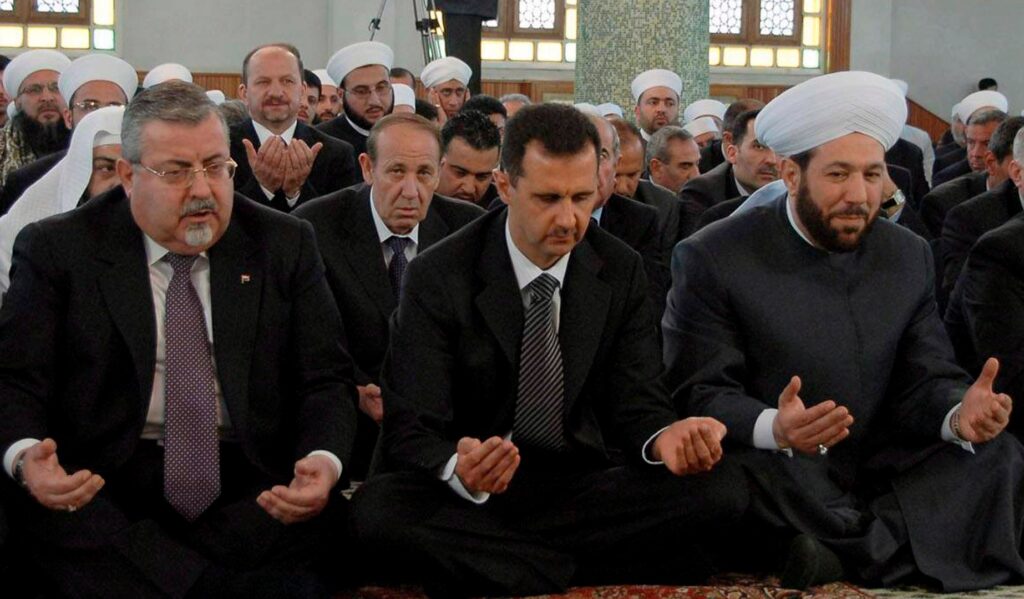
Ahmad Hassoun, the controversial religious figure often dubbed the ‘Barrel Bomb Mufti,’ has been handed a life sentence following a trial in Syria. Hassoun faced multiple serious charges, including inciting violence and legitimizing the al-Assad regime, which has been embroiled in a brutal conflict for over a decade.
The trial marks a significant development in Syria’s ongoing struggle to deal with figures seen as supporters or enablers of the Assad government’s violent tactics. Ahmad Hassoun, known for his clerical authority and vocal backing of the regime, has long been a polarizing figure both within Syria and internationally.
Prosecutors accused Hassoun of using his religious influence to justify and promote the use of barrel bombs—a form of crude explosive device reportedly dropped by Assad regime forces, causing devastating civilian casualties. His rhetoric allegedly incited violence and created an environment that facilitated continued conflict and repression.
The court’s decision to impose a life sentence reflects the gravity of the charges and the growing intolerance toward individuals perceived as responsible for fueling the conflict. Supporters of the regime have often viewed Hassoun as a critical ally who reinforced the government’s position through religious authority, while opponents condemned him for enabling brutality and oppression.
Human rights organizations have historically criticized the use of barrel bombs, which are known for their indiscriminate and destructive nature. The association of a prominent religious figure like Hassoun with the justification of such weapons underscores the complex intersections of religion and politics in Syria’s civil war.
The verdict serves as both a symbolic and practical stance against those who contribute to ongoing violence and undermine prospects for peace in the war-torn nation. It also signals possible accountability measures against other figures involved in supporting or facilitating the Assad regime’s military strategies.
Experts note that the trial and sentencing may influence how religious authority is perceived and exercised in Syria’s future political landscape. The role of clerics in legitimizing political power is a sensitive issue, and this case exemplifies the challenges in disentangling religion from state affairs in conflict zones.
For the families affected by the conflict and victims of barrel bomb attacks, the sentence carries a message of acknowledgment and justice, albeit amid continuing instability. The Syrian conflict has resulted in hundreds of thousands of deaths and displaced millions, with airstrikes and barrel bombs contributing to the high civilian toll.
The international community has reacted with cautious attention to the verdict. Many countries and organizations advocate for broader reconciliation efforts and legal processes to address war crimes and human rights abuses committed during the civil war.
As Syria remains divided, the trial of Ahmad Hassoun and its outcome reflect ongoing attempts to confront the legacy of violence and impede figures who perpetuate conflict. However, challenges persist in achieving lasting peace and rebuilding trust among Syria’s diverse communities.
In summary, the life sentence handed to Ahmad Hassoun underscores a pivotal moment in Syria’s efforts to hold influential figures accountable for their roles in the civil war’s violence. The case illuminates the complex interplay of religion, politics, and warfare that has shaped Syria’s recent history and continues to influence its uncertain future.