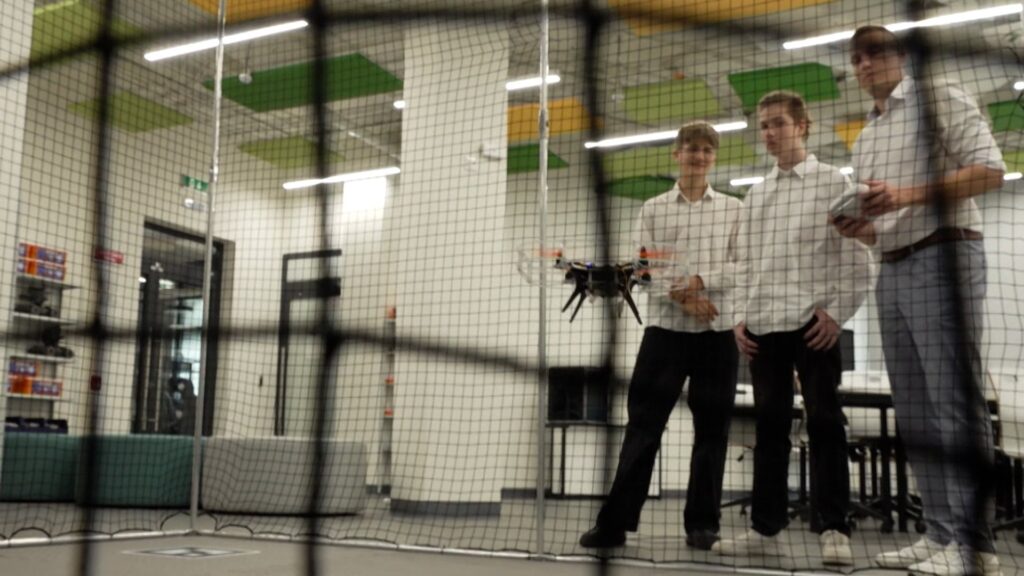
In a significant move to modernize its education system, Russia has introduced drone classes in public schools across the country. This initiative is part of broader changes to the national curriculum aimed at equipping students with practical skills in emerging technologies. Through these new classes, students learn to assemble and fly drones, gaining hands-on experience in drone technology and aerodynamics.
The introduction of drone education reflects a growing global trend towards incorporating STEM (Science, Technology, Engineering, and Mathematics) subjects into school programs to prepare students for future careers in technology and engineering sectors. In Russia, the government sees this as a way to foster innovation and technological proficiency from an early age.
These classes not only cover the technical aspects of drone operation but also emphasize safety and regulatory compliance, ensuring that students understand the legal responsibilities associated with flying drones. Teachers receive specialized training to effectively deliver the new curriculum, which includes both theoretical knowledge and practical exercises.
Parents and educators have welcomed the initiative, recognizing the importance of adapting education to the demands of the modern world. By learning how to assemble drones, students enhance their problem-solving skills, teamwork, and creativity. Flying drones also inspires interest in aerospace and robotics, fields that are experiencing rapid growth internationally.
The implementation process began in select schools as a pilot program and has now expanded nationwide due to positive feedback. Authorities report that students show high engagement levels and enthusiasm for the hands-on approach to learning.
Critics of the program caution about the need for strict oversight to prevent misuse of drones and emphasize that technology education should be balanced with traditional subjects. However, proponents argue that integrating drone education with broader curricula prepares students for a future where technology plays an increasingly central role in society and the economy.
Overall, Russia’s introduction of drone classes in public schools represents a forward-thinking approach to education reform. It aligns with global trends in teaching advanced technology skills and aims to nurture a new generation capable of contributing to the country’s technological advancements and economic development.