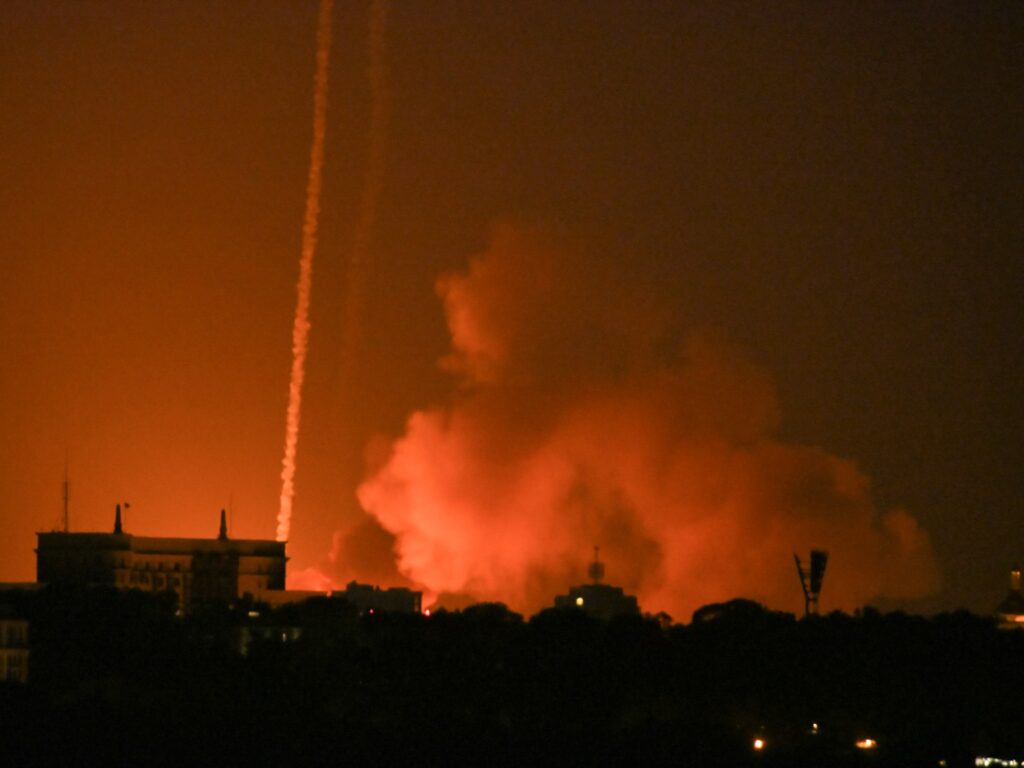
A devastating Russian missile barrage has struck Kyiv, the capital city of Ukraine, killing at least 13 people and causing extensive damage. The attacks targeted multiple districts, with ballistic missiles hitting at least three distinct areas within the city.
The missile strikes led to the collapse of several buildings and triggered a series of fires across the affected neighborhoods. Emergency services rushed to the scene to conduct rescue operations and provide aid to the injured. Authorities are currently assessing the extent of the destruction and the number of casualties.
This barrage marks one of the deadliest assaults on Kyiv in recent weeks, intensifying fears and uncertainties among the city’s residents. The missiles’ impact on infrastructure has disrupted daily life, with significant damage to residential buildings and critical services.
Officials condemned the attacks as acts of aggression against civilian populations and vowed to continue defending the city. International responses have also emerged, with many countries expressing solidarity with Ukraine and calling for an immediate cessation of hostilities.
The Ukrainian government has reiterated its commitment to safeguarding its citizens and infrastructure despite the relentless assaults. Rescue operations are ongoing, with teams working tirelessly to locate survivors trapped under rubble.
This missile attack underlines the escalating conflict and the grave humanitarian consequences faced by civilians in war zones. The international community continues to monitor the situation closely, advocating for diplomatic solutions and humanitarian aid.
As Kyiv grapples with the aftermath of the missile barrage, the resilience of its people remains evident, even amid the ongoing conflict and devastation. Recovery and rebuilding efforts are being planned to restore the affected districts once the security situation permits.
This tragic incident serves as a stark reminder of the dangers civilians face in conflict zones and the urgent need for peaceful resolutions to prevent further loss of life and destruction.