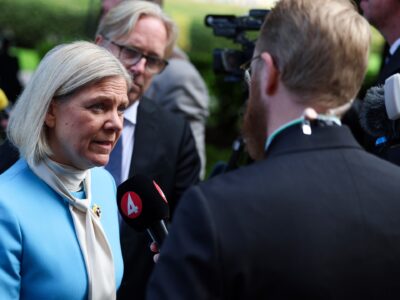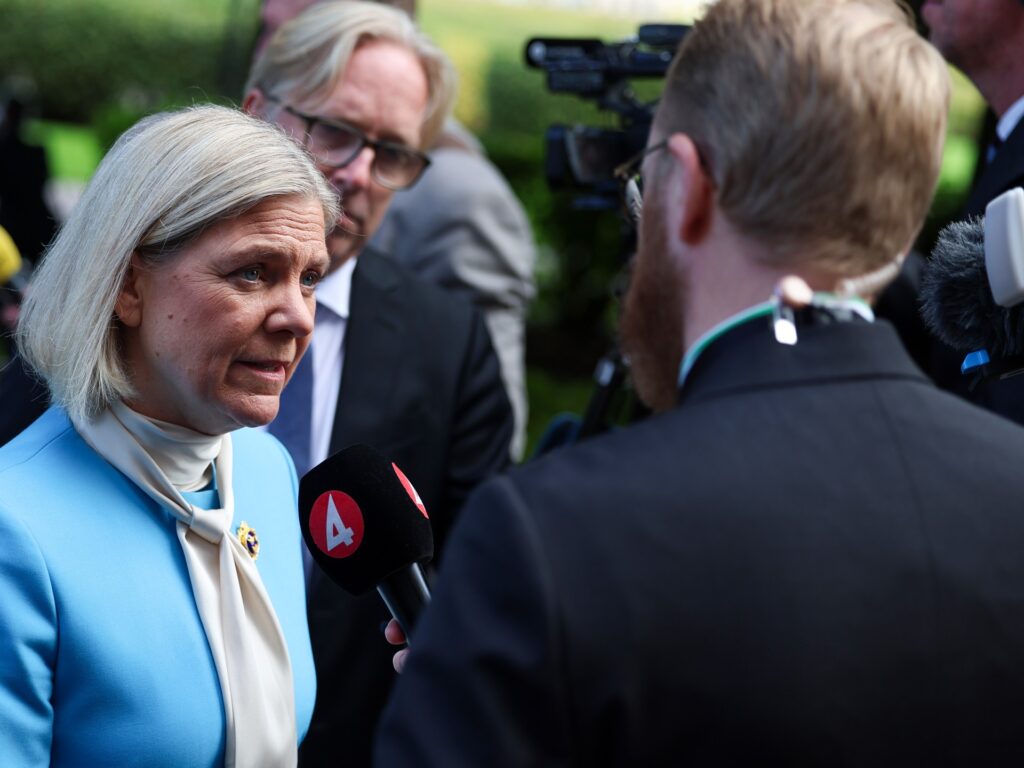
Sweden is currently in the throes of a prolonged political deadlock as the country’s centre-left leader, Magdalena Andersson, has once again failed in her attempt to form a new government. Andersson, the leader of the Social Democratic Party, announced that the “conditions [are] not in place” for her to establish a viable coalition, extending the ongoing uncertainty in Swedish politics.
This marks Andersson’s second unsuccessful bid to secure support from other political factions necessary to govern effectively after the recent elections. The failure to form a government underscores the deep divisions within the Swedish parliament, which is now characterized by a fragmented landscape and no single party or coalition having a clear majority.
The Social Democrats have traditionally been a dominant force in Swedish politics, often shaping the nation’s policy and governance. However, recent elections have seen a shift towards more polarized and fragmented political alignments, complicating the formation of stable governments. Andersson’s attempts to navigate this complex terrain have so far been thwarted by disagreements, particularly with smaller parties whose support is crucial for a majority.
Political analysts say the stalemate has significant implications for Sweden’s future, including delays in budget approval and policy implementation that could affect areas such as economic growth, immigration, and climate policy.
This deadlock also raises questions about the role of opposition parties, some of which are reluctant to collaborate with the Social Democrats or the centre-left coalition. Moreover, the rising influence of right-wing parties adds another layer of complexity to coalition talks.
As the political impasse continues, calls are growing for new approaches to break the deadlock, possibly including more inclusive negotiations or even another election. The Swedish constitution mandates a process for government formation with specific timelines, and failure to form a government may ultimately trigger a snap election.
Sweden’s political crisis highlights the challenges facing many democracies today – balancing diverse political interests within a parliamentary system while maintaining governmental stability. The coming weeks are critical as parties continue negotiations, and the Swedish public watches closely, aware that the outcome will shape the nation’s political and social trajectory for years to come.
In summary, Magdalena Andersson’s failure to form a government reflects broader political polarization and fragmentation in Sweden. It prolongs a deadlock that threatens to stall legislation and hinder effective governance, underscoring the urgent need for political compromise and cooperation in this pivotal moment for Swedish democracy.