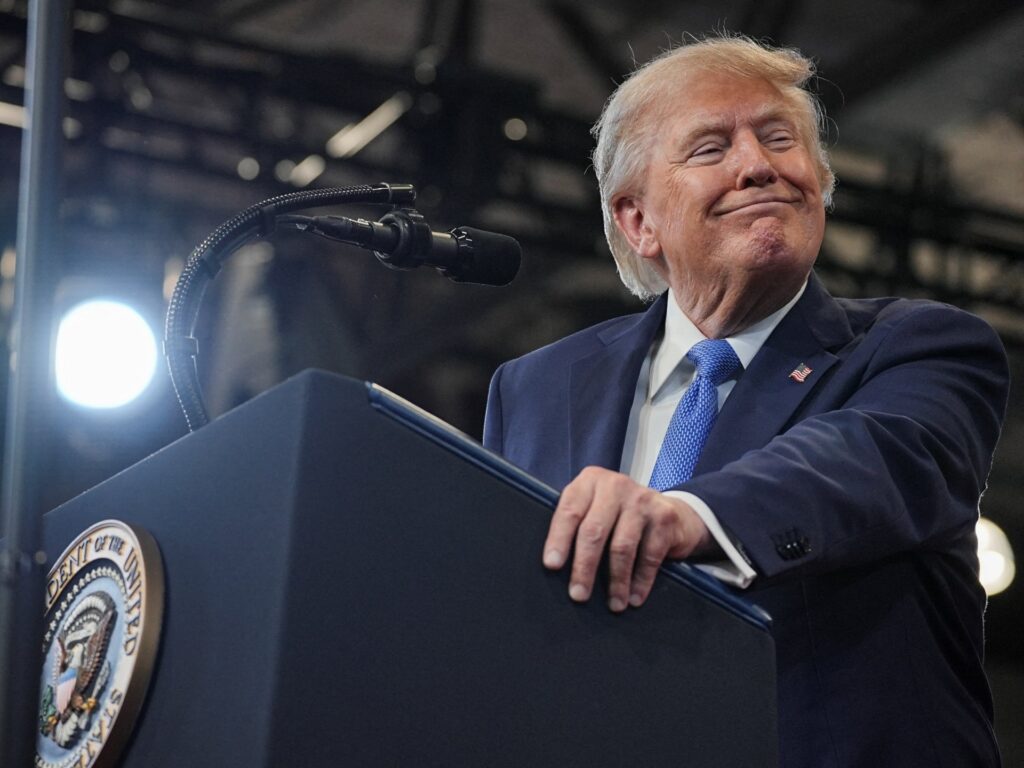
In a recent and highly controversial statement, former US President Donald Trump threatened to make the Strait of Hormuz a US territory, igniting fresh concerns about escalating tensions in the Middle East. The Strait of Hormuz, a narrow passage between the Persian Gulf and the Gulf of Oman, is one of the world’s most strategically vital waterways, serving as a major transit route for global oil shipments. Trump’s threat, while provocative, raises significant questions about the legality, feasibility, and potential repercussions of such an unprecedented move.
The Strait of Hormuz is internationally recognized as international waters, governed by various international maritime laws, including the United Nations Convention on the Law of the Sea (UNCLOS), which the United States has signed but not ratified. The notion of any country unilaterally claiming sovereignty over this crucial passage contradicts established international legal norms and could be considered an act of aggression.
Trump’s declaration emerges against the backdrop of ongoing conflict and heightened tensions between the US and Iran. For years, the two nations have had adversarial relations, particularly over Iran’s nuclear program and its influence in the Middle East. The Strait of Hormuz has been a flashpoint in this conflict, with several incidents reported, including attacks on oil tankers and naval confrontations.
Experts argue that while the US maintains a powerful naval presence in the region, physical control over the strait to the level of territorial sovereignty is neither realistic nor legally justifiable. Any move to claim the strait as US territory would likely be met with fierce opposition from Iran and the international community, potentially sparking a broader conflict.
Moreover, such a declaration could disrupt global oil markets, as about 20% of the world’s petroleum passes through the Strait of Hormuz. The geopolitical fallout could include increased oil prices, regional instability, and a challenge to the post-World War II international order that emphasizes rules-based global governance.
The US government has historically used military presence and freedom of navigation operations to ensure the strait remains open, but direct territorial claims would represent a dramatic shift in policy. The international community, including allies in Europe and Asia, generally support peaceful resolution and adherence to international law rather than confrontational approaches.
While Trump’s rhetoric may resonate with certain domestic political constituencies, it poses serious risks to regional peace and global economic stability. Analysts warn that escalating rhetoric and threats could lead to unintended military engagements, undermining diplomatic efforts focused on de-escalation.
In conclusion, Trump’s threat to make the Strait of Hormuz a US territory appears more as a political statement than a practicable policy initiative. The complexities of international law, military logistics, and geopolitical dynamics render such a claim highly improbable and dangerous. Instead, a sustainable resolution requires diplomatic engagement, multilateral cooperation, and respect for international norms to secure peace and stability in this critical region.