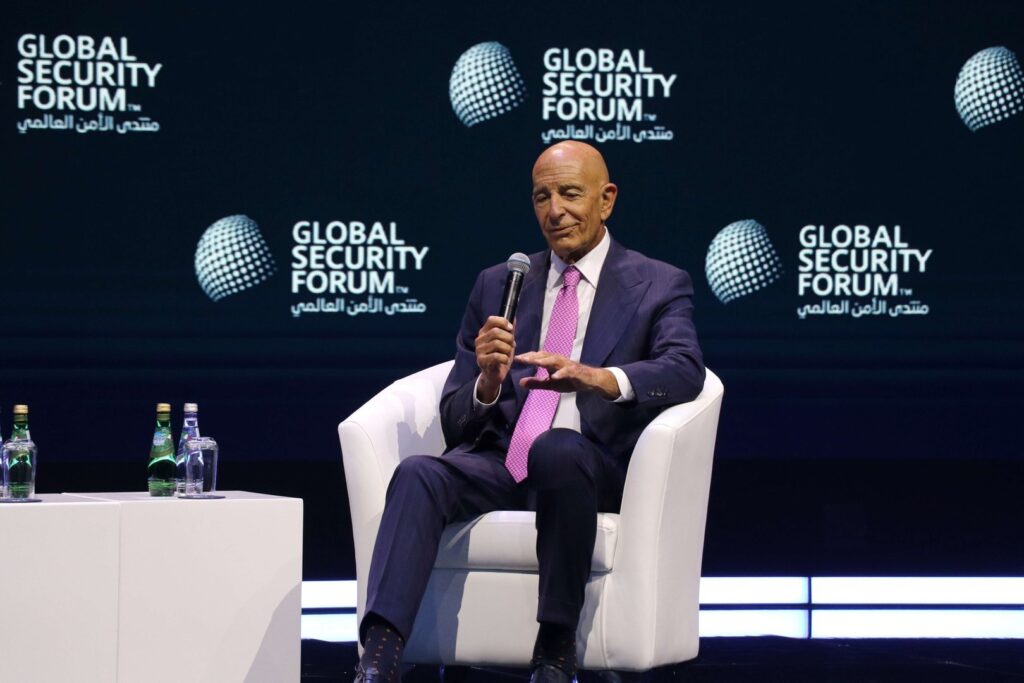
In recent statements, US envoy Tom Barrack has addressed concerns regarding the United States’ position amidst escalating tensions between Israel and Iran. Barrack emphasized that President Donald Trump did not parallel Israel’s approach by entering a formal war against Iran, clarifying the US administration’s stance on the matter.
The remarks come after rising speculation and international discourse about the potential for a direct conflict involving the United States alongside Israel against Iran. Barrack’s defense of the administration highlights a strategic distinction maintained by the US to avoid immediate military engagement despite strong support for Israel’s security.
Tom Barrack underscored that while the US is a steadfast ally of Israel, it has opted to exercise caution and diplomatic channels rather than direct military confrontation with Iran. This approach reportedly aims to prevent a broader war in the volatile Middle East region.
The envoy’s comments also reflect on President Trump’s broader foreign policy outlook, which prioritizes measured responses and consultations with international partners before escalating conflicts. The Trump administration has repeatedly condemned Iran’s actions in the region, attributing various destabilizing activities to Tehran, but has stopped short of endorsing war.
Experts note that the US’s position seeks to balance support for Israel’s right to defend itself with the complexities of engaging in an expanded military conflict that could draw in multiple countries and lead to severe consequences.
Moreover, Barrack’s statements help to clarify the US policy framework during a period marked by intense media scrutiny and geopolitical uncertainty. The distinction made by the envoy serves to reassure both domestic and international observers that the United States is committed to diplomacy and restraint.
The tension between Israel and Iran has been escalating over recent years with incidents ranging from proxy conflicts to cyberattacks and sanctions. Israel views Iran’s nuclear ambitions and regional influence as existential threats, leading to calls for assertive action.
Despite Israel’s aggressive posture, the US administration’s choice to refrain from joining an all-out war against Iran illustrates a complex balancing act in the region. It reflects considerations of global security, economic impacts, and the United States’ strategic interests.
Tom Barrack’s defense of the policy highlights the ongoing debate within US political circles about the best approach to handle Iran’s influence in the Middle East. While some advocate for a harder line, others caution against risking a major conflict.
The Trump administration’s stance also has implications for bipartisan consensus on foreign policy, the dynamics of US-Israel relations, and the broader scope of international diplomacy.
Looking ahead, analysts suggest that the US will continue to support Israel through intelligence sharing, military aid, and diplomatic backing while simultaneously seeking to avoid direct military engagement with Iran.
The statements made by Barrack serve as an important clarification amid rumors and misinterpretations that could fuel further tensions. Clear communication from the US regarding its intentions plays a crucial role in stabilizing the situation.
In conclusion, Tom Barrack’s defense of the Trump administration’s decision represents a strategic approach aimed at limiting conflict escalation. It underscores the complex realities of Middle Eastern geopolitics where alliances and enmities require careful management to preserve peace and security.