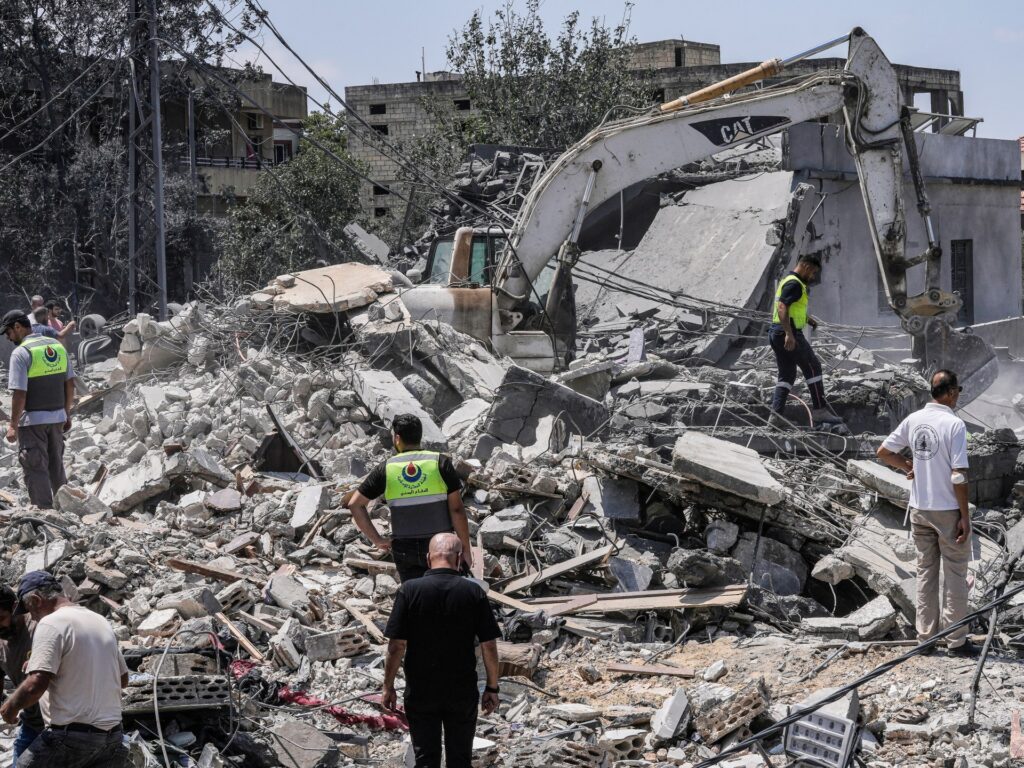
In recent developments, Israel has intensified its military operations in southern Lebanon, resulting in the deaths of at least 11 people in a single day. This escalation occurs despite an ongoing ceasefire, a truce extension brokered by the United States in June, designed to stabilize the volatile region.
The continued violence raises questions about the durability of the ceasefire agreement and the factors driving Israel’s decision to increase attacks against targets in southern Lebanon. Analysts suggest that the escalation may stem from ongoing tensions and provocations in the region, especially the complex security concerns related to militant groups operating in southern Lebanon.
The ceasefire, established to reduce hostilities between Israel and militant factions in Lebanon, has been fragile with sporadic incidents disrupting peace efforts. The recent surge in Israeli strikes underlines the difficulties in maintaining the ceasefire, especially amid accusations of cross-border attacks and retaliatory measures.
Israel’s government has stated that the targeted operations are responses to security threats posed by militant groups allegedly using southern Lebanon as a launchpad for attacks. The region has long been a flashpoint for conflict, with Hezbollah’s presence being a significant factor in Lebanon’s southern zone and a perceived threat by Israel.
The United States, which brokered the ceasefire extension, has expressed concern over the renewed violence and called for restraint by all parties involved. Washington continues to support diplomatic efforts aimed at a lasting peace and preventing further escalation of hostilities.
The civilian toll of the conflict remains a critical issue, with repeated strikes causing loss of life and widespread damage. International humanitarian groups have condemned the actions, emphasizing the need for peaceful dialogue and adherence to ceasefire agreements to protect non-combatants.
As tensions in southern Lebanon flare, regional stability is at risk, potentially drawing in neighboring countries and complicating broader Middle Eastern geopolitics. The international community watches closely, urging both Israel and Lebanese factions to recommit to the ceasefire and seek diplomatic solutions to their disputes.
In summary, despite a U.S.-brokered truce aiming to ease the conflict in southern Lebanon, Israel’s recent escalation in attacks underscores the fragile nature of peace in the region, driven by unresolved security concerns and deep-seated political tensions.