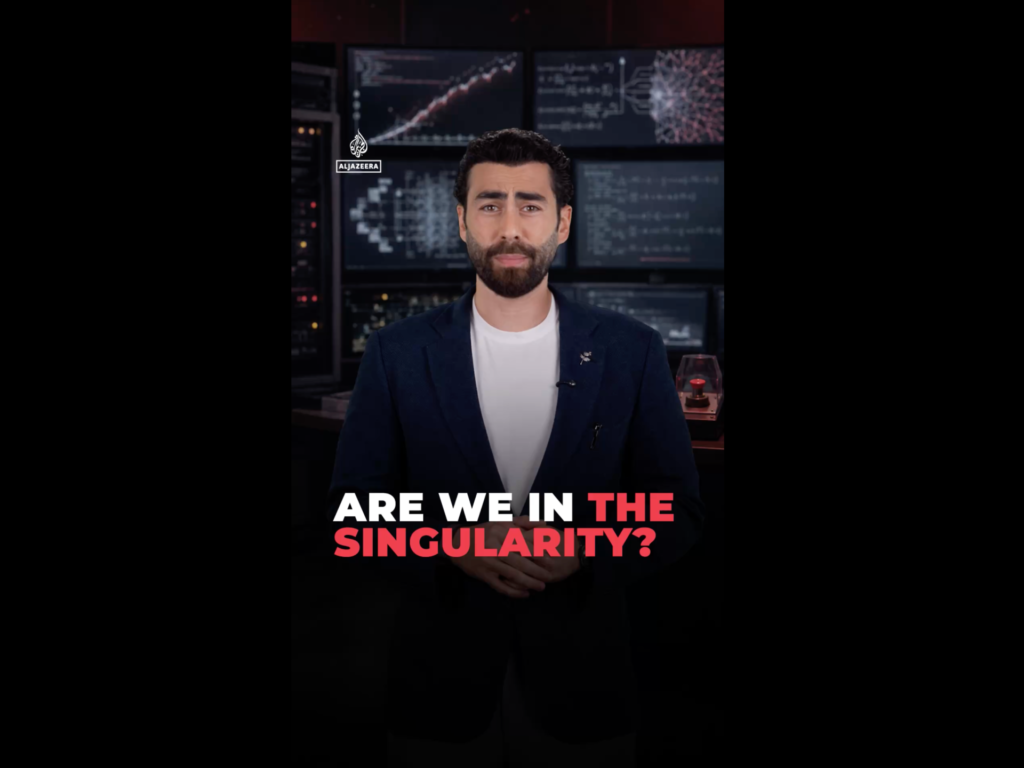
Recently, Sam Altman, CEO of OpenAI, made a bold statement claiming that artificial intelligence has entered “the singularity.” This declaration has sparked considerable debate and curiosity across the tech community and beyond about what the singularity means and whether we have indeed reached this pivotal moment.
The concept of the singularity refers to a theoretical point in time when artificial intelligence surpasses human intelligence, leading to rapid and uncontrollable technological growth. At this juncture, AI’s capabilities could transform society in profound and unpredictable ways, potentially solving complex problems or, conversely, presenting new risks.
Altman’s announcement suggests that AI technology has attained a level where it can learn, adapt, and improve itself at an unprecedented scale and pace, crossing a threshold that marks a significant shift from previous advancements.
To understand the context, it is important to look at recent AI developments. Models such as ChatGPT and other large language models have demonstrated abilities that were once thought far off—such as generating human-like text, coding software, and engaging in creative tasks. These capabilities mimic or even exceed human performance in specific areas, which signifies a leap that might align with the singularity concept.
However, some experts urge caution in embracing Altman’s statement fully. While AI progress has been rapid, true singularity involves more than just advanced capabilities. It entails a self-sustaining cycle of intelligence that improves itself autonomously without human intervention.
Furthermore, the societal and ethical implications of such a milestone are vast. If AI systems become genuinely autonomous and exponentially evolving, managing their integration into human life, governance, and economies requires unprecedented foresight and regulation.
Critics also point out that calling the current phase “the singularity” might be premature, as there are still many technical hurdles and limitations for AI, particularly regarding general intelligence, emotional understanding, and creativity in a comprehensive human-like manner.
Nonetheless, Sam Altman’s statement serves to highlight how rapidly AI technologies are advancing, pushing the boundaries of what machines can do. It invites governments, businesses, and individuals to prepare for a future where AI is deeply integrated into everyday life.
In summary, whether or not we have truly reached the singularity remains a subject of debate. Altman’s proclamation reflects the excitement and urgency surrounding AI’s evolving capabilities but also underscores the need for cautious optimism and robust ethical frameworks. As AI continues to progress, society must carefully navigate this transformative era, balancing innovation with responsibility to harness its benefits while mitigating risks.