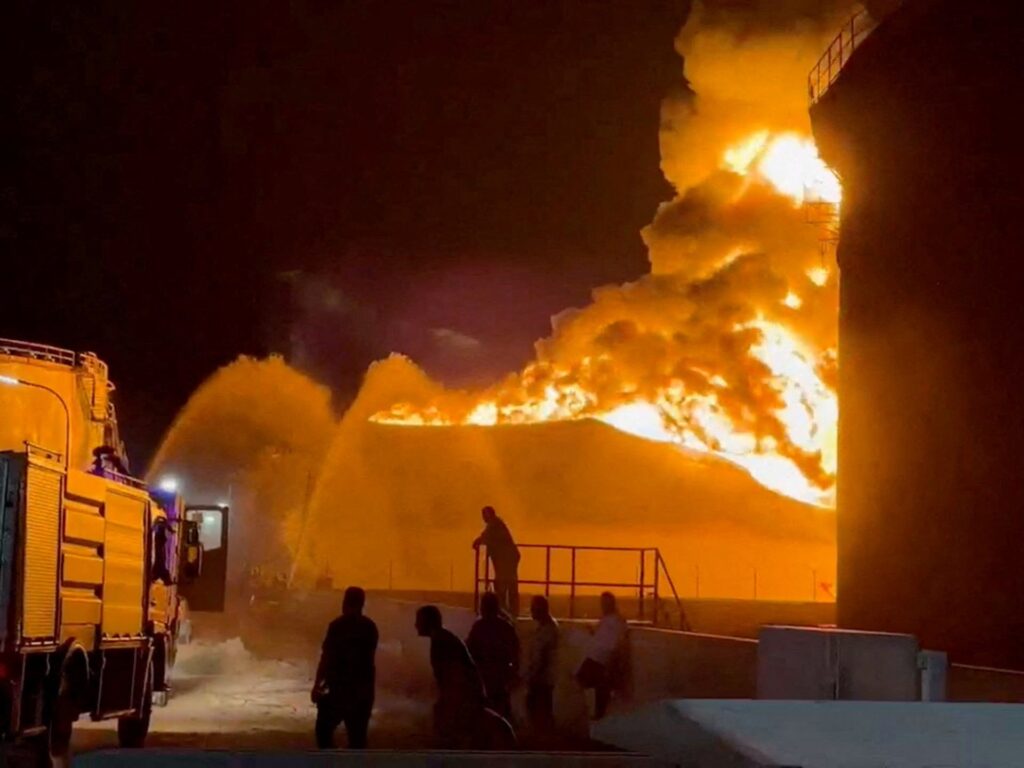
A massive fire has broken out at Libya’s Zawiya refinery, the country’s largest operational oil processing facility, following a drone attack. The incident has raised significant concerns over the refinery’s future operations and the safety of energy infrastructure in the region.
The Zawiya refinery has been a critical asset for Libya’s oil industry, handling a significant portion of the nation’s refined petroleum products. The facility’s operational capacity is vital for both domestic consumption and export revenues.
According to Libya’s National Oil Corporation (NOC), the fire was triggered after a series of drones struck the refinery complex, causing extensive damage. Early reports indicate multiple areas of the refinery were affected, leading to a large blaze that emergency services are currently battling.
The NOC has issued a statement warning that if such drone attacks continue, it might be forced to halt operations at the Zawiya refinery entirely. Halting operations would have severe implications for Libya’s oil production capabilities and could disrupt the country’s economy significantly.
Drone attacks on oil infrastructure have been an increasing concern in conflict-prone regions, with rogue groups or hostile entities targeting critical facilities to destabilize the economy or gain leverage.
Libya, which has been grappling with ongoing internal strife and political instability, has seen its oil sector repeatedly targeted in recent years, damaging production output and causing economic disruptions.
The fire at Zawiya has sparked alarm among energy security experts and analysts, who warn of the wider implications such attacks have on global oil markets, highlighting the vulnerability of supply chains.
Local authorities and the NOC are coordinating with firefighting units to control and extinguish the blaze swiftly. Safety protocols have been activated to protect refinery workers and surrounding communities from possible hazards.
Officials are also investigating the origin of the drone attacks, examining whether militant factions or external forces are responsible. The security situation in the area remains tense as investigations continue.
The Zawiya refinery fire underscores the pressing need for enhanced protection of critical energy infrastructure in conflict zones and the broader Middle East and North African regions.
In response to this incident, calls for increased security measures and international cooperation to safeguard oil facilities have intensified.
For now, the priority remains the containment of the fire and assessment of damage to resume refinery operations as soon as safely possible to mitigate economic losses.
This event serves as a stark reminder of the fragility of key energy installations amid geopolitical tensions and conflict, with potential ripple effects extending far beyond Libya’s borders.
Updates will follow as more information becomes available and the situation at the Zawiya refinery develops.