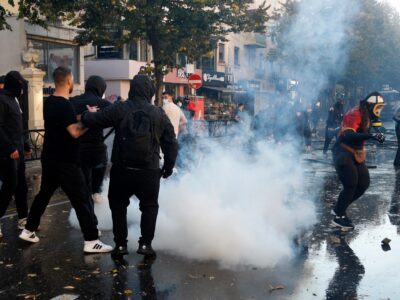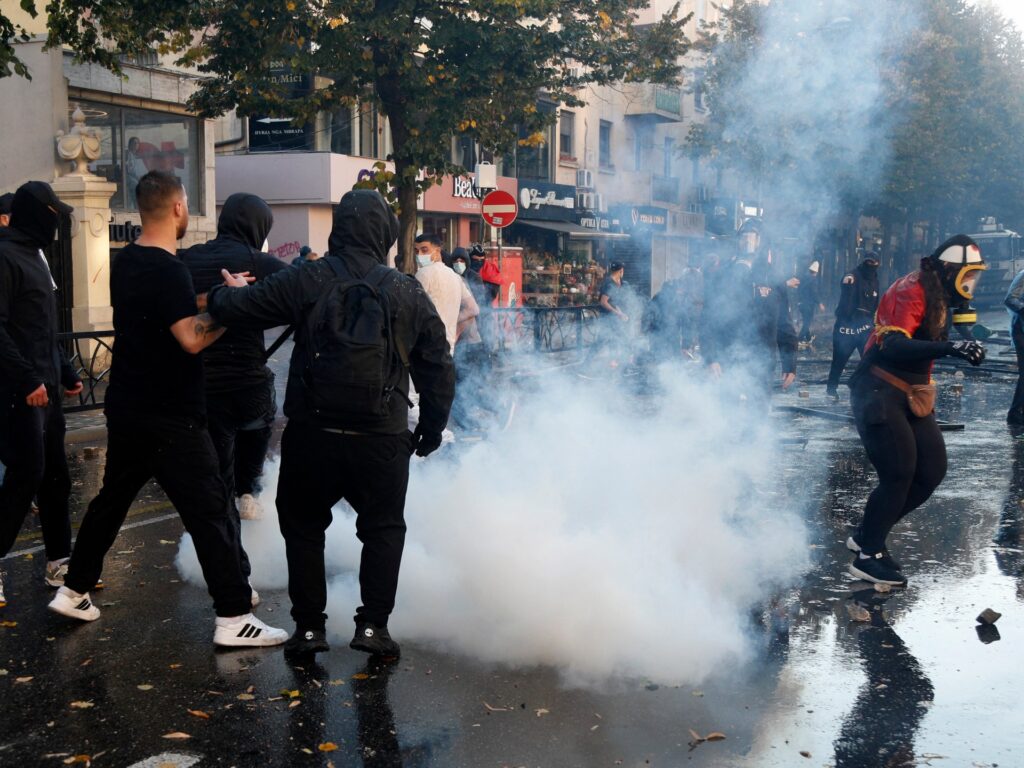
In a dramatic escalation of unrest in Tirana, the capital of Albania, the police resorted to firing tear gas to disperse protesters who had attacked the Education Ministry building. The demonstrations, which began earlier in the day, grew increasingly hostile, prompting law enforcement to take stringent measures to control the situation.
The root of the protests lies in recent government policies concerning the education sector, which many citizens believe are detrimental to the quality of education and the future prospects of students. Frustrations boiled over into a violent confrontation when a segment of the crowd turned aggressive, targeting the Ministry building with projectiles and attempting to breach its premises.
Police responded with tear gas, a common crowd-control tactic aimed at dispersing aggressive mobs without causing permanent harm. Despite the use of tear gas, the situation remained tense for several hours as more protesters gathered, chanting slogans and demanding a reversal of the controversial educational reforms.
Authorities have reported that at least 23 protesters were arrested during the course of the demonstrations. These individuals are suspected of engaging in violent acts and participating in the unlawful occupation attempt of the Ministry.
Several injuries were reported among both police officers and civilians, primarily due to projectiles and the effects of tear gas. Medical teams were dispatched to offer assistance and transport the wounded to nearby hospitals.
The government has condemned the violence and emphasized the need for peaceful dialogue to resolve disputes. The Education Ministry released a statement underscoring its commitment to reforms and encouraging citizens to engage in constructive discussions.
Analysts say the protests reflect broader social dissatisfaction with various government policies and highlight the challenges faced by Albania in implementing reforms. International observers have called for restraint from all parties and urged stakeholders to prioritize the welfare of students and the educational system.
Protest organizers have announced plans for future demonstrations but have pledged to keep them peaceful. Meanwhile, security measures remain heightened in Tirana to prevent any further escalation.
This incident marks one of the most significant protests in recent Albanian history related to education policy and signals ongoing tensions between the government and segments of the population advocating for change.
Authorities continue to investigate the events leading up to the attack on the Education Ministry and are assessing the full impact of the unrest on public safety and the political climate in Albania.