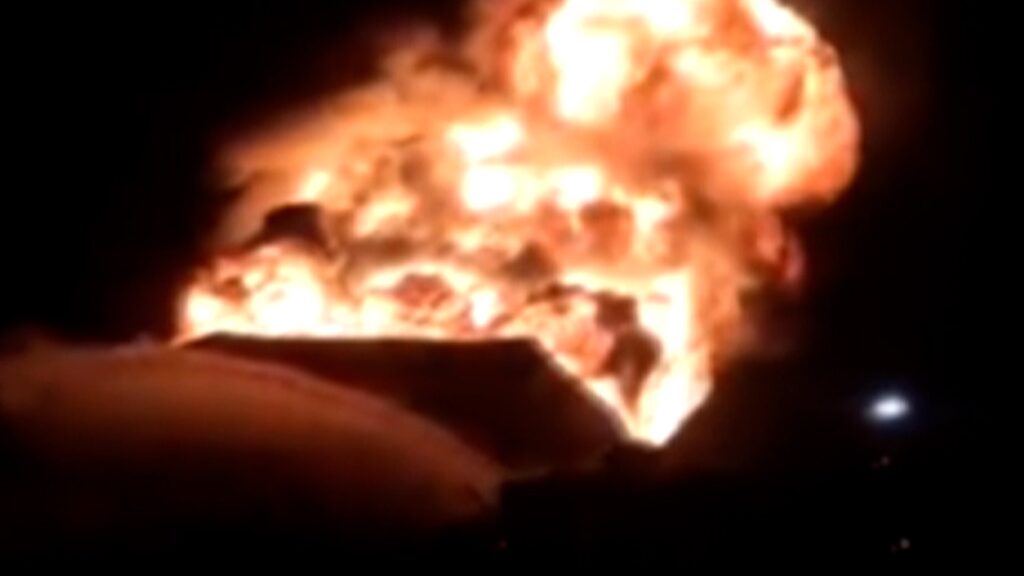
A severe fire broke out at Libya’s largest operational oil refinery located in Zawiya after a drone attack targeted the facility. The attack reportedly ignited gasoline stored at the refinery, causing widespread flames and significant damage to the infrastructure. This oil refinery is a critical hub for Libya’s oil production and exports, playing a vital role in the nation’s economy.
The incident has escalated concerns over the security and stability of Libya’s energy sector, which has already been facing turmoil amid ongoing political and military tensions in the region. The refinery in Zawiya serves as a key asset in the country’s oil industry, processing large volumes of crude oil to meet domestic and international demand.
Reports indicate that the drones involved were likely operated by unidentified militant groups, although investigations are still underway to ascertain the perpetrators behind the strike. The attack resulted in massive fires, with emergency response teams called in to contain the blaze and prevent further spread.
Authorities have temporarily suspended operations at the refinery due to safety risks and damage assessments. The fire has caused significant disruptions in oil production, which may impact Libya’s export commitments and global oil supply chains.
Libya’s oil infrastructure has been a frequent target amid conflicts, with various factions vying for control over resources. This recent attack added to the challenges faced by the National Oil Corporation and the Libyan government in maintaining steady production.
Experts warn that continued violence and attacks on critical energy facilities undermine efforts to stabilize the country’s economy and could lead to further international market instabilities. Efforts to enhance security around key installations are being prioritized to avoid repeat incidents.
Local residents near the refinery expressed concerns about environmental hazards and health risks due to the thick smoke and potential toxic emissions. Emergency services and environmental agencies are monitoring the situation closely.
International stakeholders have called for restraint and urged all parties in Libya to protect vital infrastructure to ensure energy supplies remain uninterrupted.
As firefighting efforts continue, the full extent of the damage and potential repair timelines remain uncertain. Libya’s energy sector will likely face ongoing challenges as the country navigates complex political dynamics while trying to safeguard its crucial oil resources.