In a significant development amid ongoing tensions in the Middle East, the Board of Peace has announced a firm stance that Israel should not withdraw from Gaza until Hamas has been fully disarmed. This declaration comes at a critical juncture where recent escalations and military actions have intensified the debate over the future security and governance of the Gaza Strip.
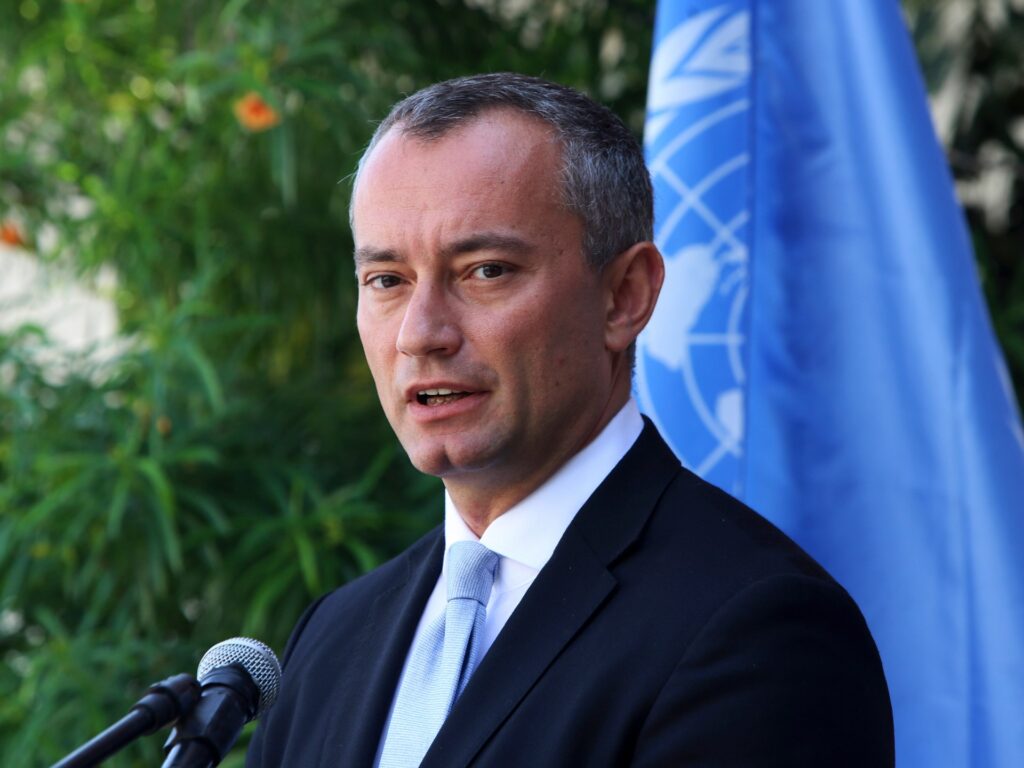
The Board’s director, Maldenov, recently met with Israeli Prime Minister Benjamin Netanyahu to discuss a comprehensive roadmap aimed at disarming Hamas, the Islamist militant group that controls Gaza and has been involved in numerous conflicts with Israel.
The dialogue between Netanyahu and Maldenov underscores the complexities of achieving peace in a region plagued by decades of hostility. The Board of Peace is advocating for a phased approach to Israeli withdrawal, emphasizing that premature evacuation without guaranteed disarmament could lead to further instability and violence.
Recent Israeli attacks on Hamas targets were cited as part of the ongoing efforts to weaken the group’s military capacity. These operations, however, have also drawn international scrutiny over civilian casualties and the humanitarian situation in Gaza.
Both Netanyahu and Maldenov acknowledged the delicate balance required to ensure security for Israeli citizens while addressing the rights and needs of Gazan residents. The roadmap proposed includes strict verification procedures, international oversight, and gradual transfer of control, contingent on Hamas’s compliance with disarmament commitments.
Security analysts suggest that the Board’s position reflects widespread concerns about Hamas’s ability to maintain armaments that threaten Israeli and regional stability. Disarming Hamas is viewed as a prerequisite to any long-term peace agreement or Israeli exit strategy.
The meetings and discussions represent an effort to align Israeli government policies with international peace advocacy groups, aiming to create a sustainable framework for peace. However, challenges remain significant. Hamas’s political and military leadership has so far resisted complete disarmament, citing the need to defend Palestinian interests against what they term ongoing occupation and aggression.
The Board of Peace’s demand could reshape negotiations, compelling both Israeli and Palestinian factions to reconsider their approaches to security and sovereignty in the Gaza Strip. Observers believe that without a clear and enforceable disarmament strategy, any withdrawal risks exacerbating conflicts, potentially leading to a power vacuum exploited by extremist elements.
International community responses have been mixed, with some nations supporting the Board’s approach as a pragmatic security measure, while others call for an accelerated Israeli withdrawal to alleviate Gaza’s humanitarian crises.
As the situation develops, the coming months will be crucial in determining whether a secure and peaceful Gaza can be established under new terms that satisfy both Israeli security concerns and Palestinian aspirations for autonomy and dignity.
This evolving scenario highlights the intertwined challenges of peacebuilding, security, and humanitarian considerations in a conflict that has defined the region for decades. Stakeholders continue to watch closely, hopeful that dialogue and firm commitments can lead to a resolution that ends the cycle of violence and lays the foundation for lasting peace.