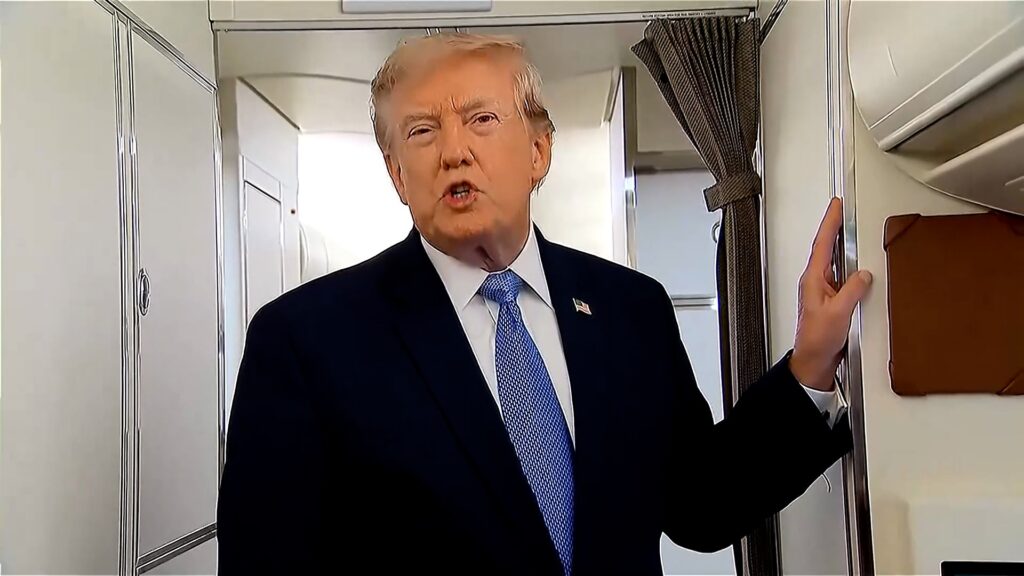
In a dramatic shift in U.S. foreign policy, President Donald Trump announced the pause of a ‘massive attack’ planned against Iran, signaling a move towards diplomacy by initiating new talks. The President revealed that new negotiations with Iran would commence on Monday, describing the upcoming conversations as being conducted ‘in the form of a negotiation.’
This announcement marks a significant turnaround from the previously heightened military tensions between the United States and Iran. The planned attack, which had been reportedly imminent, was called off, reflecting a strategic decision to seek resolution through dialogue rather than conflict.
The backdrop to this development is a period of escalating hostility, with previous threats and retaliatory actions fueling fears of a broader conflict in the Middle East. The abrupt cancellation of the military strike has been met with cautious optimism among international observers hopeful for a de-escalation in the region.
Details of the new talks remain sparse, but the initiative suggests a willingness on both sides to explore diplomatic channels to resolve longstanding disputes. The U.S. administration’s approach indicates a potential pivot from an aggressive stance to one that prioritizes negotiation and possibly new agreements on contentious issues.
Analysts suggest that the timing of the talks and the choice to announce the pause publicly could be a strategic maneuver to pressure Iran into constructive engagement under international scrutiny. While skepticism remains about the prospects for successful outcomes, the start of formal discussions is an encouraging sign for peace advocates.
The international community, particularly U.S. allies and regional partners, are closely watching this development. There is significant interest in how these talks will shape future relations, security dynamics, and economic conditions, including sanctions and trade.
President Trump’s decision underscores the complex balancing act between maintaining a firm stance on national security and embracing diplomacy to prevent conflict escalation. It also highlights the unpredictable nature of international politics where rapid shifts can have profound global implications.
As Monday approaches, preparations for the negotiations are underway with expectations high but tempered by the cautious realism that has characterized previous interactions with Iran. The coming talks could redefine the trajectory of U.S.-Iran relations and possibly set a precedent for resolving disputes through dialogue rather than military action.
This development invites renewed attention to the nuances of international diplomacy and the critical importance of communication in managing global tensions. The world awaits to see if these talks can pave the way for a durable peace or if challenges ahead will continue to test the limits of negotiation.