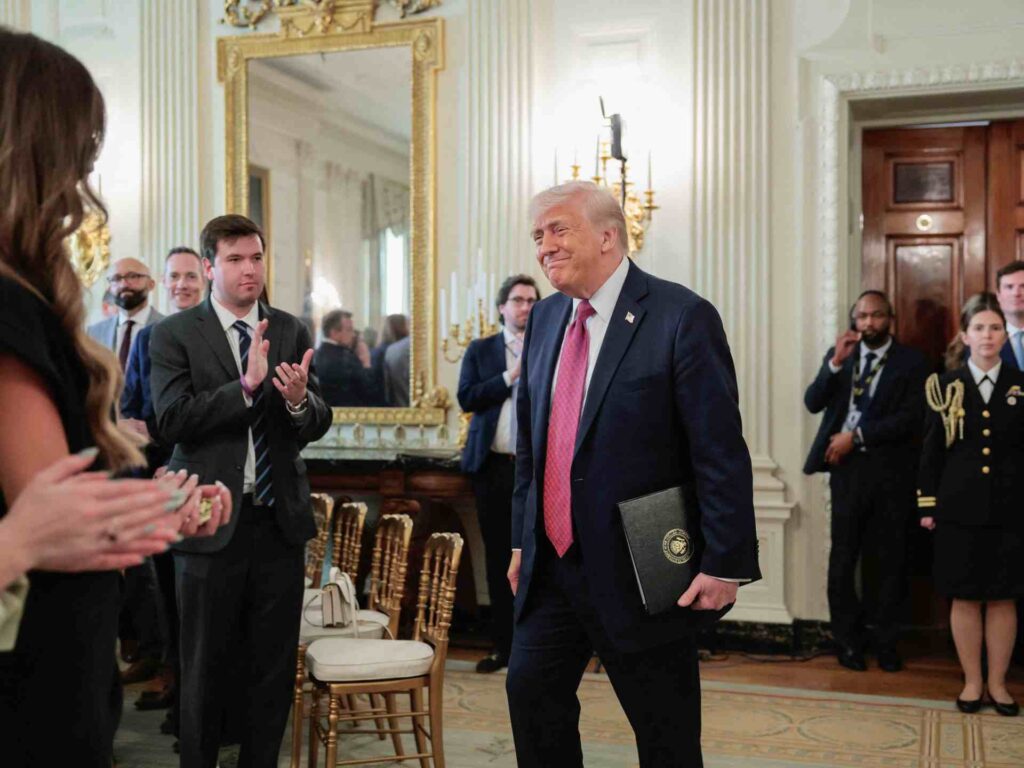
In a notable public appearance, US President Donald Trump engaged with a Bible passage centered on themes of punishment and national repentance. This event followed widespread attention brought about by an AI-generated image depicting Trump as a Jesus-like figure, which sparked intense reactions across social and political spectrums.
During a marathon reading session, the President chose scriptures that emphasize accountability, moral reflection, and collective atonement. The act was seen by many observers as a pointed response to the controversial AI portrayal, suggesting a call for introspection amid the digital narrative reshaping his public image.
The AI-generated image that circulated prominently online showed Trump in a stylized manner reminiscent of traditional depictions of Jesus Christ. This fusion of political and religious iconography raised questions about the intertwining of technology, faith, and leadership personas in modern discourse.
Supporters of the President hailed the Bible reading as a meaningful reaffirmation of spiritual values, highlighting the importance of repentance and redemption in national life. Meanwhile, critics argued that the spectacle blurred lines between political theater and genuine faith-based leadership.
Religious scholars commented on the historical context of such scripture readings, noting that passages concerning punishment and repentance have long been used as calls for societal transformation during times of crisis. The timing of Trump’s reading aligns with moments when leaders seek to address public unease and moral challenges.
This event also underscores the growing influence of AI technology in shaping political narratives. The image that triggered the reading was crafted using sophisticated algorithms capable of blending cultural and religious symbolism, illustrating the power of AI in visual communication.
Political analysts observe that Trump’s engagement with scripture may aim to reassure his base amid fluctuating public opinion. By invoking themes of national repentance, the President positions himself within a larger narrative of renewal and accountability.
The incident opens broader discussions about the role of religious imagery in politics, especially when mediated through artificial intelligence. It raises questions about authenticity, manipulation, and the evolving nature of public leadership in the digital age.
In conclusion, President Donald Trump’s decision to read Bible verses on repentance following the AI image controversy reveals complex intersections between technology, religion, and politics. As AI continues to shape public perception, leaders may increasingly turn to traditional texts and symbolic actions to navigate and influence their narratives in an ever-changing landscape.