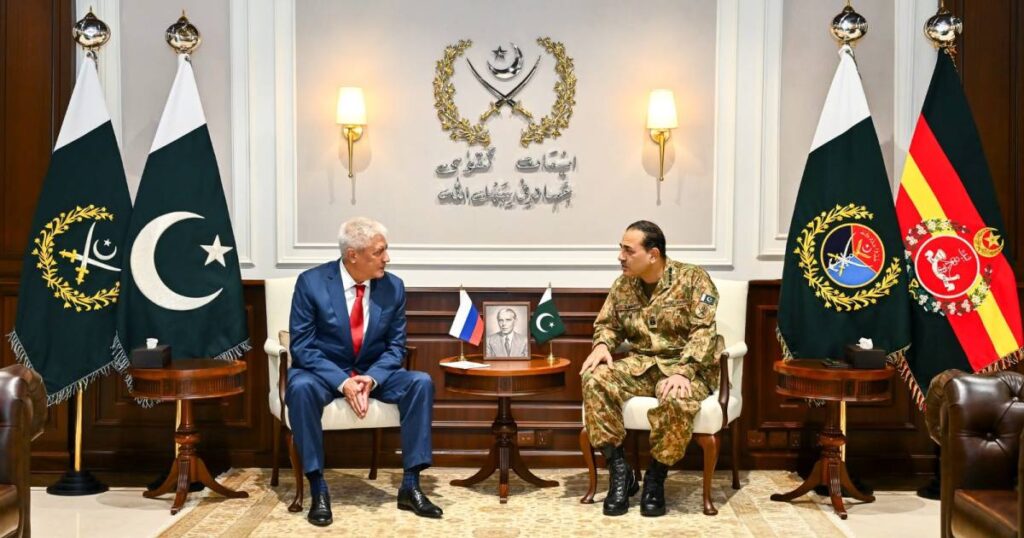
Tensions between Pakistan and Afghanistan have long been a source of regional instability, affecting security, economic cooperation, and diplomatic relations. Recently, the possibility of Russia playing a mediating role has come under discussion. Russia maintains close ties with the Taliban, the de facto authority in Afghanistan since the US withdrawal, and is actively engaging with Pakistan, signaling an interest in serving as a regional stabilizing force.
Russia’s diplomatic outreach to Islamabad is part of a broader strategy to increase its influence in South Asia, counterbalance US and Western presence, and secure its own interests in Afghanistan’s future. Moscow sees the Taliban as a pragmatic actor capable of contributing to regional security, despite concerns over extremism and drug trafficking. This recognition has paved the way for Russia to host talks and encourage dialogue between Islamabad and Kabul.
However, analysts remain cautious about Russia’s ability to act as a decisive mediator. While Russia has the advantage of direct communication lines to both Islamabad and Kabul, it lacks deep influence over the key contentious issues dividing the two neighbors. These issues include border disputes, cross-border militancy, refugee flows, and competing strategic interests.
Pakistan, a key US ally until recently, has complex relations with the Taliban due to historical support but is wary of Taliban’s ambitions and regional alliances. Afghanistan’s new government under the Taliban faces legitimacy challenges and internal instability, limiting its leverage in negotiations. Russia’s influence is constrained by these realities and the longstanding mistrust between Pakistan and Afghanistan.
Moreover, Russia’s own geopolitical priorities may limit its willingness to deeply entangle itself in the protracted Pakistan-Afghanistan conflict. While it seeks stability on its southern borders and aims to curtail the spread of terrorism, Russia is more focused on broader Eurasian dynamics, including its relations with China, India, and Central Asian states.
In sum, Russia has the potential to act as a facilitator by encouraging dialogue and supporting confidence-building measures between Pakistan and Afghanistan. Yet, its leverage is uncertain due to the complex, multilayered nature of the tensions, the mistrust between the nations, and competing regional and global interests. For meaningful détente, a multilateral approach involving regional stakeholders, international partners, and, most importantly, genuine political will from Islamabad and Kabul remains essential.