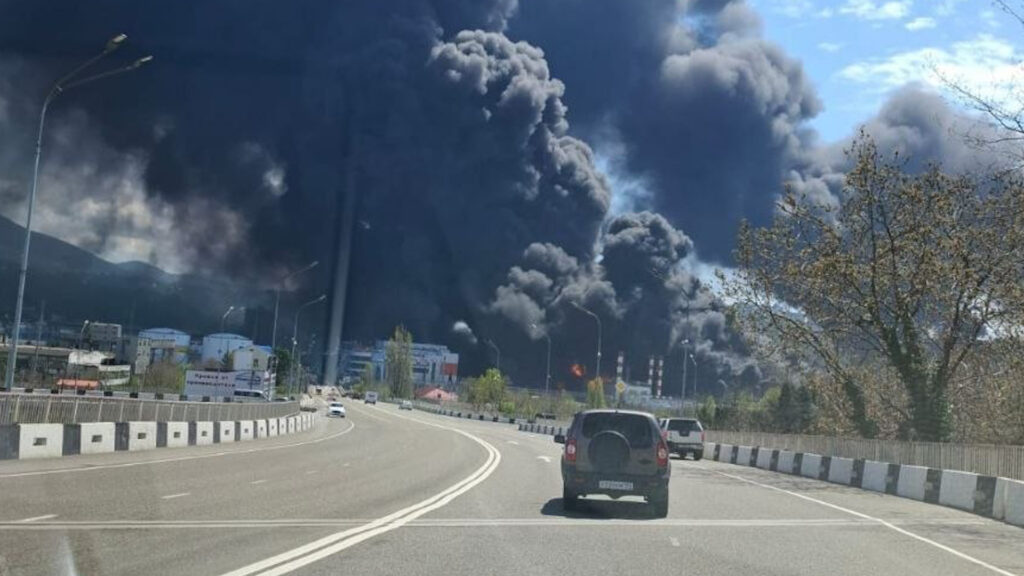
In a significant escalation of the ongoing conflict between Ukraine and Russia, Ukrainian drones launched a targeted attack on the Russian Black Sea port of Tuapse. The strike resulted in dramatic scenes, with plumes of thick black smoke rising from the site.
Tuapse port, located on the Black Sea coast, is a crucial hub for Russia’s maritime activities and oil exports. The attack signifies a strategic move by Ukraine to disrupt Russian logistics and commerce in the region.
Eyewitnesses reported seeing multiple drones heading towards the port, followed by explosions that triggered the outbreak of black smoke visible from considerable distances. The extent of the damage to port infrastructure and ships docked there has not yet been fully assessed.
This incident marks a continuing trend of drone warfare in the conflict, showcasing Ukraine’s increasing capability to carry out precise strikes deep in Russian-controlled territories. The use of drones offers a tactical advantage, allowing Ukraine to inflict damage while minimizing direct confrontation.
Russian authorities have condemned the attack, calling it a provocation that will be met with increased security measures. Meanwhile, international observers are closely monitoring the situation, concerned about the potential for further escalation in the Black Sea region.
The Tuapse port attack underscores how vital maritime routes and port facilities have become in this geopolitical conflict. Both sides appear to be targeting critical infrastructure to weaken each other’s economic and military posture.
Experts suggest the attack will bring heightened attention to the security of port facilities across the Black Sea. Navies and coast guards are expected to ramp up patrols and defenses to prevent similar future incursions.
Despite the destruction, Ukrainian officials have reiterated their stance on defending their sovereignty and retaliating against Russian military assets. The drone strike at Tuapse may also serve as a message to Russia, signaling Ukraine’s readiness to strike key logistical nodes.
The broader implications of this attack could influence diplomatic talks and international relations in the region. Countries bordering the Black Sea are likely to reassess their security strategies and alliances amid growing tensions.
As investigations continue, the global community watches closely, recognizing that ports like Tuapse are not just commercial gateways but also strategic military points whose control could impact regional stability.
The conflict’s dynamics are evolving rapidly, with new technological warfare forms such as armed drones becoming central to tactical operations. This shift challenges traditional defense postures and demands updated responses from affected nations.
The recent events at Tuapse highlight the complex intersection of modern warfare, international politics, and regional security, emphasizing that the Black Sea is a critical theater in the ongoing Ukraine-Russia confrontation.
In summary, the Ukrainian drone attack on the Tuapse port has sent a strong signal of Ukraine’s capabilities and strategic priorities. It also raises the stakes for all parties involved, with the potential for further dangerous escalations if maritime security is compromised.
The coming weeks will be pivotal as responses from Russia, Ukraine, and international actors shape the future course of the conflict and the stability of the Black Sea region.