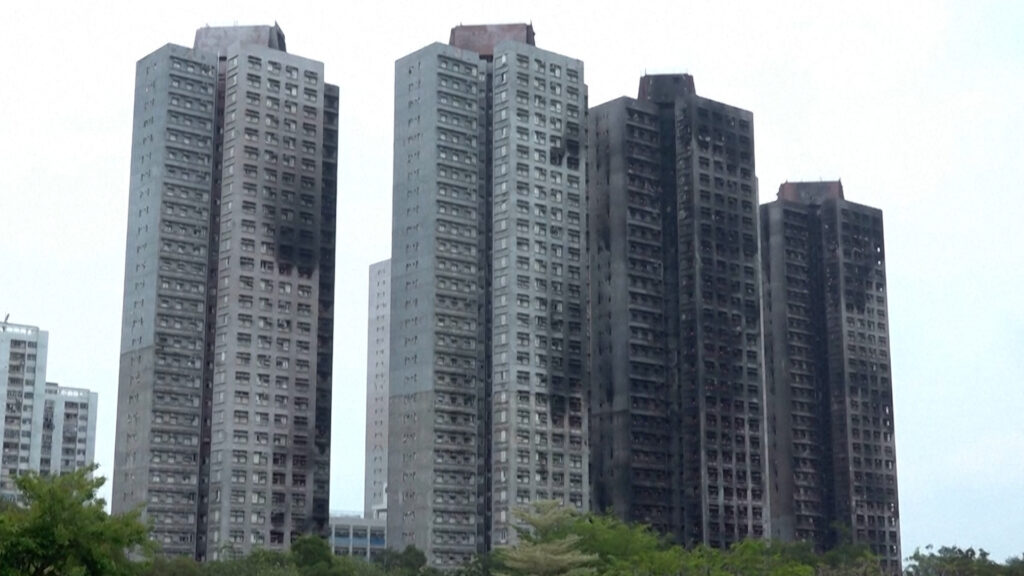
Five months after a devastating fire claimed the lives of 168 people in Hong Kong’s Wang Fuk Court, survivors have begun returning to the site, only to find their homes reduced to charred remains. The tragedy, which shook the city and drew international attention, continues to leave a deep impact on the lives of those affected.
The fire broke out in Wang Fuk Court, a residential complex, engulfing multiple units and trapping residents inside. Emergency services battled the blaze for hours, but the fire’s speed and intensity overwhelmed many escape routes, leading to a high death toll. Survivors recount harrowing experiences of fleeing the flames and witnessing neighbors lose their lives.
As the smoke cleared, the community was faced with the arduous task of rebuilding their lives and homes. Many survivors returned to gauge the damage, only to confront the heartbreaking reality that almost nothing was left standing. The burnt-out shells of apartments erode notions of safety and home for residents, many of whom have lost most of their possessions and memorabilia that held sentimental value.
Authorities have launched investigations into the cause of the fire, with preliminary findings suggesting a combination of electrical faults and inadequate safety measures may have contributed to the disaster. The incident has prompted calls for stricter enforcement of fire safety regulations and improvements in building standards across Hong Kong.
Relief efforts have been mobilized, with government agencies and local organizations providing temporary shelter, financial assistance, and counseling services to survivors. Despite these efforts, many individuals and families face an uncertain future, struggling with trauma and the loss of community networks.
The disaster has also sparked a broader conversation about urban residential safety in densely populated areas. Experts emphasize the importance of regular building inspections, fire drills, and resident education to prevent such tragedies from recurring.
Community leaders are working to mobilize resources for long-term recovery, including rebuilding homes and providing mental health support. The resilience shown by survivors in the aftermath of the fire reflects a determination to overcome adversity despite the devastation.
The tragedy at Wang Fuk Court stands as a sobering reminder of the critical need for vigilance in fire safety and the human cost when systems fail. As survivors pick up the pieces of their shattered lives, their stories underscore the urgent necessity for systemic change to protect vulnerable urban populations in the future.