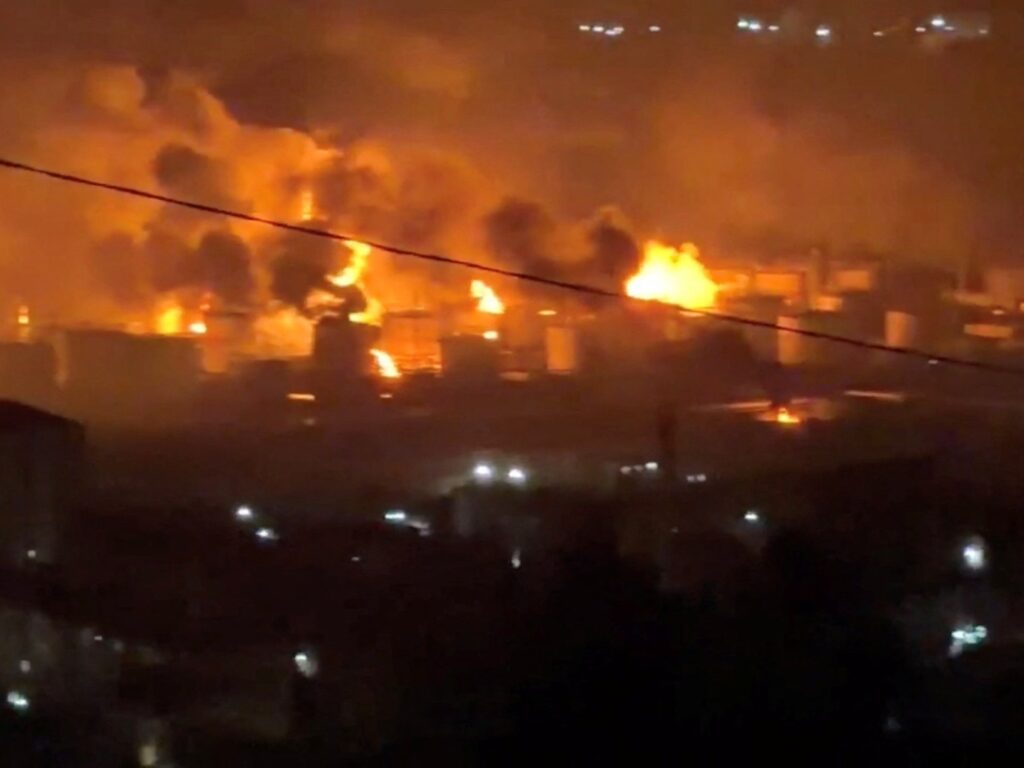
Ukraine’s military intelligence announced a significant strike against Russian naval assets in Sevastopol Bay, located in the Russian-occupied Crimean peninsula. According to Ukrainian sources, two large landing ships belonging to the Russian Navy were successfully attacked, marking a notable escalation in the ongoing conflict between the two nations.
Sevastopol, a strategic port city on the Black Sea, has long been a critical naval base for Russia, especially following its annexation of Crimea in 2014. The port houses several key components of the Russian Black Sea Fleet, making it a pivotal location in the military dynamics of the region.
The reported attack on the two large landing ships aims to disrupt Russian naval operations in the area, potentially impacting their logistical and amphibious capabilities. Large landing ships are integral for transporting troops, vehicles, and equipment, and damage to these assets could diminish Russia’s ability to reinforce or supply forces in Crimea and surrounding regions.
Ukraine’s claim highlights its enhanced intelligence and operational capabilities, especially regarding precision targeting in heavily fortified areas controlled by Russian forces. The attack underscores the ongoing hostilities and the high stakes involved in the control of Crimea, which both countries claim.
Russian authorities have not yet confirmed the details of the incident or the extent of the damage to their naval vessels. However, any successful strike within Sevastopol Bay would signify a rare breach of what Russia considers a secure and heavily defended military zone.
The incident further complicates the already tense geopolitical situation, drawing international attention to the escalating conflict and its wider implications for regional security. Allies of Ukraine have condemned Russia’s occupation of Crimea and continue to supply military aid, which Ukraine claims has been instrumental in such operations.
Military analysts suggest that the strike may be part of a broader Ukrainian strategy to weaken Russian military presence in the Black Sea and potentially pave the way for further counteroffensives.
The attack also reverberates in global circles, as countries monitor the evolving security landscape in Eastern Europe closely, concerned about the potential for further military escalation and the risks it poses to international peace.
As the situation develops, the world watches closely for official statements from the involved parties and international organizations, hoping for de-escalation but preparing for the possibility of continued conflict.