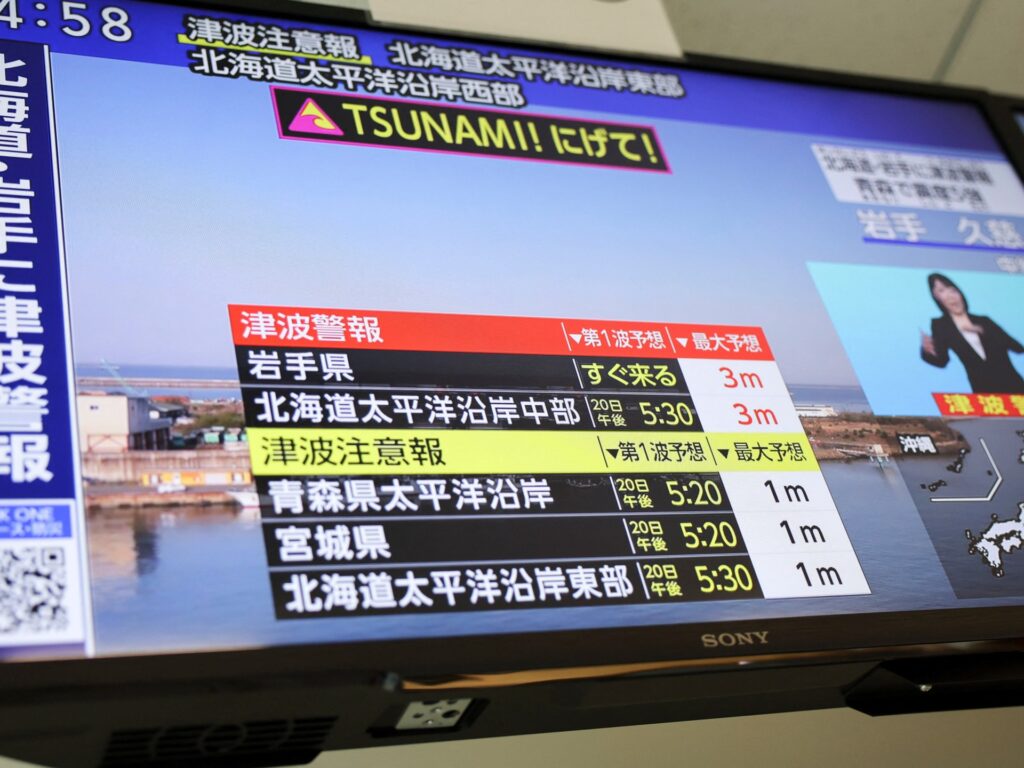
In a significant seismic event, a magnitude 7.5 earthquake struck northern Japan, prompting immediate safety alerts and government action. The earthquake, which occurred with considerable force, has led to a tsunami warning for the coastal regions, urging residents and authorities to prepare for potential high waves and flooding. Prime Minister Sanae Takaichi responded swiftly to the crisis, announcing that the government has established a crisis management team to coordinate emergency responses and ensure public safety. This rapid mobilization aims to mitigate the impact of the quake and any resulting tsunami. Authorities are currently assessing the extent of the damage, including possible injuries, infrastructure damage, and disruption to transport and utilities. Emergency services are on high alert, and residents have been instructed to follow evacuation orders and heed official guidance closely. This event underscores the seismic vulnerability of the region, which sits on the Pacific Ring of Fire, a hotspot for tectonic activity. Preparedness campaigns and robust building codes have traditionally helped reduce casualties in such disasters, but the energy of a 7.5 magnitude quake is formidable. Experts emphasize the importance of ongoing vigilance and community readiness in minimizing risks from earthquakes and tsunamis. Local governments have activated emergency protocols and are coordinating with national agencies to provide aid and information. The crisis management team led by Prime Minister Takaichi is also focused on restoring critical infrastructure and supporting affected communities. This earthquake serves as a stark reminder of the natural hazards facing Japan and the continuous need for disaster preparedness and resilience.