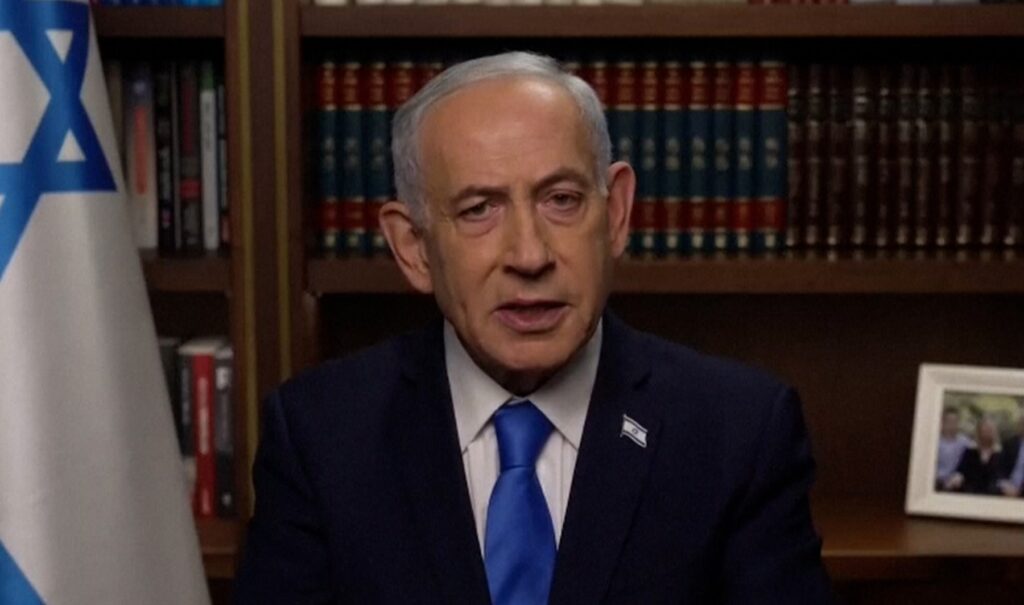
In a recent statement that has drawn significant attention worldwide, Israeli Prime Minister Benjamin Netanyahu declared that the joint military actions carried out by the United States and Israel against Iran were aimed at removing what he called an “existential threat.” This assertion highlights the escalating tensions in the Middle East and reflects the complex geopolitical dynamics surrounding Iran’s regional activities and nuclear ambitions.
Netanyahu emphasized that the coordinated strikes were not random acts of aggression but a strategic effort to neutralize threats that pose fundamental risks to Israel’s security. He described Iran as a state that has consistently supported regional proxies and militant groups hostile to Israel, which, in his view, jeopardizes not only Israeli safety but also stability in the broader Middle East.
The joint US-Israel operations represent a significant step in their shared policy to counter Iran’s influence and capabilities. According to Netanyahu, the strike’s goal was to degrade Iran’s military infrastructure and prevent it from establishing a foothold that could endanger the existence of Israel.
This development follows years of diplomatic strain and intermittent clashes involving Iran and its neighbors. The targeted action underscores the willingness of both the US and Israel to take assertive measures when they perceive direct threats. Netanyahu’s remarks serve both as a justification for the attacks and a signal to the international community about Israel’s stance regarding Iranian actions.
Analysts note that while the attacks might temporarily limit some of Iran’s operational capacities, they also carry risks of further escalation. The region remains vulnerable to extended conflict due to the already volatile nature of Middle Eastern geopolitics.
Moreover, the cooperation between the US and Israel in these military strikes underscores the strength of their alliance and shared strategic interests. It is reflective of a broader strategy to prevent Iran from acquiring or advancing nuclear weapons capabilities, which has been a consistent priority in US foreign policy.
International reactions have been mixed, with some countries expressing concern over the potential for renewed conflict, while others have shown support for efforts to curtail Iran’s military ambitions. The situation remains fluid, and global powers continue to monitor developments closely.
The joint strikes mark a critical point in the ongoing struggle between Iran and its adversaries. Netanyahu’s framing of the operation as necessary for Israel’s survival adds gravity to the conflict and highlights the high stakes involved in the region’s security landscape.
As the world watches closely, the ramifications of these actions will likely influence diplomatic and military strategies across the Middle East and beyond for the foreseeable future.