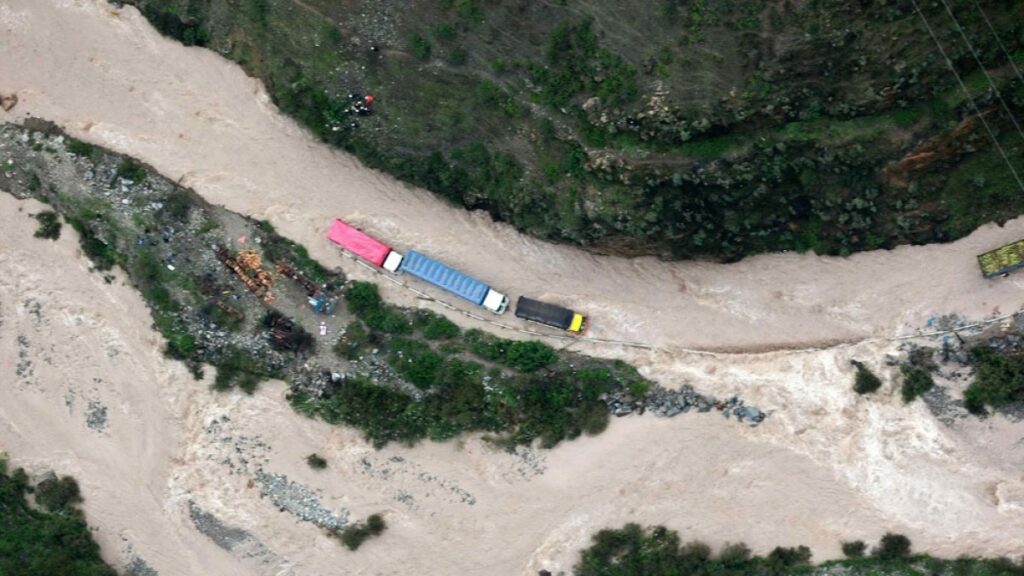
Southern Peru is grappling with the catastrophic impact of heavy rains and deadly floods that have severely affected the region in recent days. Torrential downpours have triggered devastating mudslides, resulting in multiple fatalities and widespread destruction. The floods have not only washed away homes and infrastructure but also displaced thousands of residents who are now seeking shelter in safer areas.
The situation has escalated to a national emergency, with more than 700 districts across Peru declaring states of emergency in response to the natural disaster. Emergency services and government agencies are working tirelessly to provide immediate relief and assistance to the affected populations. Rescue operations are ongoing, focusing on evacuating those trapped by the rising waters and mudslides.
The southern part of the country has been particularly hard-hit, where the intensity of the rainfall surpasses typical seasonal expectations. The relentless precipitation has saturated the soil, contributing to the frequency and severity of mudslides, which have cut off roads and isolated communities.
In response to the crisis, shelters have been established in safer locations to accommodate displaced families. Aid organizations are mobilizing resources, including food, clean water, medical supplies, and temporary housing materials, to support those impacted by the floods.
Local authorities have urged residents in vulnerable areas to remain vigilant and follow evacuation orders to minimize loss of life. The government has pledged to increase funding and logistical support for recovery efforts, emphasizing the importance of rebuilding resilient infrastructure and improving early warning systems to prevent future disasters.
The floods have also raised concerns about the long-term environmental and economic effects on Peru. Agricultural lands have been inundated, threatening food production and the livelihoods of farming communities. Infrastructure damage includes washed-out bridges, eroded roads, and destroyed utilities, which will require significant investment and time to repair.
Experts warn that climate change may be contributing to the increasing frequency and intensity of such extreme weather events in the region. This disaster underscores the urgent need for comprehensive adaptation strategies and international cooperation to address climate risks.
As Peru continues to battle the immediate crisis, the focus is shifting toward recovery and rebuilding. The resilience of the affected communities and the effectiveness of government and international support will be critical in navigating the aftermath of this severe natural calamity.
The people of southern Peru, aided by national and global solidarity, face a daunting challenge ahead as they strive to restore normalcy and fortify their defenses against future climatic events.