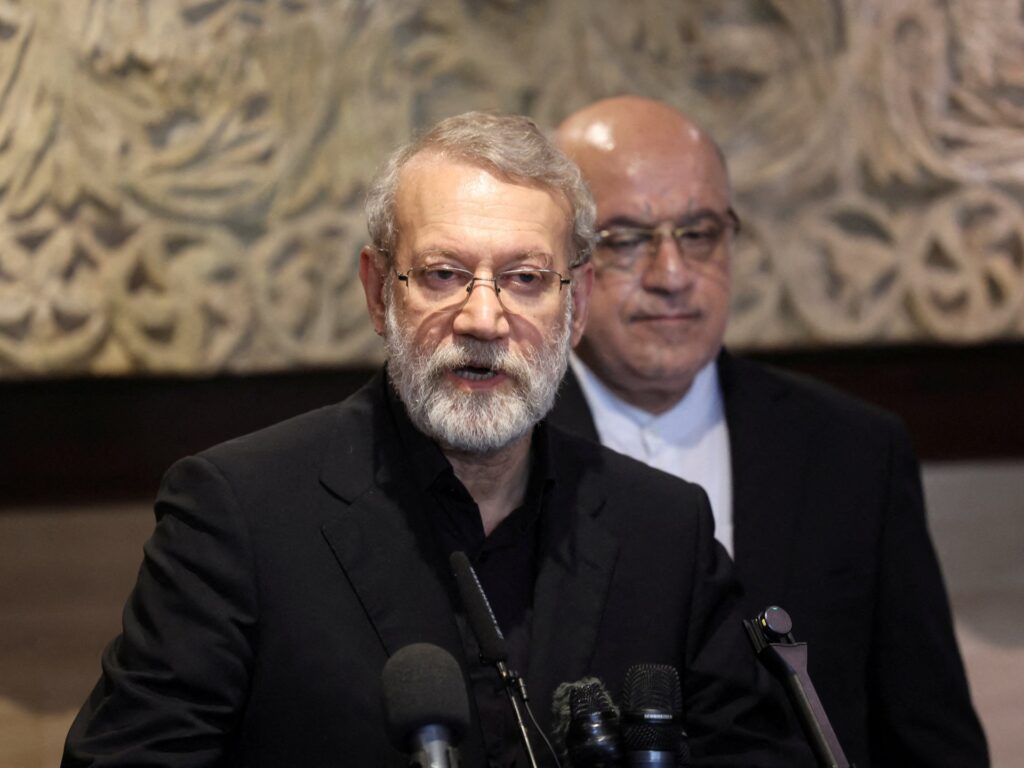
In a significant diplomatic move, Iran’s top security official, Ali Larijani, the secretary of Iran’s Supreme National Security Council, has visited Oman amidst ongoing nuclear negotiations with the United States. The trip highlights the intensifying diplomatic efforts aimed at averting a potential conflict centered on Iran’s nuclear program.
Larijani’s visit to the Sultanate of Oman underscores Oman’s role as a crucial diplomatic hub in the Gulf region. Historically, Oman has served as a neutral ground for sensitive negotiations between Iran and Western nations, including the US. The choice of Oman for these talks is strategic, leveraging its longstanding relations with both sides to facilitate dialogue.
The context of this visit is rooted in escalating tensions over Iran’s nuclear activities, which have drawn international scrutiny and fears of nuclear proliferation. The United States and other global powers have been actively seeking to limit Iran’s nuclear capabilities through diplomatic channels, aiming to prevent a military confrontation in an already volatile region.
Larijani’s discussions in Oman are viewed as part of a broader initiative to revive and advance negotiations that may lead to a renewed agreement on Iran’s nuclear program. Such an agreement would involve Iran agreeing to limit its nuclear activities in exchange for the lifting or easing of economic sanctions that have severely impacted its economy.
Experts suggest that the outcome of these talks could have profound implications for regional stability and international security. A successful diplomatic resolution would not only prevent conflict but could also pave the way for improved relations between Iran and Western countries.
However, challenges remain, as mutual suspicions and demands continue to complicate negotiations. Iran insists on its right to peaceful nuclear technology, while the US and its allies demand stringent verification measures to ensure compliance.
The diplomatic move to engage through high-level security officials like Larijani indicates the seriousness of Iran’s approach to the talks. It also reflects the high stakes involved, with the potential to influence not just bilateral relations but also the broader geopolitical dynamics of the Middle East.
Oman’s facilitation of these talks demonstrates its growing importance in regional diplomacy and conflict resolution efforts. The international community watches closely as these negotiations unfold, hopeful for a peaceful and constructive outcome.
In conclusion, Larijani’s visit to Oman is a pivotal step in the complex and delicate process of negotiating Iran’s nuclear future. It marks a moment of cautious optimism amid a backdrop of tension, illustrating the ongoing efforts by diplomatic actors to secure peace and stability in the Middle East.