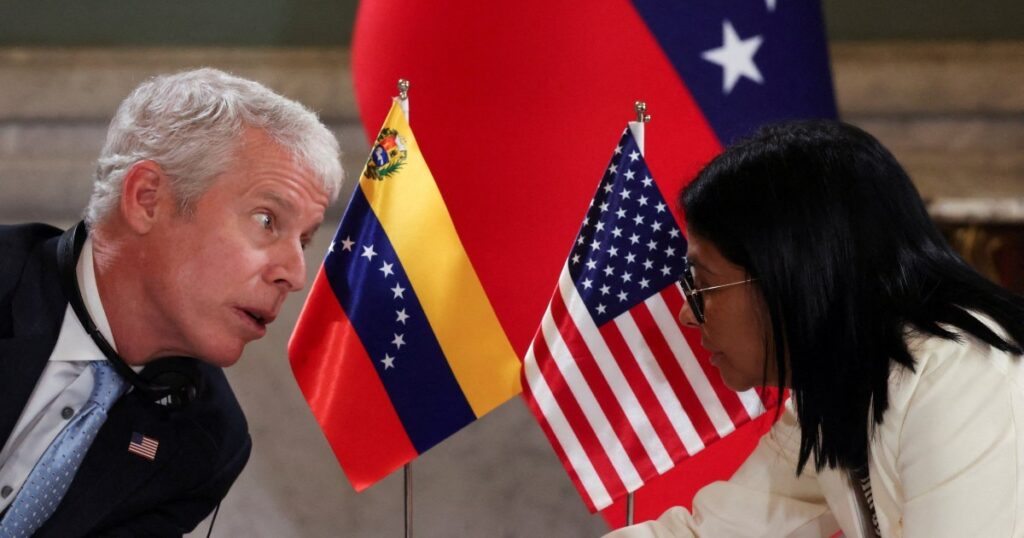
In a significant development for the energy sector, US energy giant Chevron and Italy’s multinational oil and gas company Eni have signed agreements to expand their oil projects in Venezuela. This move comes days after the Venezuelan government agreed to grant the United States control over a fifth of its vast oil reserves, signaling a new phase of cooperation amid a complex geopolitical landscape.
The agreements were officially signed in Caracas, marking an important step in restoring and boosting Venezuela’s oil production capabilities. The country, known for having some of the world’s largest proven oil reserves, has faced years of economic sanctions and production setbacks. These recent deals with Chevron and Eni may pave the way for much-needed investments and technical expertise to revitalize the oil sector.
Chevron, one of the few US companies authorized to operate in Venezuela despite longstanding sanctions, is set to expand its existing projects. The company’s involvement is pivotal in increasing output from Venezuela’s largest and most prolific oil fields. For Chevron, the collaboration represents a strategic opportunity to strengthen its presence in Latin America and benefit from Venezuela’s resource potential.
Eni, on the other hand, aims to deepen its commitment to Venezuela’s hydrocarbon sector. The Italian firm has been active in the country for several years, focusing on offshore oil projects. Through the new agreements, Eni plans to enhance oil exploration and production activities, leveraging advanced technology to improve efficiency and output.
The recent decision by Venezuela to grant the US control over a fifth of its oil reserves is part of a broader set of negotiations to ease economic sanctions and normalize relations. This move might encourage further international investments and cooperation, creating a more favorable environment for oil production growth and economic recovery.
Industry analysts suggest that the expansion of Chevron and Eni’s operations could help reverse Venezuela’s declining oil production trend, which has severely impacted the country’s revenues and global oil supply dynamics. Restoring production levels is critical not only for Venezuela’s economy but also for the global oil market, which has experienced supply challenges in recent years.
The agreements also underscore the changing geopolitics of energy, where economic pragmatism and strategic partnerships are taking precedence over political differences. The collaboration between the US, Italy, and Venezuela illustrates how energy security concerns and market demands can lead to unexpected alliances.
Moreover, these developments come at a time when the global energy landscape is increasingly focused on diversification and sustainability. While Venezuela’s oil reserves represent a major fossil fuel source, integrating their output into the global market responsibly remains a crucial challenge.
Overall, the expanded oil projects by Chevron and Eni in Venezuela promise to reshape the country’s oil industry trajectory. Increased foreign investment, technological exchange, and cooperative governance could contribute to stronger growth and more stable energy markets.
As the agreements move from paper to practice, stakeholders will be watching closely to assess the impact on Venezuela’s oil output, its economy, and broader international energy relations. This cooperation might serve as a template for resolving complex energy sector disputes and fostering mutual benefits in a highly interconnected global market.
The energy sector, governments, and global markets will all have a stake in how these developments unfold, signaling a potentially transformative period for Venezuela and its oil industry.