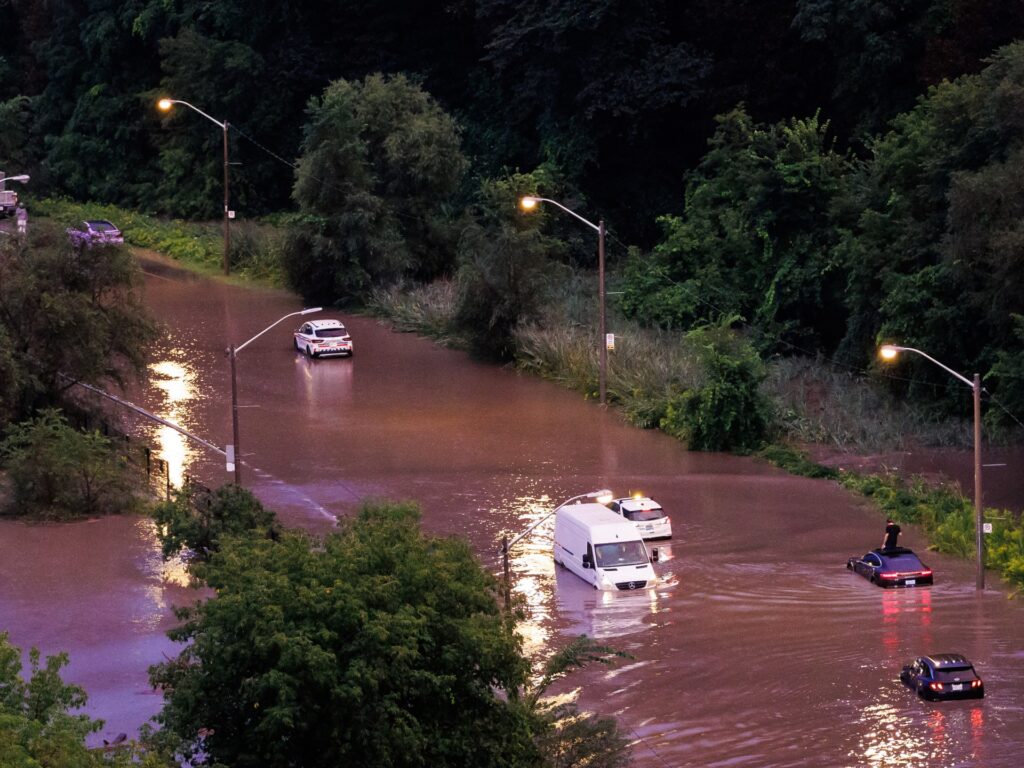
A powerful storm recently swept across Toronto, Canada, leaving tens of thousands of residents without power and causing significant disruption throughout the city. The severe thunderstorm brought intense winds, heavy rain, and lightning, resulting in widespread damage and flooding.
One of the most impacted areas was Toronto Pearson International Airport, where the storm forced multiple flight cancellations and delays, causing inconvenience for travelers and affecting airport operations.
The heavy rainfall led to severe flooding in various neighborhoods, overwhelming drainage systems and submerging streets. Emergency services were deployed to assist residents stranded by the rising waters and to clear fallen trees and debris that were blocking roads.
Power outages affected tens of thousands of homes and businesses, leaving many without electricity during the storm and in the hours that followed. Utility crews worked urgently to restore power as safety concerns and ongoing weather conditions slowed repair efforts.
City officials urged residents to stay indoors, avoid flooded areas, and follow safety precautions until the storm had passed and recovery efforts were underway. The storm’s intensity has raised concerns about preparedness and infrastructure resilience in the face of increasingly frequent and severe weather events.
Meteorologists noted that such intense thunderstorms are becoming more common in the region, highlighting the need for improved weather forecasting and emergency response strategies.
Residents are advised to keep emergency supplies ready and stay informed through official weather updates. Recovery and repair work is expected to continue for several days as the city copes with the aftermath of the storm.